

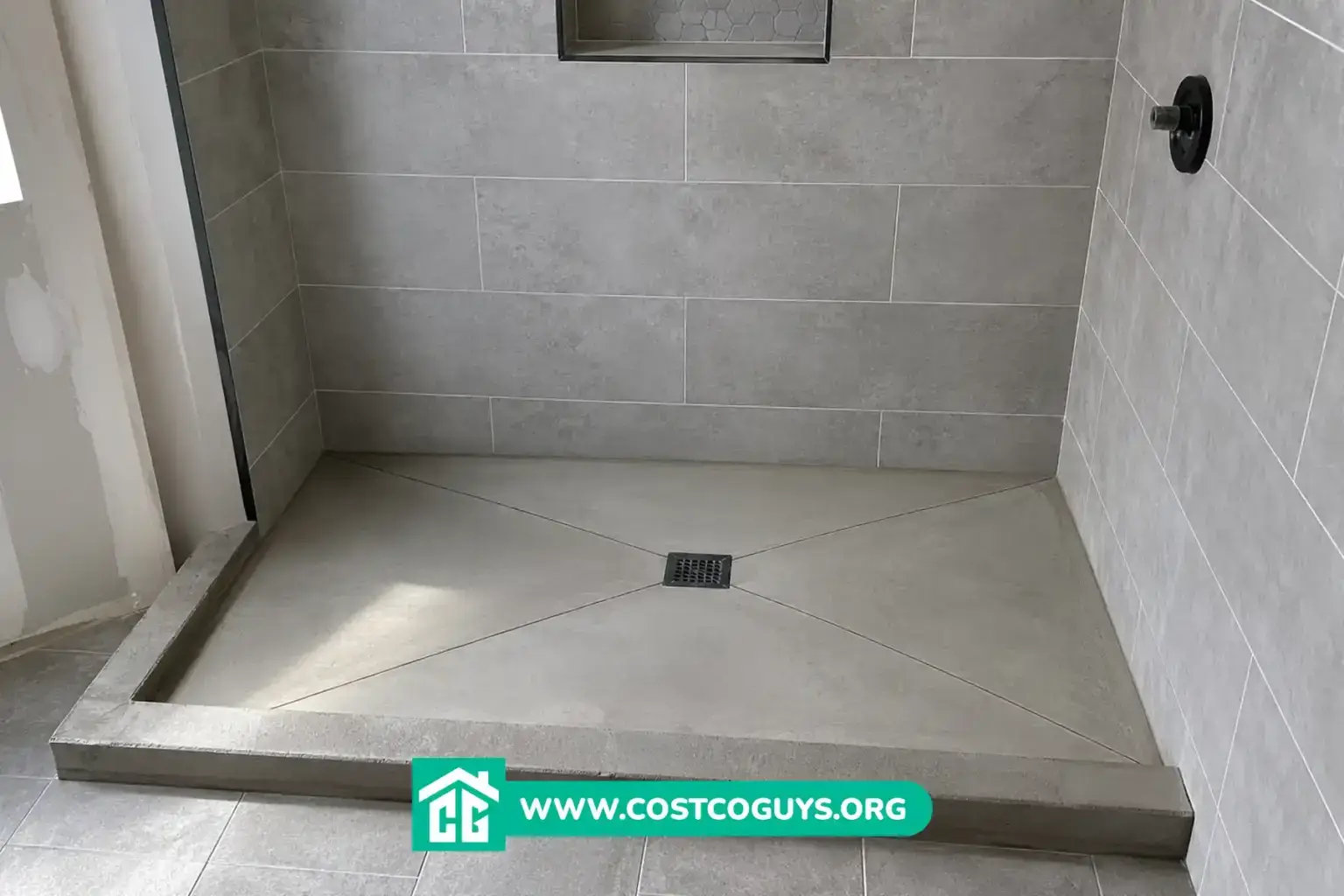

A sloped shower pan is a preformed shower base built with the drain-ward pitch already molded into it, so you skip the traditional mud bed entirely. In 2026, a standard pre-sloped shower pan runs about $120 to $700 depending on brand, size, and drain type, while a full custom shower pan can run higher.
- What Makes a Shower Pan Pre-Sloped
- Traditional Mud Bed vs Pre-Sloped Pan
- Top Pre-Sloped Shower Pan Products
- Step-by-Step Shower Pan Installation
- What Actually Drives the Price
- Common Installation Mistakes to Avoid
- When to Call a Professional
- How These Cost Estimates Were Reached
- Choosing the Right Sloped Shower Pan for Your Remodel
- Frequently Asked Questions
Last Updated: July 8, 2026
What Makes a Shower Pan Pre-Sloped
A pre-sloped shower pan comes with the pitch already built into the base at the factory. Water rolls toward the drain hole the moment it hits the surface. You don’t have to trowel a slope by hand or guess at the pitch.
Most pans use lightweight high-density polystyrene as the core material. A few, like Tile Redi, mold the whole shower base out of solid PVC plastic instead. Either way, the pan ships with a waterproofing layer already bonded to the surface, so it’s ready-to-tile straight out of the box.
The slope itself usually pitches at a quarter inch of drop for every foot of run. That’s the standard most plumbing codes reference for proper drainage in a shower area. A linear drain design spreads that pitch across a single long slot instead of sloping toward one center point.
Traditional Mud Bed vs Pre-Sloped Pan
A traditional mud bed uses a dry-pack mortar mix, hand-troweled into shape over a PVC or lead shower pan liner. It takes real skill to get the pitch even on all sides. Most tile setters need a few hours just for the mortar bed, then another day of cure time before they can lay the waterproofing membrane on top.

A pre-sloped shower pan skips that step completely. You set the pan, seal the edges, connect the drain, and you’re ready to tile the same day in many cases. That’s the biggest reason contractors reach for these products on remodel jobs with a tight schedule.
The tradeoff shows up in flexibility. A mud bed can be shaped to fit almost any custom shower size or odd angle. A pre-sloped shower pan comes in fixed sizes, though most brands let you trim the foam edges down with a saw to fit a slightly smaller footprint.
Top Pre-Sloped Shower Pan Products
The Hydro Ban pre-sloped shower pan from Laticrete is one of the most common options tile setters install today. It’s built from high-density expanded polystyrene with a factory-installed drain and waste line connection, and it meets ANSI A118.10 waterproofing standards. Laticrete also sells a linear drain version, plus a custom shower pan program through its Rapid Custom Shower System for odd sizes.
Schluter’s Kerdi-Shower-T line works on the same idea. This sloped shower tray comes pre-waterproofed and pairs with the Schluter-Kerdi-Drain for a complete waterproofing system. Standard sizes run in the low hundreds of dollars, with smaller trays sometimes available for around $120 to $150 through tile distributors.
Tile Redi takes a different construction approach. Its shower base molds the drain, the slope, and the pan into one solid piece of PVC, and mastic ships with every kit. Reviewers on trade forums have quoted comparable Tile Redi and Kerdi kits in the $500 to $650 range for similar dimensions, so the two brands land close together on price once you compare matching sizes.
Wedi’s Fundo Riolito system rounds out the group. It uses the same foam-panel waterproofing that Wedi uses on its wall boards, so the whole shower area, floor and walls, comes from one waterproof system rather than mixing brands.
Standard vs Custom Shower Pan Pricing
A standard shower pan in a common size, say 32 inches by 60 inches, costs less than a custom shower pan built to fit an irregular bathroom footprint. Custom sizing usually adds a design fee on top of the base material cost, and lead times stretch to two to six weeks instead of shipping off the shelf.
| Product Type | Typical Cost Range | What Affects the Price |
|---|---|---|
| Standard pre-sloped pan (center drain) | $120 to $400 | Brand, size, foam vs PVC construction |
| Linear drain pre-sloped pan | $300 to $700 | Drain length, brand, custom trim options |
| Custom-sized shower pan | $400 to $900+ | Exact dimensions, drain placement, lead time |
| Drain grate or linear drain cover | $40 to $250 | Material (brass, stainless), style, brand |
| Traditional mud bed materials | $50 to $150 | Mortar mix, PVC liner, quantity needed |
These ranges reflect material cost only. Labor for a full shower pan installation typically adds $500 to $1,500 depending on your region and whether the job includes tile work too.
Step-by-Step Shower Pan Installation
Start by measuring your shower area and confirming the drain location matches your chosen pan’s drain hole. Most pre-sloped shower pans need the existing drain to sit at or near center, unless you’re installing a linear drain kit.
- Dry-fit the pan in the shower area and trim the foam edges if needed to match your framing.
- Connect the drain body to the existing waste line using the brass or PVC fitting included with the kit.
- Apply the adhesive and sealant that ships with the pan around the drain and perimeter edges.
- Set the pan into the adhesive bed and press it flat, checking it sits level side to side.
- Seal any seams where the pan meets cement board or Kerdi membrane on the walls.
- Let the adhesive cure per the manufacturer’s data sheet before you start tiling.
A curb piece usually ships with the pan too, sized to the longest side of your shower base. You’ll seat that curb into the same adhesive bed before moving on to the walls.
What Actually Drives the Price
Brand accounts for a real chunk of the price gap between similar products. Laticrete and Schluter both carry premium pricing tied to their lifetime system warranties, while smaller manufacturers often undercut them on the same basic foam-and-membrane construction.
Size affects cost more than most people expect. A 60-inch linear pan costs meaningfully more than a compact 32 by 48 corner unit, simply because it uses more raw material and ships on its own pallet due to weight and size.
Drain style changes the math too. A standard center drain grate costs less than a linear drain, since linear drains use a longer channel and often a separate brass or stainless cover sold apart from the pan itself.
Common Installation Mistakes to Avoid
Skipping the dry-fit step causes more callbacks than any other mistake. Setting the pan into adhesive before confirming it actually fits the framing means you’re stuck trimming foam after the adhesive has already started to set.
Another frequent error involves the bonding flange, the raised lip around a linear drain that bonds to the waterproofing membrane. Installers sometimes tile right up to that flange without properly sealing it first, which leaves a weak point where water can work its way underneath.
Rushing the cure time on adhesive before tiling ranks as the third common issue. Manufacturers publish a specific cure window on their product data sheets, and tiling too soon can shift the pan slightly out of level.
When to Call a Professional
Hire a licensed plumber if your shower drain needs to move to a new location, since that work involves cutting into the waste line and may require a permit under local plumbing code. A tile setter with shower pan experience is worth the labor cost if you’re installing a linear drain system, since getting the slope and flange seal right takes practice most DIYers haven’t built up yet.
You can reasonably handle the pan-setting and sealing yourself if you’re working with a standard center-drain pan in a common size and your existing drain location already lines up.
How These Cost Estimates Were Reached
These price ranges come from current manufacturer and distributor listings for Hydro Ban, Kerdi, Tile Redi, and Wedi products, cross-checked against trade forum quotes from contractors who’ve purchased comparable kits. Labor figures reflect typical regional variation in tile-setter rates rather than one specific market.
Treat these numbers as a working range rather than a locked quote. Your actual cost depends on your local supplier’s pricing, your exact shower dimensions, and whether your installer bundles pan work into a larger tile job.
Choosing the Right Sloped Shower Pan for Your Remodel
A sloped shower pan saves real time on a bathroom remodel, since it swaps a full day of mud bed work for a same-day pan installation. Most homeowners land somewhere between $120 and $700 for the pan itself, with labor adding another $500 to $1,500 on top depending on the scope of the job. Size, drain type, and brand drive most of that spread, so matching the pan to your actual shower size and drain style is the fastest way to land on an accurate number for your project.
Frequently Asked Questions
Is a pre-sloped shower pan better than a mud bed?
A pre-sloped shower pan installs faster and needs less skill to get the pitch right. A mud bed still wins on custom or irregular shower shapes, since a tile setter can hand-shape the slope to fit odd angles a factory pan can’t match.
Can I cut a pre-sloped shower pan to fit a smaller space?
Yes, most foam-core pans like Hydro Ban can be trimmed with a table saw to reduce the width or length by a few inches. PVC-molded pans like Tile Redi offer less flexibility since the drain and slope are molded into one solid piece.
Do all pre-sloped shower pans come with the drain included?
No. Most brands sell the pan and the drain grate separately, since drain style and finish vary by project. The drain body or waste line connection is usually factory-installed, but the visible grate or linear drain cover is a separate purchase.
What size shower pan is standard for a small bathroom?
A 32 by 48 inch or 32 by 60 inch pan covers most small to mid-size shower areas. Anything smaller or oddly shaped usually pushes you toward a custom shower pan order instead of an off-the-shelf size.
How long does a pre-sloped shower pan take to install?
Setting the pan itself typically takes one to two hours once the drain connection is ready. Full cure time before tiling depends on the adhesive used, so check the product data sheet before starting tile work.
