

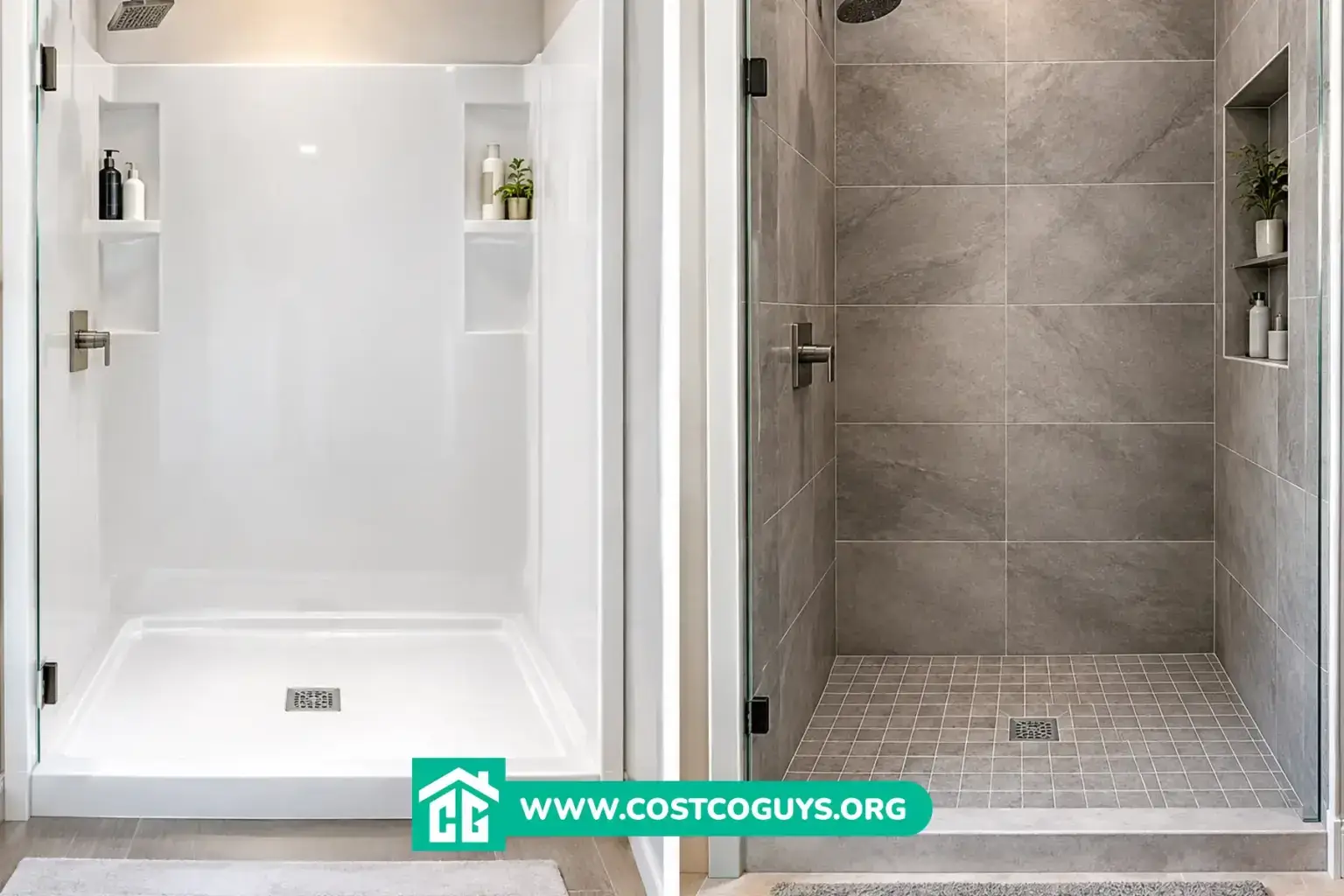

A 30 x 54 shower pan is a standard rectangular shower base. It measures 30 inches deep by 54 inches wide and fits a framed alcove without custom tile work. Expect to pay roughly $200 to $500 for a basic acrylic or fiberglass base. A tileable ready-to-tile pan with an integrated drain and curb runs $650 to $850, depending on material and drain location.
- What Fits a 30 x 54 Shower Pan Alcove
- 30 x 54 Shower Base Prices by Type
- Acrylic vs Fiberglass vs Tileable 30 x 54 Shower Base
- Choosing Center Drain vs Left or Right Drain
- How to Measure for a 30 x 54 Shower Pan
- Common Mistakes That Cost Extra on This Install
- DIY Installation vs Hiring a Plumber
- Getting the Right 30 x 54 Shower Pan for Your Bathroom
- Frequently Asked Questions
- Will a 30 x 54 shower pan fit a standard tub-to-shower conversion?
- Can I install a 30 x 54 shower pan myself?
- What’s the difference between single threshold and double threshold bases?
- Do I need a specific type of drain for a 30 x 54 shower base?
- Is a tileable shower base worth the extra cost over acrylic?
What Fits a 30 x 54 Shower Pan Alcove
A 30 x 54 shower pan fits a three-wall alcove opening. You get this layout when builders frame a bathtub in on three sides. The 54 inch dimension runs along the back wall. The 30 inch dimension is the depth from the front curb to the back wall.
This size is one of the more common shower base footprints because it matches standard 5-foot tub dimensions. If you’re converting a tub to a shower, a 30 x 54 base often drops into the existing tub cutout with little or no framing changes. Always measure your actual rough opening before buying. Framing can shift a half inch or more between houses, even ones built just a few years apart.
30 x 54 Shower Base Prices by Type
Price depends mostly on material and whether the base ships with a finished surface or needs tile over it. Acrylic and fiberglass single-piece bases cost less but limit your design to whatever color and texture ships in the box. Tileable bases cost more upfront but let you match tile to the rest of the bathroom.
| Shower Pan Type | Typical Cost Range | What Affects the Price |
|---|---|---|
| Acrylic single threshold base | $250 to $500 | Brand, curb height, and whether the drain is included |
| Basic fiberglass base | $150 to $350 | Thickness and reinforcement quality |
| Tileable base with integrated drain | $650 to $850 | Curb style, drain placement, and whether flashing is included |
These figures reflect the shower pan itself, not installation. Professional installation adds a separate labor charge. That charge varies by region and by how much demolition the project needs. Treat any total project number as a rough planning range rather than a fixed local quote.
Acrylic vs Fiberglass vs Tileable 30 x 54 Shower Base
Acrylic bases hold up well against scratches and stains and usually carry the longest warranty of the three. Fiberglass costs less but tends to show wear faster, especially if you scrub the surface with abrasive cleaners over the years.

A tileable base is a pre-sloped foam or composite pan with an integrated drain and tile flange. Manufacturers sometimes sell these under names like Redi Base. You skip the mortar bed and waterproofing membrane a traditional tiled shower floor needs, since the pan itself handles both jobs. That’s the main reason these cost more than a finished acrylic pan.
Choosing Center Drain vs Left or Right Drain
Drain location matters more than most first-time buyers expect. A center drain works for most straightforward alcove installations, where the existing rough-in already sits in the middle of the space.
Left or right drain models exist because plumbing doesn’t always land in the center. This comes up often in older homes and tub-to-shower conversions. Check your existing drain location before ordering. Most acrylic and fiberglass bases are built around a standard 2 inch compression drain fitting, but tileable pans often use their own integrated drain instead. Moving a drain a foot or more usually means opening the subfloor, which turns a weekend project into a bigger one.
How to Measure for a 30 x 54 Shower Pan
Measure the rough opening at floor level, wall to wall, in both directions. Framing lumber and old tile backing can eat into the opening, so don’t rely on the tub’s listed size alone.
- Measure width and depth at three points each: near the front, middle, and back of the space.
- Check that the floor is level. Most acrylic pans need a flat subfloor and shim as needed under low spots.
- Confirm the drain’s exact center point relative to the back and side walls.
- Note ceiling height if you’re also installing a shower door, since door frames add their own clearance needs.
Common Mistakes That Cost Extra on This Install
The most expensive mistake homeowners make is buying the pan before confirming the drain rough-in location. Once you test-fit or cut into a base with the wrong drain side, most retailers won’t take it back.
Skipping a dry-fit before permanently setting the pan is another common issue. Set the base in place first. Check for rock or gaps and confirm the drain lines up before you apply any adhesive or mortar bed underneath it. A pan that rocks even slightly will crack the seal around the drain over time and lead to a slow leak inside the wall.
DIY Installation vs Hiring a Plumber
Setting an acrylic or fiberglass pan into an existing alcove is a reasonable DIY project. You’ll want basic tools, a level, and some comfort with plumbing connections. Budget a full day for a straightforward swap where the drain location doesn’t change.
Call a licensed plumber in a few situations. The drain needs to move. You find water damage or soft subflooring once the old tub or pan comes out. The project touches wall framing near electrical wiring. Local plumbing codes can also differ on venting and trap requirements, since jurisdictions adopt and amend the Uniform Plumbing Code in different ways. Check with your local building department, also called the AHJ, before finalizing a drain relocation.
Getting the Right 30 x 54 Shower Pan for Your Bathroom
A 30 x 54 shower pan works well for a standard three-wall alcove. Picking the right one comes down to three things. Confirm your exact rough opening. Match the drain location to your existing plumbing. Decide whether a finished acrylic base or a tileable pan fits your bathroom’s design. Get the drain location right before you buy, since that single detail decides whether installation stays a simple swap or turns into a bigger plumbing job.
Frequently Asked Questions
Will a 30 x 54 shower pan fit a standard tub-to-shower conversion?
Often yes, since 5-foot tubs commonly measure close to 30 x 54 inches. Measure your actual opening first, since tub sizes vary slightly by manufacturer and installation age.
Can I install a 30 x 54 shower pan myself?
Most homeowners with basic DIY experience can install one if the drain location doesn’t change. If the drain needs to move or you find subfloor damage, bring in a licensed plumber.
What’s the difference between single threshold and double threshold bases?
Single threshold pans have one low curb for a three-wall alcove. Double threshold pans have curbs on two sides and work for corner installations.
Do I need a specific type of drain for a 30 x 54 shower base?
Most acrylic and fiberglass bases use a standard 2 inch compression drain fitting. Some tileable pans use integrated drains that aren’t interchangeable, so confirm compatibility with the specific model before buying.
Is a tileable shower base worth the extra cost over acrylic?
It depends on your design goals. A tileable base costs more but lets you match tile throughout the bathroom. An acrylic base costs less and skips the tile work entirely.
