

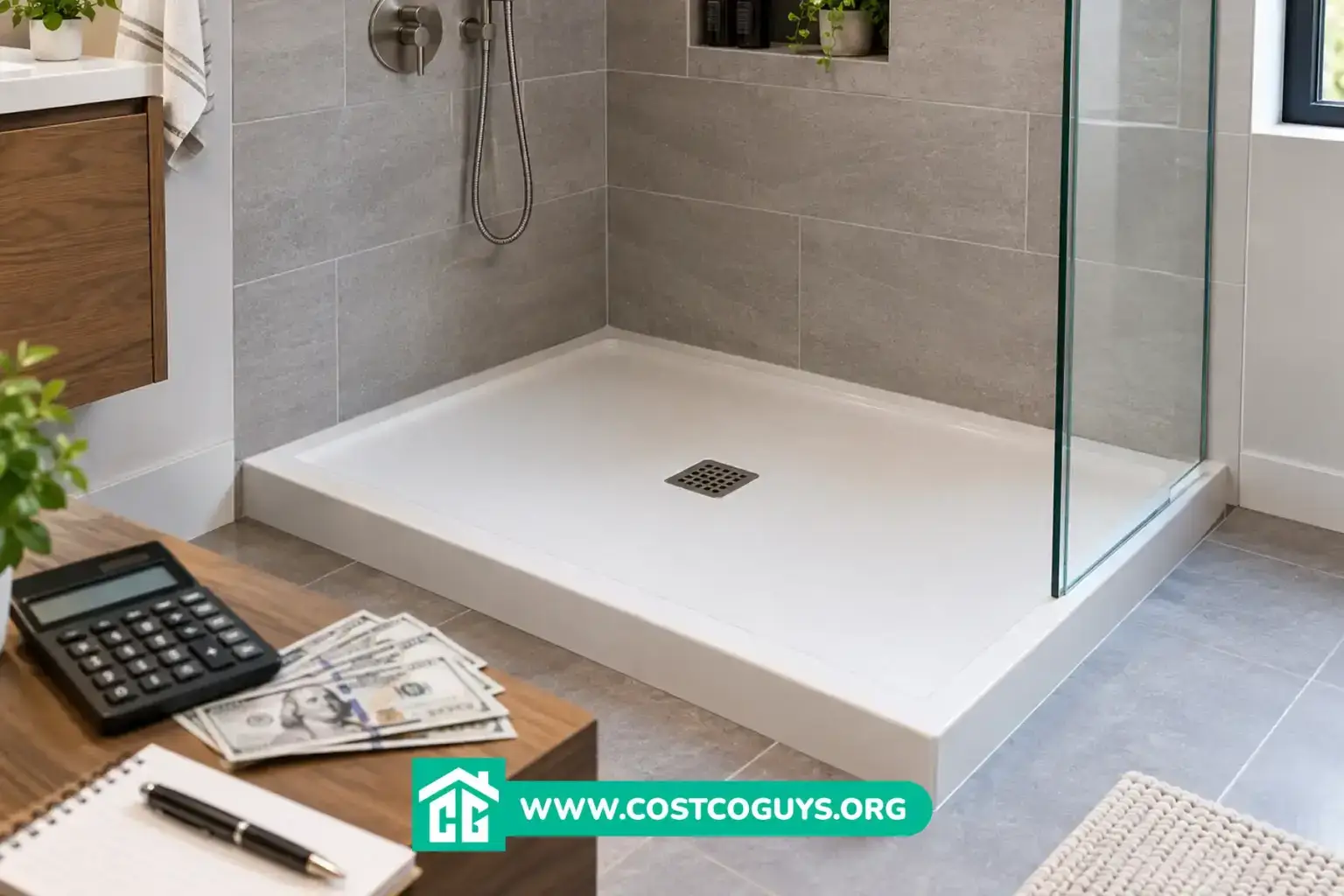

A 36×30 shower pan gives you one of the more common replacement sizes for RV, camper, and fifth wheel showers, and pricing in 2026 typically runs from about $150 for a basic ABS plastic model to over $400 for a heavy-duty center drain pan built for direct OEM fit. The right choice depends on your drain location, your existing shower stall dimensions, and how much flex you’re willing to accept in fit.
- What “36×30” Actually Means for a Shower Pan
- 36×30 Shower Pan Cost in 2026
- Center Drain, Forward Center Drain, or Corner Drain
- Material Options: ABS Plastic vs Fiberglass vs Composite
- RV Shower Pan vs Home Alcove Shower Pan
- How to Measure Your Shower Stall Before You Buy
- Common Mistakes When Replacing a Shower Pan
- DIY Installation vs Calling a Professional
- Choosing the Right 36×30 Shower Pan for Your Space
- Frequently Asked Questions
What “36×30” Actually Means for a Shower Pan
Shower pan sizes are almost always nominal, not exact. A pan labeled 36″ x 30″ usually measures closer to 35 3/4″ x 29 3/4″ once you check it with a tape measure, a gap confirmed on the manufacturer spec sheet for the ICON Technologies SP3036 center drain pan. That small difference matters when you’re fitting a replacement pan into an existing shower stall with tile or fiberglass walls already in place.
This size shows up most in RVs, travel trailers, and fifth wheels, where manufacturers cut a standard rectangle into the floor plan. Home bathrooms use 36×30 too, but you’ll see it less often than the classic 36×36 or 60×30 alcove sizes.
36×30 Shower Pan Cost in 2026
Price depends heavily on material thickness, drain placement, and whether the pan is a direct OEM replacement or a universal fit. Here’s a realistic breakdown based on current retail listings.
| Pan Type | Typical Cost Range | What Affects the Price |
|---|---|---|
| Basic ABS plastic RV pan (nearby sizes, universal fit) | $150 to $210 | Wall thickness, foam base, drain position |
| Heavy-duty center drain RV pan, OEM-spec 36×30 | $375 to $430 | Reinforced bottom, direct drop-in fit, brand |
| Home alcove acrylic or composite pan | $200 to $600 | Material grade, drain style, wall lip height |
Available estimates put labor for a straightforward RV pan swap at a few hundred dollars if you hire a mobile RV technician, though many owners handle this one themselves. Current pricing data for local labor rates isn’t something we can confirm, so treat any labor figure as a rough planning number rather than a quote.
How These Prices Were Compared
These ranges come from checking current listings across RV parts retailers and general home improvement suppliers. We looked at pans marketed specifically as 36×30 or the closest nominal match, along with their material specs and drain configurations. Prices shift with sales and shipping costs, so use this table as a planning range, not a guaranteed quote for your exact model.

Center Drain, Forward Center Drain, or Corner Drain
Drain placement is the single biggest factor in whether a pan will actually fit your existing plumbing. Get this wrong and you’re looking at cutting new floor holes, which turns a simple swap into a bigger project.
- Center drain: The drain sits in the middle of the pan. This is the most common setup for a rectangle pan and usually lines up with factory RV plumbing.
- Forward center drain: The drain sits centered side to side but shifted toward the front wall rather than the middle of the pan’s length. Some RV manufacturers use this layout instead of a true center placement.
- Corner drain: The drain sits in one corner. This is common on smaller square pans and combo units built around a toilet.
Before you order anything, pull the old pan (or measure through the existing drain hole) and confirm exactly where your drain sits relative to the pan’s edges. A drain that’s off by even an inch can mean the new pan won’t seat flat.
Material Options: ABS Plastic vs Fiberglass vs Composite
Most RV shower pans in this size use durable ABS plastic with a foam base underneath. The foam adds a little give when you step in and helps the pan sit flush on an uneven subfloor. Look for a pan with a lightly textured surface, since a smooth floor turns dangerous fast once it’s wet.
Home bathroom pans in the 36×30 range more often use fiberglass, acrylic, or a composite material. Composite and stone resin pans cost more but resist scratching and cracking better over time. A cheap, flimsy pan might save you money upfront, but a thin floor can flex under weight and eventually crack at stress points near the drain.
A shower pan from RecPro is a common reference point in the RV world for this style of construction, since the brand’s lineup consistently uses ABS plastic bodies with foam bottoms across its size range. If your exact 36×30 dimension isn’t in stock from a given supplier, checking their nearby sizes, like 36×24 or 28×32, can sometimes get you a workable fit with minor trim adjustments.
RV Shower Pan vs Home Alcove Shower Pan
These two product categories look similar on a spec sheet but serve different jobs. An RV pan needs to be lightweight, since every pound matters for towing and fuel economy. A home alcove pan doesn’t have that constraint, so manufacturers can use heavier, more rigid materials.
RV pans also tend to have a shorter wall lip and a lower profile overall, since RV bathrooms have less vertical clearance than a site-built home. If you’re renovating a stick-built bathroom, don’t assume an RV-rated pan will match your wall height or drain rough-in without checking the spec sheet first.
How to Measure Your Shower Stall Before You Buy
Getting this step right saves you a return shipment and a second trip to the hardware store. Measure three things before ordering a replacement pan.
- Length and width of the existing pan, taken at the base, not the top lip, since many pans flare out slightly.
- Drain location, measured from two fixed points like the side wall and the front wall, not just eyeballed.
- Overall depth from the shower stall floor to the bottom of the wall panels, so the new pan’s lip doesn’t sit too high or too low against the walls.
Write these numbers down and keep them handy while you shop. A lot of return hassles trace back to skipping the drain measurement and assuming “center” means the exact middle of the pan.
Common Mistakes When Replacing a Shower Pan
The most expensive mistake is ordering by the labeled size instead of the actual measured size. A “36×30” pan from one brand might measure differently than another brand’s version with the same label, so always cross-check the listed dimensions in inches, not just the marketing name.
Another common issue is ignoring subfloor condition. If the plywood under your old pan feels soft or shows staining, that’s a sign of water damage that needs attention before you install anything new. Setting a fresh pan over a compromised subfloor just hides the problem instead of fixing it.
DIY Installation vs Calling a Professional
Swapping a shower pan is a reasonable project for an intermediate DIY homeowner or RV owner with basic tools: a drill, a utility knife for caulk and sealant, and a wrench for the drain fitting. Disconnecting and reconnecting a P-trap or drain fitting, the curved pipe under the pan that holds water and blocks sewer gas, is usually straightforward.
Call a licensed plumber or RV technician if you find rotted subfloor, if the drain plumbing needs to be relocated, or if water has reached the walls or nearby electrical areas. Local code and permit rules can vary depending on your jurisdiction, so if your project involves reworking plumbing lines rather than a straight pan swap, check with your local building department, sometimes called the authority having jurisdiction, before you start.
Choosing the Right 36×30 Shower Pan for Your Space
The right 36×30 shower pan comes down to three things: matching your actual drain location, picking a material that fits your budget and durability needs, and double-checking measurements against the label instead of trusting it blindly. A basic ABS plastic pan with a foam base works fine for most RV bathrooms, while a heavier OEM-spec center drain pan makes sense if you want a true drop-in fit with no floor modification.
Measure twice, confirm the drain type, and you’ll avoid the return shipping and wasted weekend that come with guessing on size.
Frequently Asked Questions
Is a 36×30 shower pan the same as a 30×36 shower pan?
Yes. The numbers just describe length and width in a different order, so 36×30 and 30×36 refer to the same rectangle. Always check whether the length or width lines up with your drain position, since that matters more than the order the numbers are written in.
Can I install a 36×30 shower pan myself?
Most homeowners and RV owners with basic tools and some plumbing comfort can handle this project. If you find subfloor damage or the drain needs to move, that’s the point where a licensed plumber or RV technician should take over.
What’s the difference between a center drain and a forward center drain?
A center drain sits in the true middle of the pan. A forward center drain is centered side to side but shifted toward the front wall. Confirm which one your old pan uses before ordering a replacement.
How much does a 36×30 shower pan cost in 2026?
Basic ABS plastic pans in nearby sizes typically run $150 to $210, while heavier OEM-spec center drain pans built specifically for a 36×30 footprint run closer to $375 to $430. Home alcove pans in acrylic or composite materials range from about $200 to $600 depending on material grade.
Why is my new shower pan not sitting flush?
This usually points to a subfloor that isn’t level, a labeled size that doesn’t match the actual measured dimensions, or a drain that’s positioned differently than your old pan. Check all three before assuming the pan itself is defective.
