


A 30 inch shower pan is a pre-formed shower base sized to fit stalls with roughly 30 inches of width, most often paired with a 32, 36, or 60 inch length depending on the layout. Prices for a 30 inch shower pan typically run from $150 to $500 for acrylic or fiberglass models, and $250 to $700 for tileable bases like Tile Redi, before installation labor.
- What Fits in a 30 Inch Shower Pan
- Acrylic vs Fiberglass vs Tileable Shower Pan Base
- How 30 Inch Shower Pan Prices Were Compared
- Single Threshold vs Double Threshold 30 Inch Shower Base
- Common Mistakes When Buying a 30 Inch Shower Pan
- DIY Installation vs Hiring a Pro
- Maintaining a 30 Inch Shower Pan
- Choosing the Right 30 Inch Shower Pan for Your Bathroom
- Shower Pan FAQs
What Fits in a 30 Inch Shower Pan
The “30 inch” number refers to one side of the base, not the total footprint. A 30×30 shower pan works for a compact square stall, while a 30×60 or 30×72 pan suits a rectangular alcove shower. Measure your rough framed opening before you shop, since actual pan dimensions run slightly smaller than the nominal size to allow for wall panels or tile.
Most 30 inch pans use a center drain, though left and right drain versions exist for showers where the plumbing rough-in sits off to one side. Check your existing drain location first. Moving a drain adds plumbing work and cost that a simple pan swap does not need.
Acrylic vs Fiberglass vs Tileable Shower Pan Base
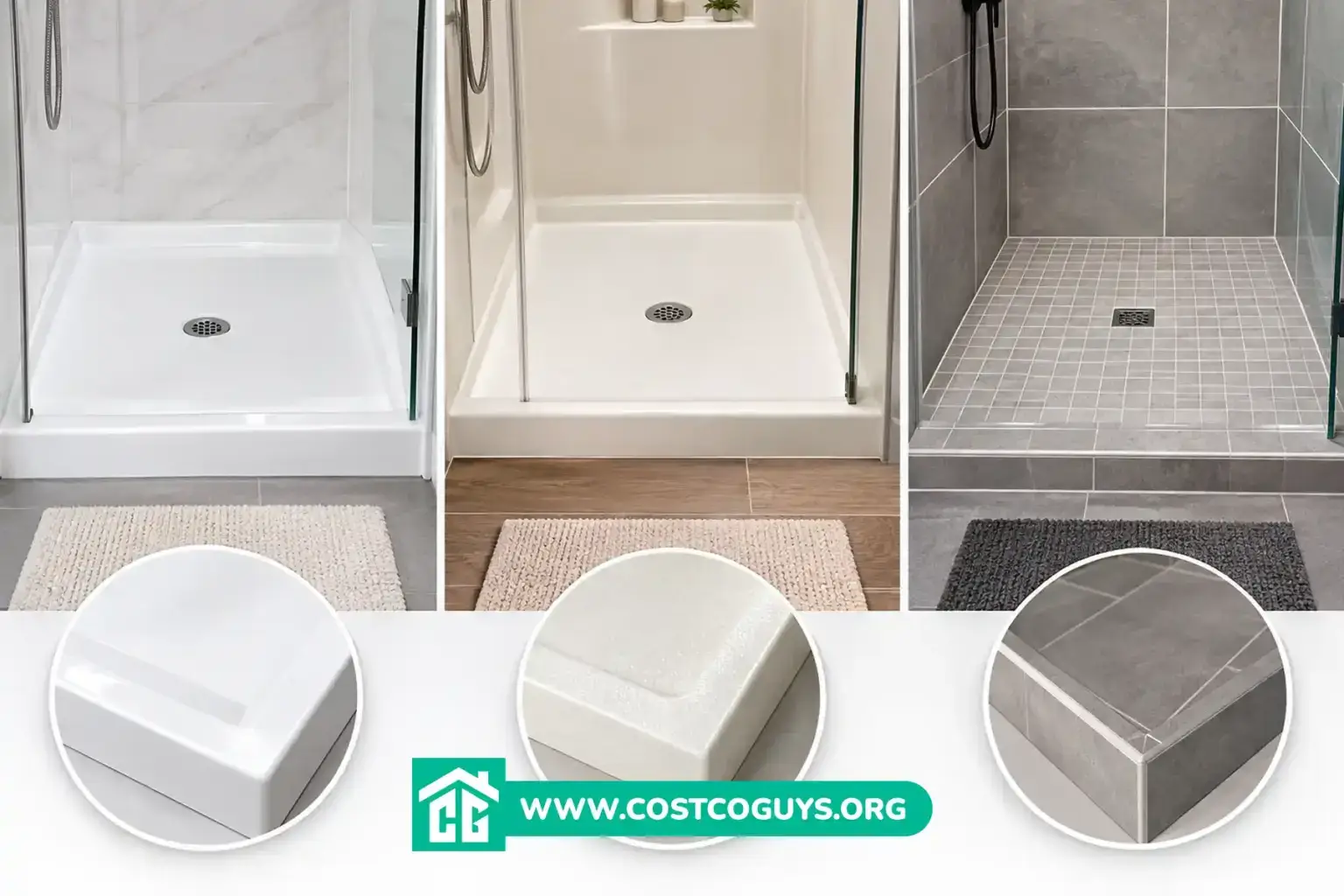
Acrylic shower bases use a molded acrylic surface backed by fiberglass for rigidity. They resist stains, feel warm underfoot, and clean easily with a sponge and mild cleaner. Most big-box 30 inch acrylic pans come pre-drilled for a standard drain and ship with a textured floor for slip resistance.
Fiberglass-only pans cost less but flex slightly underfoot and show scratches over time. They work fine in a guest bathroom or rental unit where budget matters more than long-term wear.
A tileable shower base, such as a Tile Redi Redi Base, is a foam or PVC core pan with a pre-sloped surface designed to accept tile directly. You get a custom look that matches your bathroom floor, and the integrated drain and curb reduce the seams where water could find a path into the subfloor. Tileable pans cost more upfront and take longer to install since you still need to set tile on top.

| Material | Typical Price Range | Best For |
|---|---|---|
| Fiberglass | $100–$250 | Budget remodels, rental units |
| Acrylic | $150–$400 | Most homeowners, easy cleanup |
| Solid surface composite | $300–$600 | High-traffic bathrooms, heavier use |
| Tileable (foam or PVC core) | $250–$700 | Custom tile look, curbless or low-curb showers |
Current pricing data varies by retailer and region, so treat these figures as a planning range rather than a quote for a specific store or model.
How 30 Inch Shower Pan Prices Were Compared
These ranges reflect publicly listed prices from major retailers and manufacturer product pages for standard 30 inch single-threshold bases in white or off-white finishes. Colored finishes, brushed nickel drain covers, and double-threshold or barrier-free designs usually add to the base price.
Labor is not included in the ranges above. A straightforward pan swap in an existing shower typically runs a few hundred dollars in labor, while a pan replacement that involves fixing subfloor rot or relocating a drain costs more. Get a local quote before you budget a full project, since regional labor rates vary widely.
Single Threshold vs Double Threshold 30 Inch Shower Base
A single threshold shower pan has one low curb on the entry side, which fits most alcove and corner installs where one wall stays open for a door or curtain. A double threshold pan has curbs on two adjacent sides, which suits a corner shower where two sides face the room.
Pick the threshold style that matches your framed opening and door type. Swapping styles mid-project often means adjusting the wall panels or tile layout too, so confirm this detail before you order.
Common Mistakes When Buying a 30 Inch Shower Pan
People often order by the nominal size printed on the box without checking the actual footprint listed in the spec sheet. A pan that reads “30 x 30” might measure 29.75 by 29.75 inches, which matters when your framed opening is tight.
Another common mistake is ignoring drain type compatibility. Acrylic pans usually need a standard shower drain kit, while some tileable pans require a specific drain body sold separately or bundled with the base. Buying the wrong drain kit means a return trip to the store mid-project.
A third mistake is skipping the subfloor check. If the existing pan has been leaking, the plywood underneath may already be soft or delaminated. Installing a new pan over damaged subfloor just hides the problem instead of fixing it.
DIY Installation vs Hiring a Pro
Setting an acrylic or fiberglass 30 inch shower pan is a realistic weekend project for an intermediate DIYer with basic plumbing comfort. The pan sits on a mortar bed or manufacturer-approved setting material, then connects to the existing drain with standard fittings.
A tileable pan takes more skill, since you need to waterproof the seams, set backer board or cement board on the curb, and tile the surface without disturbing the pre-formed slope. If your project involves moving the drain line, cutting into subfloor, or working near an existing water leak that reached the wall or floor framing, bring in a licensed plumber. Some local jurisdictions also require a permit for drain relocation, and rules differ by area, so check with your local building department, also called the authority having jurisdiction, before you start.
Maintaining a 30 Inch Shower Pan
Acrylic and fiberglass pans hold up well with a weekly wipe-down and an occasional non-abrasive cleaner. Avoid steel wool or harsh scouring pads, which dull the glossy finish and create tiny scratches where soap scum collects.
For tileable pans, reseal the grout lines once a year and check the drain flange for gaps. Catching a small seam issue early costs a tube of caulk. Ignoring it for a season can mean pulling tile to fix a hidden leak.
Choosing the Right 30 Inch Shower Pan for Your Bathroom
An acrylic 30 inch shower pan covers most standard remodels at a moderate price and an easy install. A tileable base costs more and takes longer but gives you a custom, seamless look that matches the rest of your bathroom floor. Match the pan to your framed opening, confirm the drain location, and check the subfloor condition before you buy. That combination decides whether your new shower pan lasts one bathroom cycle or the life of the house.
Shower Pan FAQs
What size shower fits a 30 inch shower pan?
A 30 inch shower pan fits a framed shower opening of roughly 30 inches on one side, paired with a matching or longer second side such as 30×30, 30×48, or 30×60. Always check the actual product dimensions against your framed rough opening, since they can run slightly smaller than the nominal size.
Can I install a 30 inch shower pan myself?
Yes, if you’re comfortable with basic plumbing and the drain location stays the same. Acrylic and fiberglass pans are the easiest DIY option, while tileable pans require tile-setting skill on top of the base install.
Do 30 inch shower pans come with the drain included?
It depends on the brand and model. Some acrylic pans include a matching drain kit, while others, including many tileable bases, sell the drain separately or require a specific drain body. Check the product listing before you order.
What is the difference between a shower pan and a shower base?
The terms are used interchangeably in most product listings. Both refer to the molded or tileable floor piece that sits at the bottom of a shower stall and directs water to the drain.
How long does a 30 inch shower pan last?
A quality acrylic or fiberglass pan typically lasts 15 to 25 years with normal care. Tileable pans can last as long as the surrounding tile and grout stay sealed and free of cracks.
