

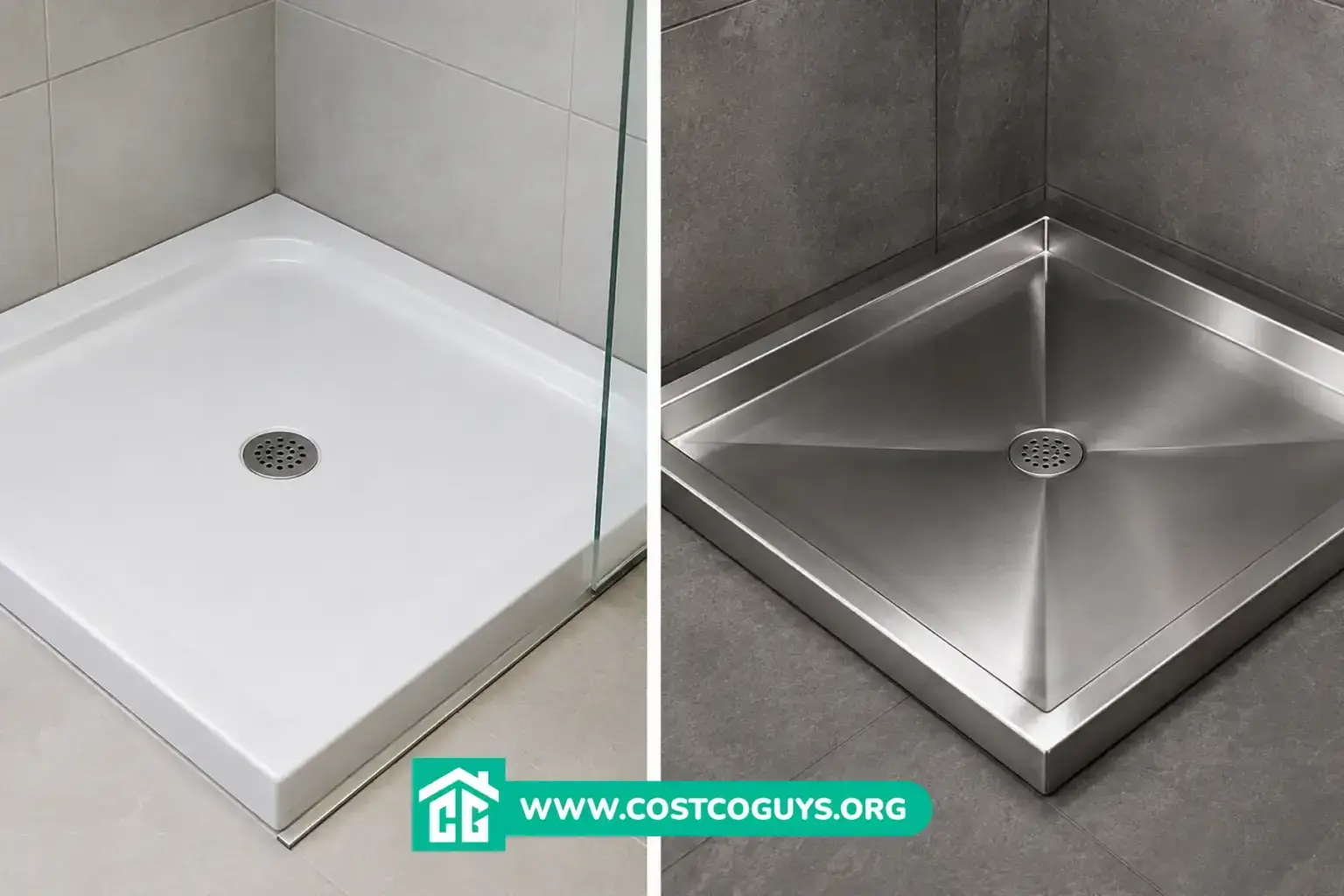

A 30×30 shower base fits square shower stalls in small bathrooms, and prices typically run from around $150 for basic acrylic models to $600 or more for stainless steel or solid surface versions. Material, threshold height, and drain placement all affect the final price.
- What Fits in a 30×30 Shower Base
- 30×30 Shower Base Prices by Material
- How Acrylic, Fiberglass, and Stainless Steel Compare
- Center Drain vs Corner Drain Layouts
- Single Threshold vs Double Threshold Options
- Popular 30×30 Shower Base Brands
- How to Measure for a 30×30 Shower Base
- DIY Installation vs Hiring a Pro
- Common Mistakes When Choosing a Shower Pan
- Choosing the Right 30×30 Shower Base
- Frequently Asked Questions
What Fits in a 30×30 Shower Base
A 30×30 shower base works for a square stall roughly 30 inches on each side, once you account for wall thickness and framing. That size suits powder rooms, basement bathrooms, and guest baths where floor space runs tight.
Most 30×30 pans include a center drain opening, a tile flange around the edges, and a textured floor surface for grip. The flange is the raised lip that tucks behind your wall backer board so water can’t seep down into the subfloor.
30×30 Shower Base Prices by Material
Price depends heavily on what the pan is made from. Acrylic and fiberglass stay budget-friendly, while stainless steel and solid surface cost more but hold up differently over time.
| Material or Type | Typical Price Range | What Affects the Price |
|---|---|---|
| Fiberglass-reinforced acrylic | $150 to $300 | Threshold style, brand, and wall flange height |
| Basic fiberglass | $120 to $220 | Thinner shell, fewer color options |
| Tile-ready waterproof pan or curb kit | $150 to $300 for the kit, plus tile cost | Membrane quality and whether slope sticks are included |
| Stainless steel, 16-gauge 304 | $400 and up | Custom sizing, gauge thickness, and finish |
| Solid surface or stone resin | $500 to $900 | Color-through material and heavier shipping weight |
Current pricing data changes often by retailer and region, so treat these as planning ranges rather than a quote. Check a current listing before you budget a final number.
How Acrylic, Fiberglass, and Stainless Steel Compare
Acrylic shower bases use a fiberglass core with a glossy acrylic top layer. This combination resists stains and scratches, and it stays easy to clean with regular bathroom cleaners.



Plain fiberglass costs less but scratches more easily over time. It also tends to show wear faster in a high-traffic bathroom.
Stainless steel pans, often 304-grade in 16-gauge thickness, resist corrosion and handle heavy use without cracking. They cost more upfront, but many owners choose them for a modern look or a commercial-style bathroom that sees frequent use.
Center Drain vs Corner Drain Layouts
A center drain sits in the middle of the pan and works well when your existing plumbing already lines up that way. This layout is the most common choice for a 30×30 square stall.
A corner drain moves the opening to one edge, which can help if your rough-in plumbing sits off-center. Switching drain location during a remodel usually means moving the drain line, so check your existing rough-in before you order a base with a different layout.
Single Threshold vs Double Threshold Options
A single threshold base has one low entry point, usually paired with a shower door on that side. This works for alcove or three-wall installations.
A double threshold base raises the curb on two sides, which fits corner installations with a neo-angle door. Pick the threshold style based on your door type and which walls will hold the shower enclosure.
Popular 30×30 Shower Base Brands
DreamLine’s SlimLine series uses high-gloss acrylic with a textured SlipGrip floor, though the 30-inch depth models often pair with a 60-inch width rather than a true 30×30 square. Confirm exact dimensions before ordering.
Fine Fixtures makes a dedicated 30×30 square pan in both single and double threshold styles, and it shows up as one of the few brands offering that exact square size off the shelf.
VEVOR sells acrylic and PVC shower pans along with tile-ready curb kits that include a membrane, slope sticks, and a stainless steel grate for a fully tiled floor look. Ove Decors offers acrylic pans in several rectangular and square sizes as well, though check current listings for 30×30 availability since sizing changes by product line.
How to Measure for a 30×30 Shower Base
Measure the finished stall opening at the floor, not the framing dimension. Framing typically runs a bit larger than the finished pan size to leave room for backer board and tile.
Check the drain rough-in location against the pan’s drain placement before you buy. Also measure your doorway and any hallway turns if you’re bringing in a rigid one-piece pan rather than a flexible curb kit.
DIY Installation vs Hiring a Pro
Installing a one-piece acrylic or fiberglass 30×30 shower base is a common DIY project for someone comfortable with basic tools. You set the pan on a mortar bed or manufacturer-approved underlayment, level it, and connect it to the existing drain.
Hire a licensed plumber if the drain needs to move, if you’re unsure about proper slope toward the drain, or if the subfloor shows signs of rot or water damage. Local permit rules can also apply to drain work, so check with your local building department, sometimes called the authority having jurisdiction, before you start.
Common Mistakes When Choosing a Shower Pan
Buying a pan sized to the rough framing opening instead of the finished stall size causes tight or crooked installs. Always work from finished dimensions.
Skipping a check on drain center distance is another common error. If the drain doesn’t line up, you’ll need to move plumbing before the pan will sit flat.
Some buyers also choose a thin, budget fiberglass pan without checking the weight rating, then find it flexes underfoot. A pan with solid structural support underneath holds up better long term, even if it costs a bit more.
Choosing the Right 30×30 Shower Base
A 30×30 shower base works best for tight bathroom layouts where a standard rectangular stall won’t fit. Acrylic remains the most practical choice for most budgets, while stainless steel or solid surface fits owners who want a heavier-duty or higher-end finish.
Confirm your drain location, threshold style, and finished stall dimensions before you order. Getting those three details right avoids a return shipment and keeps your remodel on schedule.
Frequently Asked Questions
What size shower door fits a 30×30 shower base?
Most 30×30 pans pair with a neo-angle or pivot shower door sized for a 30-inch by 30-inch opening. Check the specific door manufacturer’s fit chart since actual glass panel sizes vary slightly by brand.
Does a 30×30 shower base include the drain?
Some pans include a drain and cover, while others sell the base only. Check the product listing closely, since this detail changes the total cost of your project.
Can I install a 30×30 shower base over any subfloor?
Most acrylic and fiberglass pans work over plywood, cement board, or concrete subfloors. Confirm the manufacturer’s approved subfloor types before installation, since some pans need a mortar bed for full support.
Is fiberglass or acrylic better for a small shower pan?
Acrylic generally resists scratches and stains better than plain fiberglass, and it keeps its finish longer with regular cleaning. Fiberglass costs less but tends to show wear sooner in daily use.
Can I convert a 30×30 shower stall to a tiled floor instead of a pan?
Yes, a tile-ready curb kit with a waterproof membrane lets you tile the shower floor directly instead of using a preformed pan. This route takes more labor but gives you a custom look that matches the rest of the tile work.
