

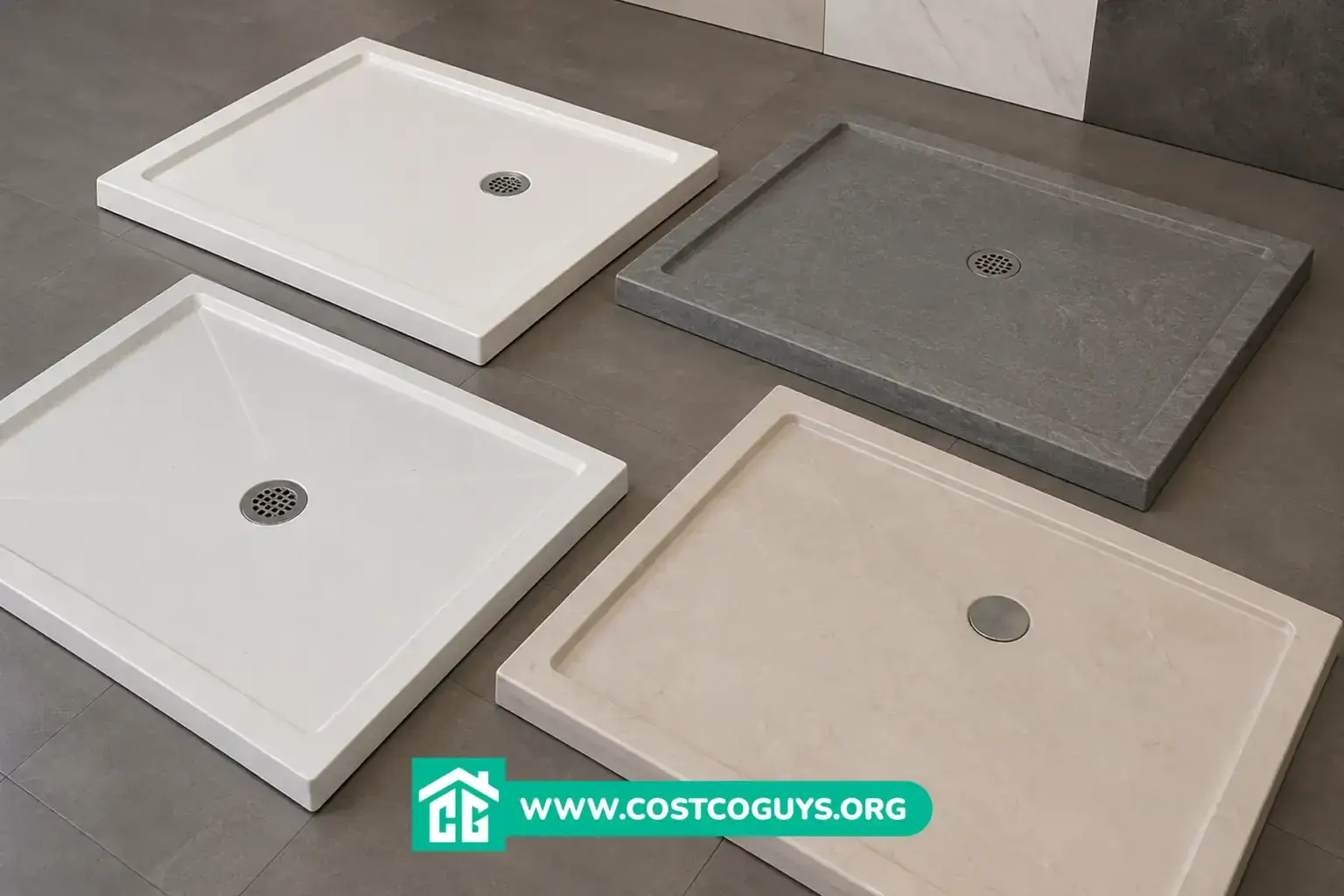

A 48×60 shower base fits a standard alcove opening and works with acrylic, fiberglass-reinforced, tileable, or solid surface materials. Expect to pay $350 to $1,400 for the base alone, depending on the material and drain style, before labor.
- 48×60 Shower Base Price and Specs at a Glance
- Shower Base Materials for a 48 x 60 Pan
- Drain Configuration Options for This Size
- Acrylic vs Tileable 48×60 Shower Base
- Curbless and Barrier-Free 48×60 Shower Bases
- What a Shower Base Kit Includes
- DIY Installation vs Hiring a Pro
- Common Mistakes With This Shower Base Size
- Choosing the Right 48×60 Shower Base
- FAQs About 48×60 Shower Bases
48×60 Shower Base Price and Specs at a Glance
This size gives you 20 square feet of shower floor, more than a standard 32×60 or 36×60 unit. That extra room matters if two people share the shower or you want space for a corner bench.
| Base Type | Typical Price Range | What Affects the Price |
|---|---|---|
| Acrylic, fiberglass-reinforced | $350 to $600 | Drain location, color, threshold height |
| Tileable pan (PVC or SMC core) | $400 to $950 | Drain type, curb configuration, bench add-ons |
| Solid surface | $450 to $750 | Finish, drain cover material, brand |
| Barrier-free or curbless tileable | $550 to $1,400 | Linear drain length, ramped entry, kit inclusions |
These are editorial planning ranges pulled from current retailer listings, not a local quote. Freight shipping and drain assemblies sold separately can add $50 to $150 to the total.
Shower Base Materials for a 48 x 60 Pan
Acrylic bases, like the DreamLine SlimLine line, use high-gloss acrylic reinforced with fiberglass over a rigid backing. They install fast, resist stains, and come pre-formed with the slope built in. You skip the mud bed entirely.
Tileable shower pan kits use a pre-sloped polystyrene or PVC core with a fabric or SMC top layer designed to bond with thinset and tile. These let you match the pan to your tile shower floor instead of showing a visible acrylic edge. They cost more but give you a custom look that acrylic can’t match.
Solid surface bases are a non-porous composite material that resists mold and doesn’t need sealing. They’re heavier than acrylic and often marketed for their easy to clean surface and consistent color through the material, not just on top.


Drain Configuration Options for This Size
A 48×60 shower base typically comes in four drain layouts. Center drain works for most straight-in showers. Left drain or right drain shifts the fitting toward one side, useful when your existing rough-in plumbing isn’t centered.
Linear or trench drains run along one edge instead of sitting in the middle. They pair well with barrier-free designs and let you slope the floor in one direction only, which some installers find easier to tile.
- Center drain: standard rough-in, most common in stock DreamLine and Tile Redi bases
- Left or right drain: matches offset plumbing without moving the drain pipe
- Linear trench drain: single-direction slope, common in tileable and curbless kits
- Square drain: a compact grate option often paired with tileable pans
Check your existing drain location before you order. Moving a drain pipe means opening the subfloor, and that’s a job for a licensed plumber, not a weekend DIY swap.
Acrylic vs Tileable 48×60 Shower Base
Acrylic bases win on installation time and cost. Most go in within a few hours once the subfloor is level, and you don’t need tile skills to finish the floor.
Tileable pans win on appearance and long-term flexibility. If you ever change your bathroom decor, you can retile the shower floor without replacing the whole base. They also handle high-traffic or rental properties better since there’s no acrylic surface to scratch or chip.
If your budget is tight and you want the shower running fast, acrylic makes sense. If you’re already tiling the walls and want a seamless look, a tileable pan is worth the extra cost.
Curbless and Barrier-Free 48×60 Shower Bases
A barrier-free or roll-in shower base sits flush with the bathroom floor instead of having a raised curb. This size works well for a barrier-free layout because 48×60 gives enough depth for a wheelchair-accessible turning radius in many bathrooms.
Curbless installation usually pairs with a linear drain and a slightly deeper subfloor recess to create the slope without a curb. Local building codes may set minimum clearance and slope requirements for accessible showers, so check with your local building department, also called the AHJ (authority having jurisdiction), before finalizing the layout.
What a Shower Base Kit Includes
Most kits include the base itself, a drain assembly, and sometimes a tileable flange for the wall transition. Read the listing closely. Many tileable pans list the drain kit as sold separately, which adds $40 to $120 depending on the finish.
Look for a base that lists a slope of about 1/4 inch per foot toward the drain. That slope matches standard plumbing code drainage requirements in most jurisdictions, though your local plumbing code can vary, so confirm with your AHJ if you’re pulling a permit.
Internal link opportunity: link to a Costco Guys guide on shower pan drain installation.
DIY Installation vs Hiring a Pro
Setting an acrylic base on a level, properly framed subfloor is realistic for an intermediate DIYer with basic tools. You’re mostly securing the base, connecting the drain fitting, and sealing the perimeter.
Hire a plumber or licensed contractor when the job involves moving the drain rough-in, when the subfloor shows soft spots or water damage, or when you’re converting a tub space to a curbless shower that changes the floor framing. Active leaks that have reached the subfloor, walls, or nearby electrical areas also call for a professional before you install anything new.
Common Mistakes With This Shower Base Size
The most expensive mistake is ordering before measuring the rough opening. A 48×60 base needs a true 48×60 framed space, and older homes often run slightly out of square. Measure at three points along each wall, not just once.
Another common issue is skipping the waterproof membrane behind a tileable pan. The pan itself sheds water, but the wall-to-floor transition still needs proper waterproofing, or you risk moisture getting behind the tile over time.
Choosing the Right 48×60 Shower Base
For most bathroom remodels, a 48×60 shower base gives you the extra floor space of a larger shower without needing custom framing. Acrylic works best for speed and budget, tileable pans work best for a custom finish, and barrier-free layouts work best when accessibility matters.
Match the drain location to your existing plumbing first, then choose the material based on how much time and budget you have for the project. That order keeps costs predictable and avoids a mid-project plumbing surprise.
FAQs About 48×60 Shower Bases
Does a 48×60 shower base fit a standard alcove?
Yes, in most cases. Alcove framing for this size is common in bathroom remodels, but always confirm your rough opening measurements before ordering since older homes can run slightly off standard dimensions.
Can I install a 48×60 shower base myself?
If your subfloor is level and the drain location already matches, most DIYers can install an acrylic base in a few hours. Tileable pans take longer since you also need to set tile over the surface.
What’s the difference between center drain and left or right drain?
Center drain sits in the middle of the pan, while left or right drain shifts the fitting to one side to match offset rough-in plumbing. Pick the option that matches your existing drain pipe location to avoid moving plumbing.
Is a tileable shower pan better than acrylic for a 48×60 shower?
Neither is universally better. Acrylic costs less and installs faster, while a tileable pan gives you a seamless tile floor that matches the rest of the shower.
Do 48×60 shower bases come with the drain included?
It depends on the brand and kit. Many tileable pans sell the drain assembly separately, so check the product listing before you budget the full cost.
