

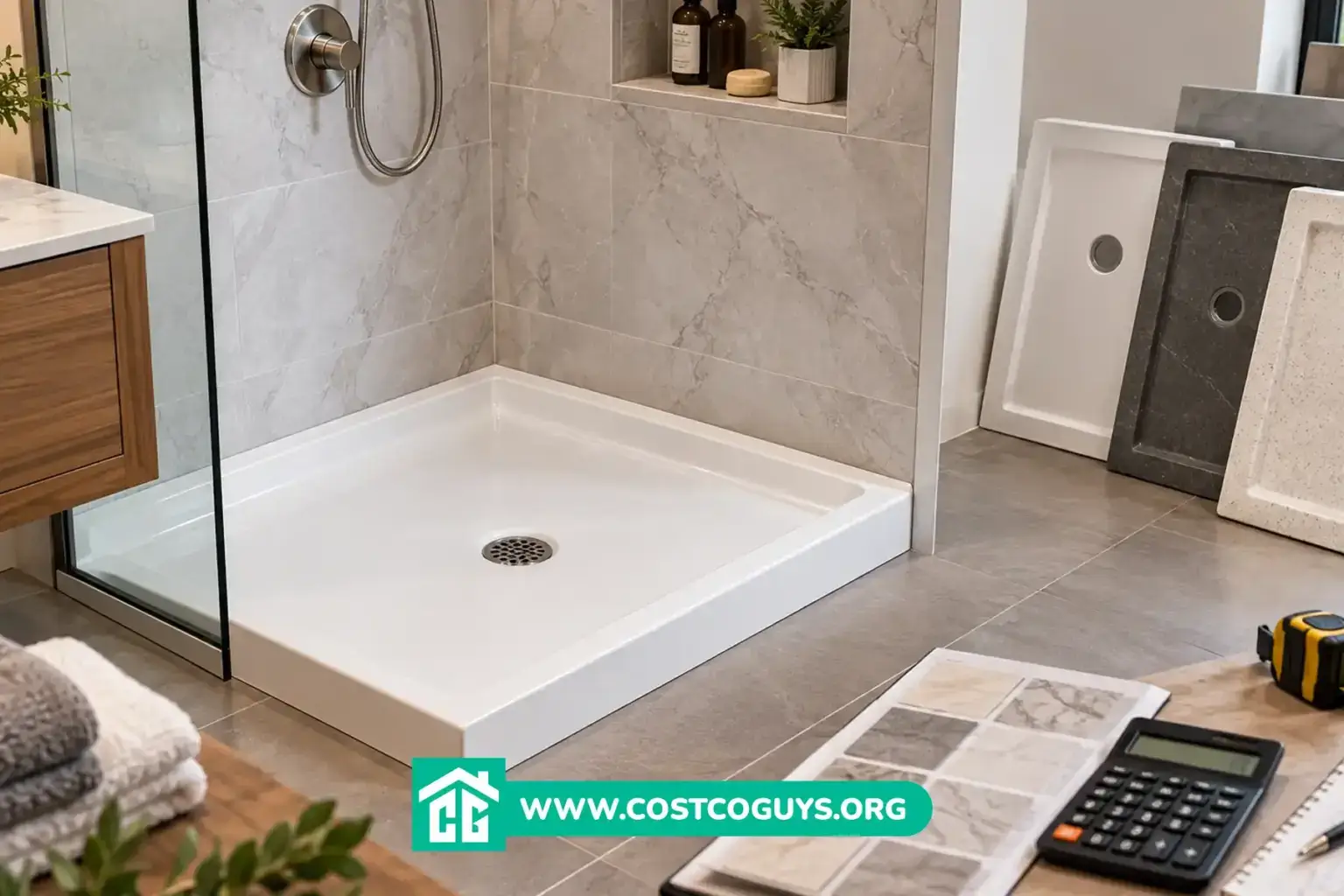

A 36 inch shower base typically costs between $200 and $700, with most 36 x 36 acrylic models landing around $300 to $500 before shipping. The exact price depends on material, drain position, and whether you buy the base alone or as part of a full shower kit.
- What Comes With a 36 Inch Shower Base
- 36 x 36 Shower Base Price Ranges by Material
- Acrylic vs Composite Stone Shower Pans
- Center Drain vs Corner Drain Placement
- Ordering Online: Shipping and What to Expect
- Installing a 36 Inch Shower Base Yourself
- Common Mistakes When Sizing a Shower Base
- Choosing the Right 36 Inch Shower Base
- Shower Base FAQs
What Comes With a 36 Inch Shower Base
A shower base is the floor pan your shower sits on. It’s the part that catches water and directs it to the drain, and it sits underneath the wall panels and door. Most 36 x 36 shower base listings include just the pan itself, a drain cover, and installation instructions. Some retailers bundle a compression drain or offer a full kit with matching wall panels.
Before you order, check the product page closely. A lot of buyers assume the drain fitting is included, then find out at install time that it’s sold separately. If the listing doesn’t say “drain included,” plan on buying a 2 inch compression drain to match.
36 x 36 Shower Base Price Ranges by Material
Material drives most of the price difference between one shower pan and the next. Here’s a realistic breakdown based on current retailer and manufacturer listings.
| Material | Typical Price Range | What Affects the Price |
|---|---|---|
| Acrylic (fiberglass-reinforced) | $200 – $550 | Brand, threshold height, textured floor finish |
| Solid composite stone | $450 – $650 | Thickness, slip-resistant coating, drain style |
| Ready-to-tile (foam core) | $300 – $600 | Waterproofing membrane quality, tile flange design |
These figures come from current listings on major home improvement retailers and manufacturer product pages, so treat them as a planning range rather than a guaranteed local price. Freight shipping for a solid base can add $50 to $150 on top of the product cost, especially for composite stone models that weigh more.
Acrylic vs Composite Stone Shower Pans
Acrylic is the most common material for a 36 inch shower base, and it’s usually the budget-friendly pick. It’s lightweight, easy for one person to carry, and comes in a wide range of white and off-white finishes. The tradeoff is that cheaper acrylic pans can flex slightly underfoot if they’re not fully supported during installation.


Solid composite stone bases cost more, but they feel more solid and typically hold up better to scratches over time. They’re heavier too, so a two-person install makes the job a lot easier. If you’re after a traditional look with a slightly warmer feel underfoot, composite stone edges out acrylic, though you’ll pay for it.
Center Drain vs Corner Drain Placement
Most 36 x 36 shower pans come with a center drain, which fits the plumbing rough-in used in the majority of alcove showers built in the US. If your existing drain sits off to one side, you’ll need a left or right offset drain base instead of a standard center drain model.
Corner shower bases are a different product entirely. A 36 x 36 corner base is designed to fit a neo-angle installation with two adjoining walls, not a straight alcove. Check your rough-in measurements and drain location before you order, because relocating a drain after the fact adds real plumbing cost.
Ordering Online: Shipping and What to Expect
Shipping times for a shower base vary by material and by how the retailer ships it. Lightweight acrylic pans often ship within a few days using standard parcel carriers. Heavier composite stone bases usually go out on freight trucks, and some suppliers note orders leaving the warehouse within 24 hours but taking a week or more to arrive depending on your location.
Inspect the box the moment it arrives. Shower bases crack in transit more often than people expect, and most retailers only cover freight damage if you report it within a short window, often 48 hours. Take photos of the packaging and the base itself before you sign for delivery, and contact customer service right away if you spot a crack, chip, or warped edge.
Internal link opportunity: link to a Costco Guys guide on shower wall panel installation.
Installing a 36 Inch Shower Base Yourself
Setting a shower base is a manageable weekend project for a comfortable DIYer, but it’s not a purely cosmetic job. You’re building a water barrier over your subfloor, and a bad seal here causes hidden leaks that can rot framing before anyone notices.
Most manufacturers post a written instruction sheet and often a short install video that walks through leveling the base, applying the waterproof flange, and connecting the drain. Follow that specific product’s instructions closely, since mortar bed requirements and flange details differ between brands. Dry-fit the base first, check it’s level in both directions, and confirm the drain lines up before you commit to any adhesive or mortar.
Call a licensed plumber if you’re relocating the drain, if your subfloor shows soft spots or water damage, or if local permit rules apply to your project. Plumbing and waterproofing rules can vary by city, so check with your local building department, also called the authority having jurisdiction, before you start if you’re unsure whether a permit applies.
Common Mistakes When Sizing a Shower Base
The biggest mistake homeowners make is measuring the existing shower stall instead of the actual stud-to-stud rough opening. A 36 x 36 shower base needs a slightly larger rough opening to account for the wall panel thickness, so measure against the framing, not the old tile surface.
Another common issue is ordering a base with the wrong drain style for the existing plumbing. Always confirm center, left, or right drain placement against your current rough-in before you purchase, since returns on heavy freight items can be expensive and slow.
Choosing the Right 36 Inch Shower Base
A 36 inch shower base works well for most standard bathroom remodels, and picking the right one comes down to three things: matching your drain location, picking a material that fits your budget and durability needs, and confirming your rough opening before you order. Acrylic covers most budgets, composite stone adds durability for a higher price, and either one gives you a solid, low-maintenance shower floor when it’s installed and waterproofed correctly.
If you’re still comparing options, start with your existing drain location and rough-in measurements. That single step narrows the field faster than material or finish ever will.
Shower Base FAQs
What size rough opening do I need for a 36 x 36 shower base?
Most 36 x 36 shower bases need a stud-to-stud rough opening close to 36 inches on each side, though this varies slightly by brand. Check the specific product’s installation instructions for the exact rough-in dimensions before you frame or order.
Can I install a shower base without professional help?
Many basic DIYers can install a shower base themselves, especially with a matching drain and no relocation involved. If the drain needs to move or your subfloor has water damage, bring in a licensed plumber.
Do I need a permit to replace a shower base?
That depends on your local building department. Simple like-for-like replacements often don’t require a permit, but rules vary, so check with your local authority having jurisdiction before starting the project.
How long does shipping take for a shower base?
Lightweight acrylic bases often arrive within a few days. Heavier composite stone bases usually ship freight and can take a week or longer depending on your location and the supplier.
What’s the difference between a shower base and a shower pan?
These terms are generally used interchangeably in the industry. Both refer to the waterproof floor unit that sits under your shower walls and directs water to the drain.
