

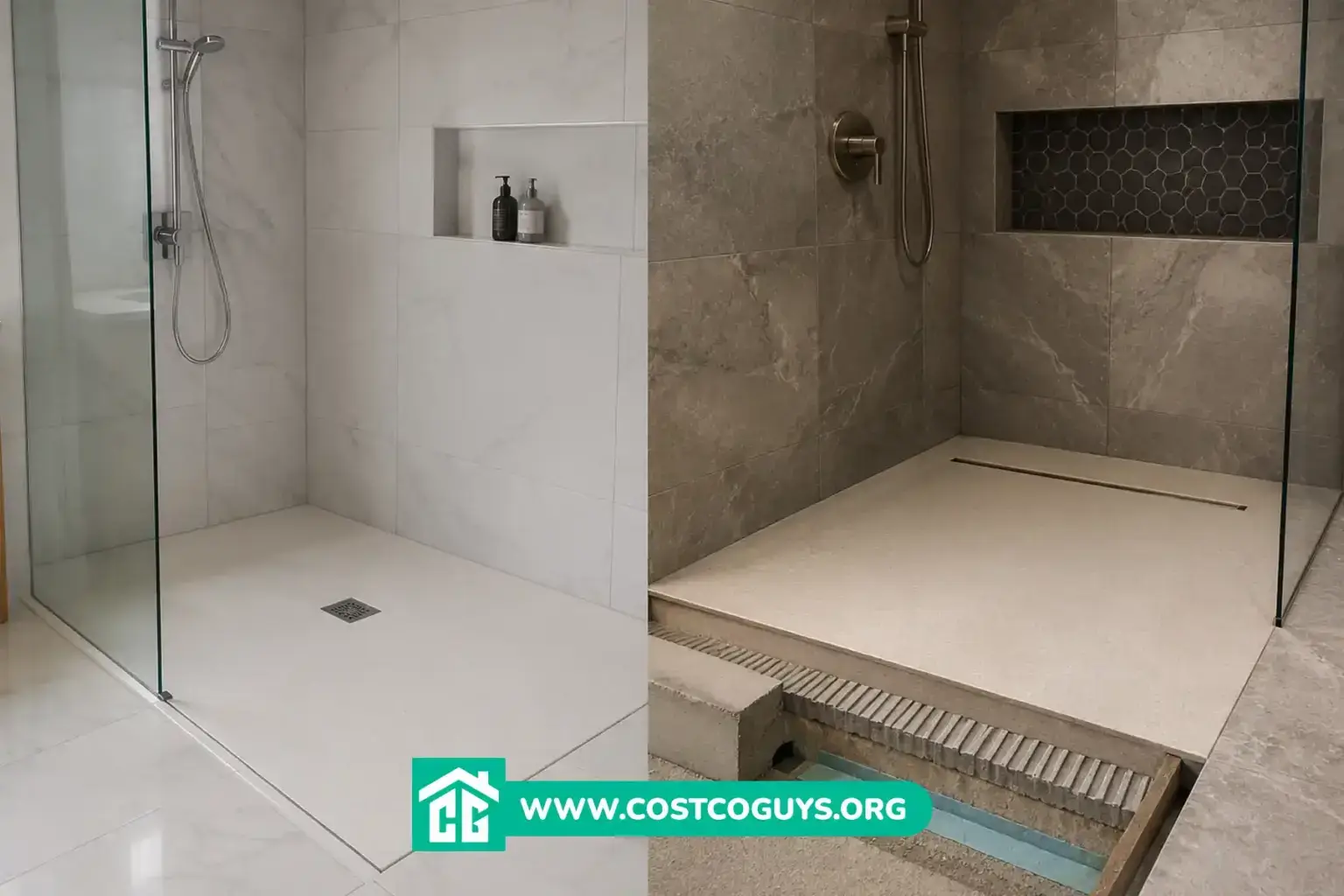

Zero threshold shower pans cost $200 to $600 for the pan itself. Full professional installation runs $900 to $2,300 in 2026. Price depends mostly on the pan material and whether your contractor needs to recess the subfloor for a flush transition.
- What Makes a Shower Pan “Zero Threshold”
- Zero Threshold Shower Pan Cost Breakdown for 2026
- Zero Threshold vs Single Threshold Shower Bases
- SMC, Solid Surface, and Acrylic: Which Material Holds Up
- Sizes, Drain Placement, and Custom Fit Options
- How to Install a Zero Threshold Shower Pan
- What Actually Drives Your Total Price
- Mistakes That Cost You More Later
- DIY Installation vs Hiring a Licensed Plumber
- Zero Threshold Shower Pans: Final Cost Takeaway
- Zero Threshold Shower Pan Questions
- Are zero threshold shower pans worth the extra installation cost?
- Can you install a zero threshold shower pan without cutting the subfloor?
- What size zero threshold shower pan fits a standard bathroom?
- Do zero threshold shower pans work with any shower door?
- How long do zero threshold shower pans last?
- Is a zero threshold shower pan the same as a curbless tile shower?
What Makes a Shower Pan “Zero Threshold”
A zero threshold shower pan sits flush with your bathroom floor instead of raised on a curb. There’s no step to trip over and no lip to swing a wheelchair or walker over. Most zero threshold shower pans measure just 1 to 1.3 inches thick. They’re designed to be recessed into the subfloor. That way, the finished surface lands nearly level with the rest of the room.
The Findepot zero threshold shower pan sits 1.3 inches tall when floor mounted. It drops to a 1/8-inch transition once recessed. That tiny lip still keeps water inside the shower’s drainage system. It stays safe for wheelchair users and seniors with limited mobility. This is different from a low threshold base, which trims the step down but doesn’t eliminate it. It’s also different from a true curbless tile shower, which uses a sloped mortar bed instead of a manufactured pan.
Zero Threshold Shower Pan Cost Breakdown for 2026
Industry pricing sources don’t fully agree on installed cost, and the gap comes down to what each figure actually includes. Angi and This Old House both cite $700 to $1,000 for accessible, curbless pan installation. That number leans heavily on the extra labor for floor modification, not the pan itself. Angi’s broader shower pan replacement figure runs $900 to $2,300, averaging around $1,620 across all pan types. That range includes standard curbed models, which install faster. Homewyse’s 2026 calculator puts total installed cost between $1,536 and $2,967, a range built from national labor rates plus materials.
| Item or Service | Typical Cost Range | What Affects the Price |
|---|---|---|
| SMC or solid surface pan (material only) | $460 to $600 | Size, drain configuration, brand |
| Acrylic single threshold pan (material only) | $210 to $500 | Size, threshold height, finish |
| Slip resistant coating upgrade | $200 to $620 | Texture type, pan material |
| Professional installation (labor) | $500 to $1,700 | Subfloor recessing, drain relocation |
| Full installed project | $900 to $2,967 | Pan type, project size, region, permits |
| Permits | $150 to $500 | Local code requirements |
Home Depot sells a Transolid zero threshold alcove pan with a center drain for around $464. A similar model with an end drain costs about $498. Those figures reflect the pan alone. Adding a new shower door typically costs another $600 to $1,350 for parts and labor. Tile work for the walls can add $1,800 to $6,850 if you’re not keeping existing surrounds.
Zero Threshold vs Single Threshold Shower Bases
These two terms get mixed up constantly, and the difference matters for your budget. A single threshold shower base, like the DreamLine SlimLine sold at Lowe’s, keeps a real curb. That curb runs between 1.75 and 2.75 inches tall. You can set it on top of the existing subfloor, with no cutting or recessing required. That’s why SlimLine pans typically run $210 to $500 and install in a day.
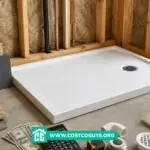

A true zero threshold shower pan needs the contractor to cut into the subfloor. The drain also has to drop to match the pan’s near flat profile. That extra carpentry and plumbing work explains the higher labor cost. Curbless installs cost more than a single threshold swap, even when the pans themselves are priced similarly. You might not need full wheelchair clearance for your accessible shower. In that case, a single threshold base can save real money.
SMC, Solid Surface, and Acrylic: Which Material Holds Up
Sheet molded compound, known as SMC, is a fiberglass-reinforced composite used in most budget to mid-range zero threshold pans. It’s rigid, resists cracking under foot traffic, and comes with a slip resistant textured floor as standard. Findepot and Woodbridge both build their zero threshold lines around SMC construction with a reinforced grid underneath for extra support.
Solid surface pans, like the Core Zero Threshold model, use a polymer-reinforced sheet compound. That material can be sanded and polished if it gets scratched. That repairability makes solid surface a better pick for households expecting decades of daily use. It typically costs more than SMC, though. Acrylic pans are the material behind most DreamLine SlimLine bases. They offer a glossy, stain resistant finish and a lighter overall weight. But they’re mainly sold in single threshold, not true zero threshold, configurations.
Sizes, Drain Placement, and Custom Fit Options
Zero threshold shower pans come in standard alcove sizes, from 32 by 32 inches up to 60 by 36 inches. That range covers most bathroom renovation projects without custom fabrication. A 36 inch depth is common for tighter bathrooms. A 60 by 36 size gives wheelchair users enough turning space inside the shower itself.
Drain placement affects both plumbing cost and layout flexibility. Center drain pans work best when your existing plumbing already sits in the middle of the shower footprint. Corner drain and reversible left or right drain pans give you more options if you’re relocating the drain anyway. You’re not locked into matching the exact spot your old tub or shower used.
How to Install a Zero Threshold Shower Pan
Installation starts with removing the old tub or shower base. The contractor then cuts the subfloor to create a recessed pocket sized to the new pan. The contractor drops and reconnects the drain at the lower height. They check the slope toward it, then dry fit the pan before securing it. A waterproof membrane or barrier strip goes around the edges to keep water from reaching the subfloor. Tile flange sealing and wall surround installation follow next.
Getting the pan level and properly plumb matters more here than on a standard curbed base. There’s no lip to catch a small drainage mistake. Even a slight miscalculation in slope can leave standing water instead of directing it toward the drain.
What Actually Drives Your Total Price
This cost estimate reflects informed editorial judgment based on 2026 retail and contractor pricing data. It’s not an official or audited figure, and it can shift with your local market. Material choice moves the number first. SMC and solid surface pans cost more than basic acrylic. They hold up better, though, to the constant water exposure that zero threshold designs face. Subfloor condition matters just as much. A contractor working over a slab charges more than one working with an open joist bay. The same goes for a floor that needs structural reinforcement first.
Drain relocation adds plumbing labor whenever the new pan’s drain doesn’t line up with your existing pipe. Permit requirements vary by city. Some jurisdictions require inspection for any project that alters the subfloor or moves a drain line. Regional labor rates round out the picture, with installation typically costing more in major metro areas than in smaller markets.
Mistakes That Cost You More Later
Skipping the waterproofing step around the pan’s edges is the most common and most expensive mistake homeowners make. Water that gets under an improperly sealed flange can rot subfloor framing before anyone notices a leak. That turns a shower pan job into a full floor replacement.
Choosing a pan size that doesn’t match your framing is another frequent issue. Buyers sometimes order online without measuring the actual alcove opening. They then discover the pan is too wide or too narrow once it arrives. Always measure the existing space and check the manufacturer’s trim allowances before you order.
DIY Installation vs Hiring a Licensed Plumber
Setting a single threshold acrylic pan on an existing subfloor is realistic for an experienced DIYer with basic plumbing skills. Cutting into a subfloor to recess a true zero threshold pan is a different job. It involves structural work, drain relocation, and waterproofing details that are easy to get wrong on a first attempt.
Hiring a licensed plumber or contractor for a curbless shower conversion protects you against leaks and mold. Those problems often come from a poorly sealed pan. It also ensures the drain slope meets code. That matters if you plan to sell the home later and need the work to pass inspection.
Zero Threshold Shower Pans: Final Cost Takeaway
Zero threshold shower pans typically cost $200 to $600 for the pan alone. Full installed projects land between $900 and $2,967, depending on subfloor work, drain relocation, and material. SMC and solid surface pans cost more upfront than acrylic single threshold bases. But they’re built specifically for the recessed, flush installation that makes a shower truly wheelchair accessible. Getting quotes from a licensed installer who has handled curbless conversions before is the best way to start. That’s how you pin down what your specific bathroom will actually cost.
Zero Threshold Shower Pan Questions
Are zero threshold shower pans worth the extra installation cost?
For anyone using a wheelchair, walker, or planning to age in place, yes. The subfloor recessing work costs more upfront. But it removes the fall risk that a curbed shower creates. That risk matters most for seniors and people with mobility limitations.
Can you install a zero threshold shower pan without cutting the subfloor?
Not if you want a true flush transition. Some manufacturers offer a low threshold version with a small 1/2 to 1 inch lip that skips the recessing step. That’s technically a low threshold base, though, not a zero threshold shower pan.
What size zero threshold shower pan fits a standard bathroom?
Most standard bathrooms fit a 60 by 32 inch or 60 by 36 inch zero threshold shower pan. That size matches common alcove openings left by a removed tub. Smaller bathrooms often use a 48 by 36 inch size instead.
Do zero threshold shower pans work with any shower door?
Yes, though frameless and semi-frameless sliding doors pair best with the low profile design. They don’t rely on a raised curb for the door track. Confirm your door’s minimum threshold requirement before ordering, since a few models still expect a small lip.
How long do zero threshold shower pans last?
SMC and solid surface pans commonly carry manufacturer warranties in the 15 to 30 year range. Some brands, like Freedom Shower Systems, back their curbless pans for 30 years. Actual lifespan depends heavily on how well the installer waterproofs the pan’s edges.
Is a zero threshold shower pan the same as a curbless tile shower?
No. A zero threshold shower pan is a pre-manufactured base you install as a single unit. A curbless tile shower, by contrast, uses a custom mortar bed sloped to a linear or point drain. Tile showers cost more and take longer to build, but offer more design flexibility.
