

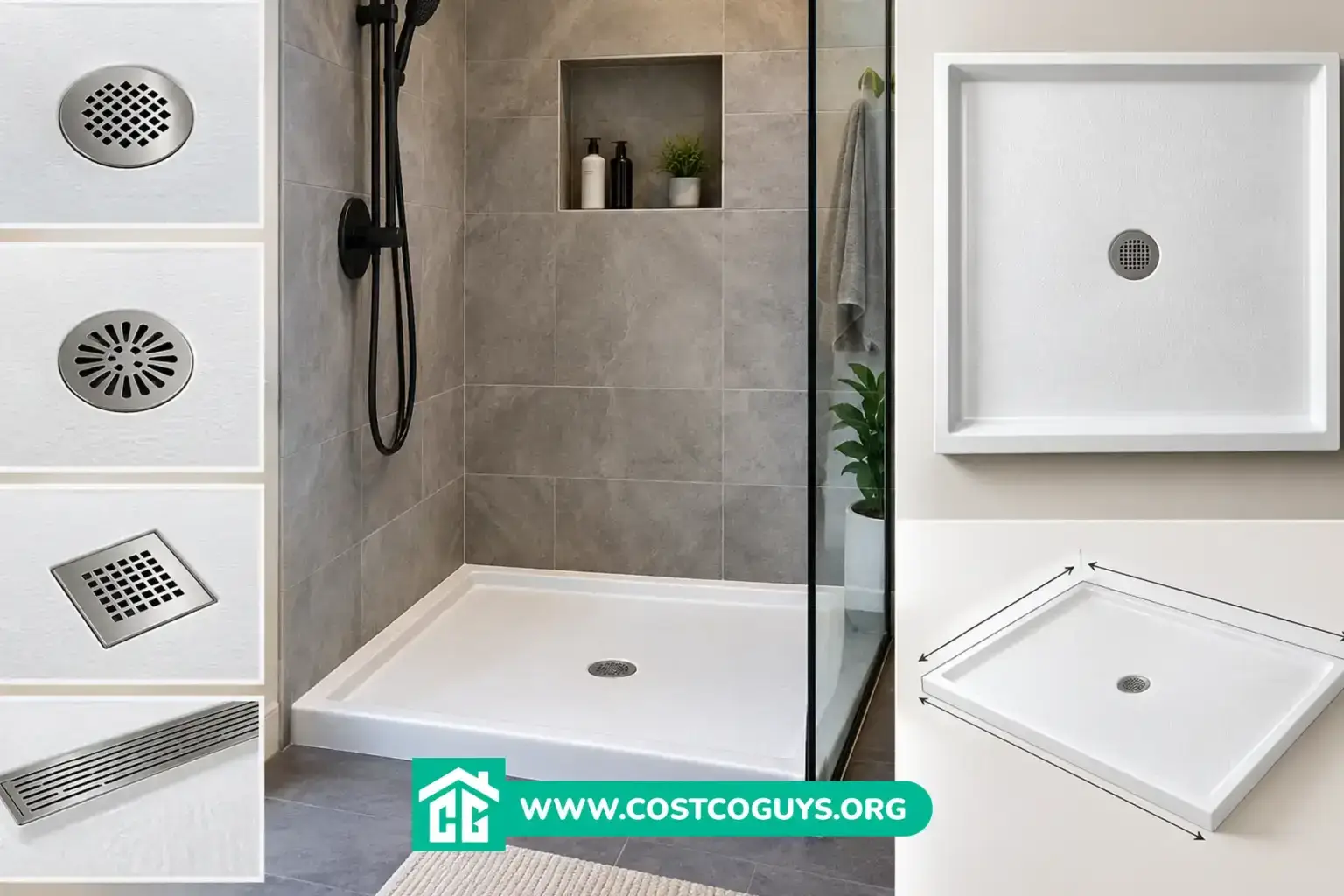

A 30 x 36 shower pan fits compact bathrooms, small remodels, and most RVs that need a rectangular base without eating up floor space. Expect to pay between $180 and $550 depending on material, with acrylic and ABS plastic pans at the lower end and solid surface bases at the top.
- What Fits in a 30 x 36 Shower Stall
- How Much a 30 x 36 Shower Pan Costs in 2026
- Center Drain, Left Drain and Right Drain Explained
- Acrylic, Fiberglass, ABS and Solid Surface Compared
- RV Shower Pans vs Residential Shower Bases
- Installing a 30 x 36 Shower Pan Yourself
- Common Mistakes to Avoid With This Size
- Picking the Right 30 x 36 Shower Pan for Your Project
- 30 x 36 Shower Pan FAQs
What Fits in a 30 x 36 Shower Stall
A 30 x 36 shower pan measures 30 inches on one side and 36 inches on the other, giving you a rectangular base instead of a square one. That extra 6 inches of length compared to a 30 x 30 pan makes a real difference if you’re tall or just want more room to move without bumping the walls.
This size shows up in two very different worlds. Homeowners use it for smaller bathroom remodels, basement baths, and tight closets converted into a shower. RV owners and camper builders reach for it constantly, since 30 x 36 lines up with the standard shower stall footprint in a huge range of travel trailers and fifth wheels. If you searched for a camper shower pan or an RV shower pan, this is likely the size you need.
How Much a 30 x 36 Shower Pan Costs in 2026
Pricing depends heavily on material and where you buy. Lightweight ABS plastic pans built for RVs run cheaper than acrylic or solid surface bases made for permanent home installation. The table below reflects editorial research from manufacturer and retailer listings, not a guaranteed local price.
| Pan Type | Typical Cost Range | What Affects the Price |
|---|---|---|
| RV/camper ABS plastic pan | $180 to $230 | Brand, whether a foam support base is included, shipping to your location |
| Acrylic single-threshold base | $200 to $350 | Threshold height, flange style, finish quality |
| Fiberglass reinforced base | $150 to $280 | Thickness, whether it includes a full-length support pad |
| Solid surface or composite base | $300 to $550 | Material thickness, structural rib support, mortar-set installation requirements |
How We Estimated These Ranges
These figures come from checking current listings across major retailers and manufacturer sites, including RV-specific suppliers and home improvement chains. Material type drives most of the price gap here. An ABS plastic RV pan skips the reinforced flange and mortar-bed design that a residential acrylic or solid surface base needs, which keeps manufacturing costs down.
Treat these numbers as planning ranges. Local retailer pricing, sales, and installation costs will shift your actual total, so get a current quote before you budget a project around any single figure.

Center Drain, Left Drain and Right Drain Explained
Drain placement matters more than people expect when shopping for a shower pan. A center drain sits in the middle of the base and works for most standalone installations, including RVs, since it doesn’t depend on which wall your plumbing runs behind.
Left drain and right drain configurations position the drain closer to one side. You’d choose one of these when your existing plumbing rough-in doesn’t line up with center, which is common in bathroom remodels where you’re reusing old pipe locations instead of moving them. Buying the wrong drain configuration is one of the most common and expensive mistakes homeowners make, since it can mean cutting into a subfloor a second time.
Before you order, measure from the wall to your existing drain stub-out. That single measurement tells you whether you need center, left, or right.
Acrylic, Fiberglass, ABS and Solid Surface Compared
Acrylic bases dominate the residential market. They’re fiberglass-reinforced underneath a glossy acrylic top layer, which resists stains and cleans easily. A single-threshold acrylic pan, like the Swiss Madison Voltaire line, typically ships with a low step-in height and a three-sided flange to stop water from sneaking behind the wall panels.
ABS plastic pans, the type most RV manufacturers use, trade some durability for weight savings. A lighter pan matters when your RV has a strict weight limit, and ABS still holds up fine for the lighter foot traffic a camper shower sees compared to a daily-use home bathroom.
Solid surface and composite bases, sometimes sold under names like Transtone, use a sheet-molded compound with structural ribs underneath. They cost more but create a flex-free, watertight base when set in thinset mortar. If you’re doing a full renovation and want the base to outlast several bathroom refreshes, this material holds up the best over time.
RV Shower Pans vs Residential Shower Bases
An RV shower pan and a residential 30 x 36 shower base look similar but aren’t interchangeable in every case. RV pans often use a forward center drain positioned closer to the front wall rather than dead center, and they typically don’t include drain fittings, so you’ll need to buy those separately.
Residential bases are built to sit on a wood subfloor with a mortar bed or direct-to-stud installation, while RV pans get set into a framed shower stall built specifically for that model’s dimensions. If you’re replacing a factory shower pan in a travel trailer, match the exact drain position and depth, not just the 30 x 36 footprint, since even a half-inch difference can leave gaps at the walls.
Installing a 30 x 36 Shower Pan Yourself
Swapping a shower pan is a reasonable DIY project for someone comfortable with basic tools, but it involves several steps that need to go in order.
| Step | What It Involves |
|---|---|
| 1. Remove the old pan | Disconnect the drain, cut any caulk or adhesive seal, and lift the pan out carefully to avoid cracking surrounding tile or wall panels |
| 2. Inspect the subfloor | Check for soft spots, water damage, or rot before setting a new pan, since a compromised subfloor won’t support the base properly |
| 3. Dry-fit the new pan | Set it in place without adhesive first to confirm drain alignment and check for gaps along the walls |
| 4. Set and seal | Apply mortar or adhesive per the manufacturer’s installation guide, then connect the drain assembly and test for leaks before sealing edges |
Drain connections are where DIY projects most often go wrong. If your drain stub-out doesn’t line up cleanly, or if you find signs of water damage in the subfloor, call a licensed plumber. Reworking drain plumbing or repairing a rotted subfloor goes beyond a straightforward pan swap and can affect your home’s structure if it’s handled poorly.
Common Mistakes to Avoid With This Size
The biggest mistake is assuming all 30 x 36 pans are dimensionally identical. Manufacturers round differently, and a pan listed as 30 x 36 might measure a quarter inch smaller once you account for the flange. Always check the manufacturer’s spec sheet against your rough opening before ordering.
Skipping the drain type check is another costly error. A center drain pan won’t work if your existing rough-in sits off to one side, and returning a shower pan after it’s been dry-fit or scuffed usually isn’t an option with most retailers.
Buyers also forget that most acrylic and solid surface pans don’t include the drain assembly. Budget for that separately, along with any mortar mix, adhesive, or caulk your installation guide calls for.
Picking the Right 30 x 36 Shower Pan for Your Project
For a home remodel, an acrylic single-threshold base in the $200 to $350 range covers most standard installations, and a solid surface pan makes sense if you want a base that holds up under mortar-set tile work for decades. For an RV or camper, stick with an ABS plastic pan built for that exact drain position, usually in the $180 to $230 range.
Whichever type you choose, confirm the drain location against your existing plumbing before you buy, and don’t skip the subfloor check if you’re replacing an old pan. Getting those two details right up front saves you from a second trip to the store and a bigger repair bill down the road.
Internal link opportunity: link to a Costco Guys guide on shower pan sizes.
30 x 36 Shower Pan FAQs
Is 30 x 36 a standard shower pan size?
Yes, it’s a common rectangular size sold by most major shower base manufacturers and widely used in RVs and campers. It’s not the most common residential size compared to 32 x 32 or 36 x 36, but retailers stock it regularly.
Can I put a glass shower door on a 30 x 36 pan?
Yes, most shower door manufacturers make frameless and framed doors sized for 30-inch openings. Measure your finished opening after the wall surround goes up, not just the pan width, since tile or panel thickness changes the final dimension.
Does a 30 x 36 shower pan work as a direct RV shower pan replacement?
It often does, since 30 x 36 is a common factory size in travel trailers. Match the drain position and depth exactly, since RV pans frequently use a forward center drain rather than one centered front to back.
What’s the difference between left drain and right drain on this size?
The drain sits closer to one side wall instead of the center, matching a specific plumbing rough-in location. Choose based on where your existing drain pipe comes up through the floor.
Do I need a permit to replace a shower pan?
That depends on your local building department. A straight pan swap using the same drain location usually doesn’t require one, but check with your local authority having jurisdiction if you’re moving plumbing or doing structural work.
