

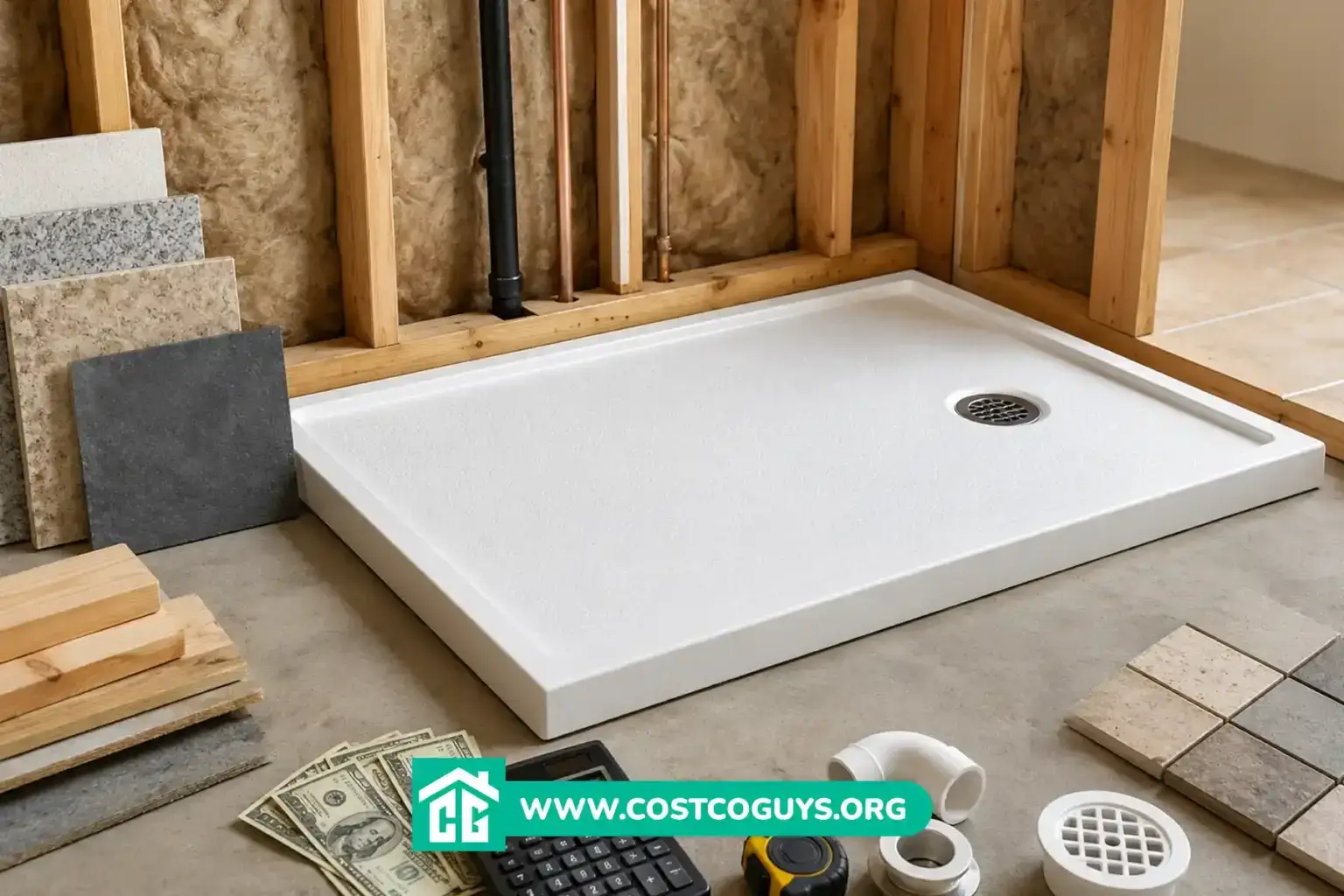

A 60 x 40 shower pan is one of the largest standard shower floor sizes sold at home centers, and it usually costs between $300 and $1,400 depending on the material, before installation. Acrylic and fiberglass bases sit at the low end, while ready-to-tile and solid surface pans cost more.
- What a 60 x 40 Shower Pan Fits
- Shower Pan Materials for a 60 x 40 Base
- 60 x 40 Shower Pan Cost Breakdown
- Drain Placement: Left, Right, Center, and Linear
- Barrier Free 60 x 40 Shower Pans for Accessibility
- DIY Versus Professional Installation
- Common Mistakes When Installing a 60 x 40 Base
- Picking the Right 60 x 40 Shower Pan
- Frequently Asked Questions
What a 60 x 40 Shower Pan Fits
A 60 x 40 pan measures 60 inches long by 40 inches wide, which gives you roughly 16.6 square feet of shower floor. That’s large enough for two people to shower comfortably, or for one person to move around without bumping the walls.
This size shows up most often in primary bathroom remodels and new construction, where the shower replaces a tub-shower combo. If your rough opening is closer to 60 x 42 or 60 x 48, double check your measurements before you order, since a pan that’s even an inch too big won’t drop into a framed opening.
Shower Pan Materials for a 60 x 40 Base
Material choice affects price, weight, and how the pan connects to your tile or walls. Most 60 x 40 pans fall into three categories.
Acrylic and fiberglass bases, like DreamLine’s SlimLine line, use a molded acrylic surface backed with fiberglass for rigidity. They’re lightweight, come pre-finished in white, black, or biscuit, and install faster than tile work since there’s no waterproofing membrane to add.
Ready-to-tile pans, sold by brands like Tile Redi, are one-piece PVC or composite units that are pre-pitched at a slope of about a quarter inch per foot. They’re built to be tiled directly, so you get a custom look without pouring a traditional mud bed.

Solid surface and cast iron pans cost the most but hold up well in high-use bathrooms. Cast iron bases resist chipping and scratching better than acrylic, though they weigh far more and need solid subfloor support.
60 x 40 Shower Pan Cost Breakdown
Prices below reflect national online retail listings for a 60 x 40 or comparably sized shower base as of mid-2026. Local pricing and installer labor rates vary by region.
| Item or Service | Typical Cost Range | What Affects the Price |
|---|---|---|
| Acrylic or fiberglass base (unit only) | $300 to $550 | Threshold height, drain location, brand |
| Ready-to-tile composite base | $500 to $950 | Barrier-free design, linear drain, curb height |
| Solid surface or cast iron base | $700 to $1,400+ | Material weight, finish, warranty length |
| Linear or trench drain upgrade | $100 to $300 | Grate finish, such as brushed nickel or matte black |
| Professional installation labor | $500 to $1,500 | Subfloor prep, plumbing changes, tile work |
What Shapes 60 x 40 Shower Pan Pricing
These ranges come from current listings at major bath retailers and manufacturer product pages, not a blended industry average. Material is the biggest driver: acrylic units are mass produced and cheaper to ship, while ready-to-tile and solid surface pans require more manufacturing steps.
Treat this table as planning guidance rather than a local quote. Get a written estimate from a licensed installer before you budget a full remodel.
Drain Placement: Left, Right, Center, and Linear
A 60 x 40 pan needs its drain positioned to match your existing plumbing rough-in, unless you’re moving the drain line as part of the remodel. Manufacturers typically offer left, right, and center drain versions of the same pan.
- Center drain: works well when the pan sits away from walls on multiple sides
- Left or right drain: matches an existing drain that’s offset toward one end
- Linear or trench drain: runs along one edge instead of a single point, which some homeowners prefer for a barrier-free look
Moving a drain more than a few inches usually means cutting into the subfloor and rerouting the drain line. That’s plumbing work, and it’s worth having a licensed plumber confirm the new line meets your local plumbing code before you close up the floor.
Barrier Free 60 x 40 Shower Pans for Accessibility
Barrier free, also called curbless, pans skip the raised curb at the shower entrance so the floor stays level with the rest of the bathroom. This style works for wheelchair access and for homeowners planning to age in place.
Installing a barrier free 60 x 40 pan requires recessing the subfloor to match the front lip of the pan, since there’s no curb to hide the transition. That recess depth varies by manufacturer, so check the product’s installation sheet before you frame the opening.
Internal link opportunity: link to a Costco Guys guide on walk-in shower installation costs.
DIY Versus Professional Installation
Setting an acrylic or fiberglass 60 x 40 pan is a realistic weekend project for an experienced DIYer. You’ll need to level the base, connect it to the drain, and secure it per the manufacturer’s instructions.
A ready-to-tile or barrier free pan is a bigger job. It usually involves recessing or building up the subfloor, tying into the drain line, and applying a waterproofing membrane before tile goes on.
Call a licensed plumber or contractor if the project involves moving the drain location, cutting into floor joists, or any framing changes. Subfloor and drain work done incorrectly can lead to leaks that damage the floor structure below, and permit requirements for plumbing changes vary by city, so check with your local building department, also called the AHJ, before you start.
Common Mistakes When Installing a 60 x 40 Base
Skipping the dry fit is the most common error homeowners make. Set the pan in place without adhesive or fasteners first, and confirm it sits level and the drain lines up before you commit.
Another frequent mistake is ignoring the manufacturer’s subfloor flatness requirement. Ready-to-tile pans in particular need a flat, solid base; gaps under the pan can cause it to flex and crack the tile above it over time.
Homeowners also sometimes buy a 60 x 42 or 60 x 48 pan by mistake, since the sizes look similar on a product page. Measure your framed opening twice before ordering, and factor in wall tile thickness if you’re tiling the shower walls.
Picking the Right 60 x 40 Shower Pan
For most bathroom remodels, an acrylic 60 x 40 shower pan covers the job at the lowest cost and the fastest install. Choose a ready-to-tile or solid surface pan when you want a custom tile look, a linear drain, or a barrier free entrance.
Match the drain location to your existing plumbing whenever possible to avoid extra labor. If accessibility matters for your household, budget extra time and money for the subfloor recess a barrier free pan requires, and involve a licensed plumber for any drain relocation.
Frequently Asked Questions
Is a 60 x 40 shower pan the same as a 60 x 42?
No. A 60 x 40 pan is two inches narrower than a 60 x 42 pan, and the two sizes aren’t interchangeable in a framed opening. Always confirm your exact rough-in measurements before ordering either size.
Can I tile directly over a 60 x 40 shower pan?
Ready-to-tile pans are designed for direct tile application and don’t need extra waterproofing underneath the tile. Acrylic and fiberglass bases already have a finished surface and aren’t meant to be tiled over.
Do I need a permit to replace a shower pan this size?
That depends on your local building department. A straight swap with the same drain location often doesn’t need a permit, but moving the drain or changing framing usually does. Check with your local AHJ before starting the work.
What’s the difference between a shower pan and a shower base?
The terms are used interchangeably by most manufacturers and retailers. Both refer to the molded floor unit that sits at the bottom of a shower.
Can a 60 x 40 shower pan work for a curbless walk-in shower?
Yes, as long as you choose a barrier free model built for that purpose. Standard pans have a raised threshold and aren’t designed for a level, curbless entrance.
