

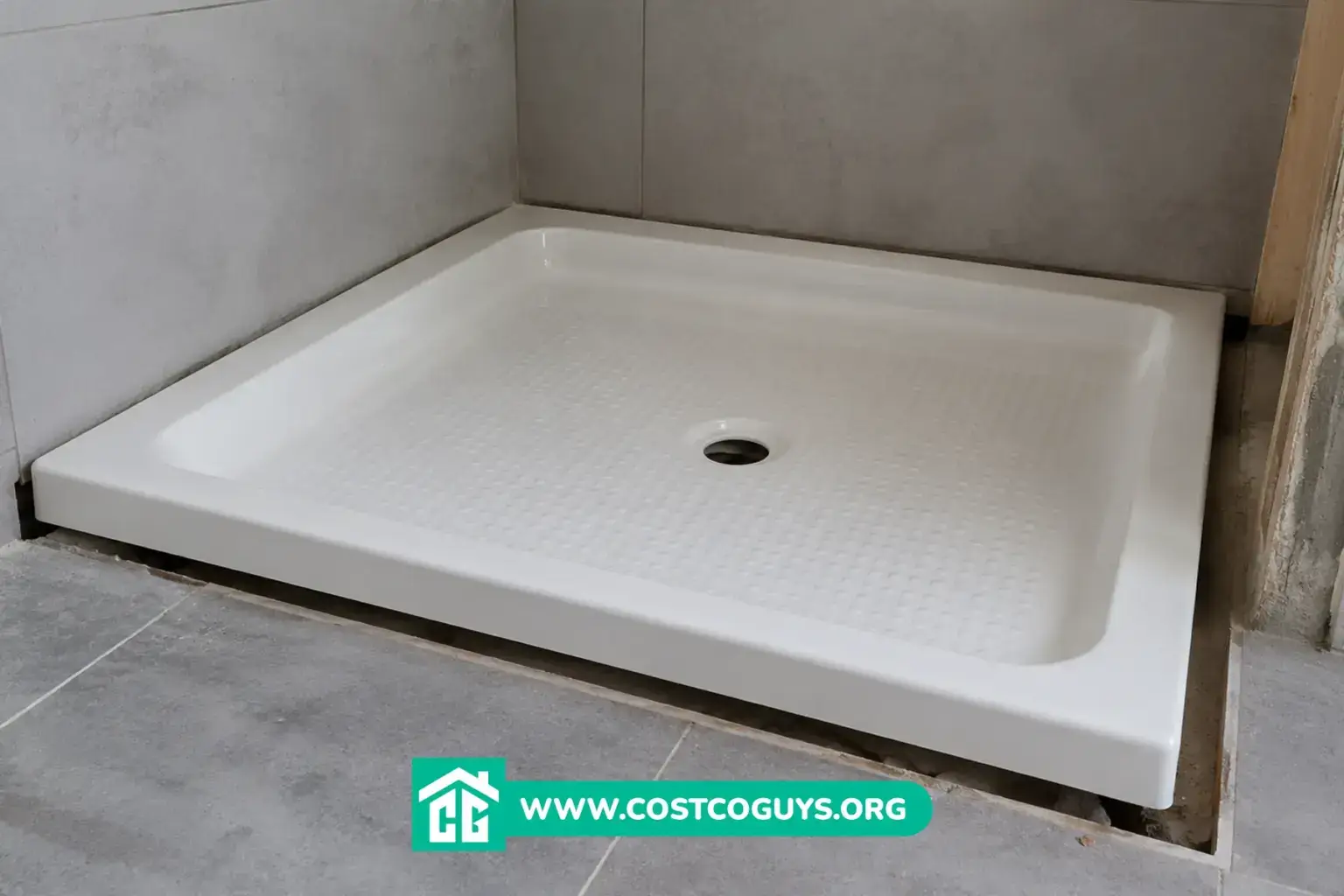

Standard shower pan size ranges from 32×32 inches for compact stalls up to 60×36 inches or larger for spacious walk-in showers, with 36×36 inches the most common pick for 2026 remodels.
If you’re replacing an old shower base or planning a new bathroom, getting the size right matters more than picking a color or finish. A pan that’s an inch too big won’t fit your alcove. One that’s too small leaves gaps at the walls that trap water. Here’s what you need to know before you buy.
Common Standard Shower Pan Sizes
Manufacturers build most shower pans in a handful of go-to sizes because those dimensions fit the majority of framed alcoves in U.S. homes. Square pans work well for tight bathrooms. Rectangular pans give you more room to move without needing a full walk-in layout.
| Shape | Common Sizes | Best For |
|---|---|---|
| Square | 32×32, 36×36, 38×38, 42×42 | Small to mid-sized bathrooms, replacing an existing stall |
| Rectangular | 36×48, 32×60, 36×60, 60×30, 60×32, 60×36 | Primary bathrooms, walk-in showers, larger footprints |
| Corner or neo-angle | 36×36, 38×38, 42×42 (angled entry) | Tight corners where a straight alcove won’t fit |
These aren’t exact for every brand. A Kohler pan and a Sterling pan labeled the same size can differ by half an inch once you check the actual spec sheet, so always confirm the model’s real dimensions before ordering.
Finding the Right Shower Pan Size for Your Bathroom
Start by measuring your existing alcove or framed opening, not the old shower pan itself. Old pans shift slightly over the years, and tile buildup can throw off your numbers if you measure against the wall surface instead of the studs.
Measure width and depth at three points: top, middle, and bottom of the opening. Older homes settle, so the framing isn’t always perfectly square. Use the smallest measurement at each point to avoid ordering a pan that won’t slide into place.


Check your drain location too. Center-drain pans work for most square and small rectangular layouts. End-drain pans, common in 60-inch walk-in showers, let plumbers keep the existing drain line without moving it, which saves labor on a remodel.
Internal link opportunity: link to a Costco Guys guide on measuring a bathroom for a shower remodel.
Acrylic Shower Pan and Other Material Options
Material affects both price and how the pan handles daily use. An acrylic shower pan is the most common choice for stock sizes. It’s lightweight, resists stains, and comes in nearly every standard dimension listed above. Acrylic pans typically run in the low hundreds of dollars for common sizes, though price climbs with larger or custom shapes.
Fiberglass pans cost less upfront but scratch more easily and can flex slightly underfoot if the subfloor isn’t perfectly flat. Stone resin and solid-surface pans cost more, but they feel solid and resist cracking better over time.
Tile-ready pans skip the finished surface entirely. You set a waterproof membrane and mortar bed, then tile or stone over the top. This route gives you the most size flexibility since a tiled shower floor doesn’t have to match a factory dimension, but it takes more skill and time than dropping in a prefab unit.
Rough-In vs Finished Shower Pan Dimensions
The size printed on the box is the finished, outside dimension of the pan. Your framed rough opening needs to be slightly larger to allow for the pan’s flange and any shimming during install. Most manufacturers list a recommended rough-in size on the spec sheet, usually half an inch to an inch bigger than the pan itself.
Skipping this check is one of the most common mistakes homeowners make. Ordering a 36×36 pan for a 36×36 framed opening leaves zero room for adjustment, and the pan often won’t fit without cutting into the studs.
Building Code Minimums for Shower Size
The International Residential Code sets a minimum interior shower area of 900 square inches, with no dimension smaller than 30 inches. Some local plumbing codes, including versions of the Uniform Plumbing Code, require 1,024 square inches instead. That’s why a 30×30 pan meets some jurisdictions’ minimums but not others.
Local rules can differ from these baseline figures. Check with your local building department, also called the authority having jurisdiction, before finalizing a size if your remodel needs a permit.
DIY Installation vs Hiring a Plumber
Swapping a prefab shower pan of the same size and drain location is a project many basic DIY homeowners can handle with the right tools and a weekend. You’ll need a level, a caulking gun, plumber’s putty, and patience getting the drain connection watertight.
Call a licensed plumber if you’re moving the drain location, changing from a center drain to an end drain, or if the subfloor shows signs of water damage. Rotted subfloor under an old pan is more common than most people expect, and it turns a simple swap into a bigger repair.
Choosing the Correct Shower Pan Size for Your Layout
Match the shape to your bathroom, not the other way around. A 36×36 square pan fits most standard-sized bathrooms and gives you noticeably more elbow room than the 30×30 code minimum. If you have a longer, narrower space, a 60×32 or 60×36 rectangular pan turns that layout into a comfortable walk-in shower without a full renovation.
Whatever size you land on, measure your actual framed opening twice before you order. The right shower pan size comes down to matching real numbers from your bathroom to a pan’s actual spec sheet, not just picking the size that sounds standard.
FAQ
What is the most common shower pan size?
36×36 inches is the most common shower pan size in current U.S. bathrooms. It offers more comfortable room than the 30×30 code minimum while still fitting standard-sized bathroom layouts.
Can I install a bigger shower pan than my old one?
Only if your framed opening and drain location can support the larger footprint. Moving walls or relocating the drain usually means bringing in a licensed plumber or contractor.
How do I know if my shower pan size meets code?
Check your local plumbing code, since minimums vary between 900 and 1,024 square inches depending on which code your area follows. Your local building department can confirm the exact requirement for your address.
What’s the difference between a shower pan and a shower base?
The terms are used interchangeably by most manufacturers and retailers. Both refer to the waterproof floor unit that forms the bottom of a shower stall.
Do shower pan sizes come in odd dimensions like 34 or 38 inches?
Yes. While 32, 36, and 60 inch measurements are most common, several brands offer 34, 38, and 42 inch options to fit alcoves that fall between standard sizes.
