

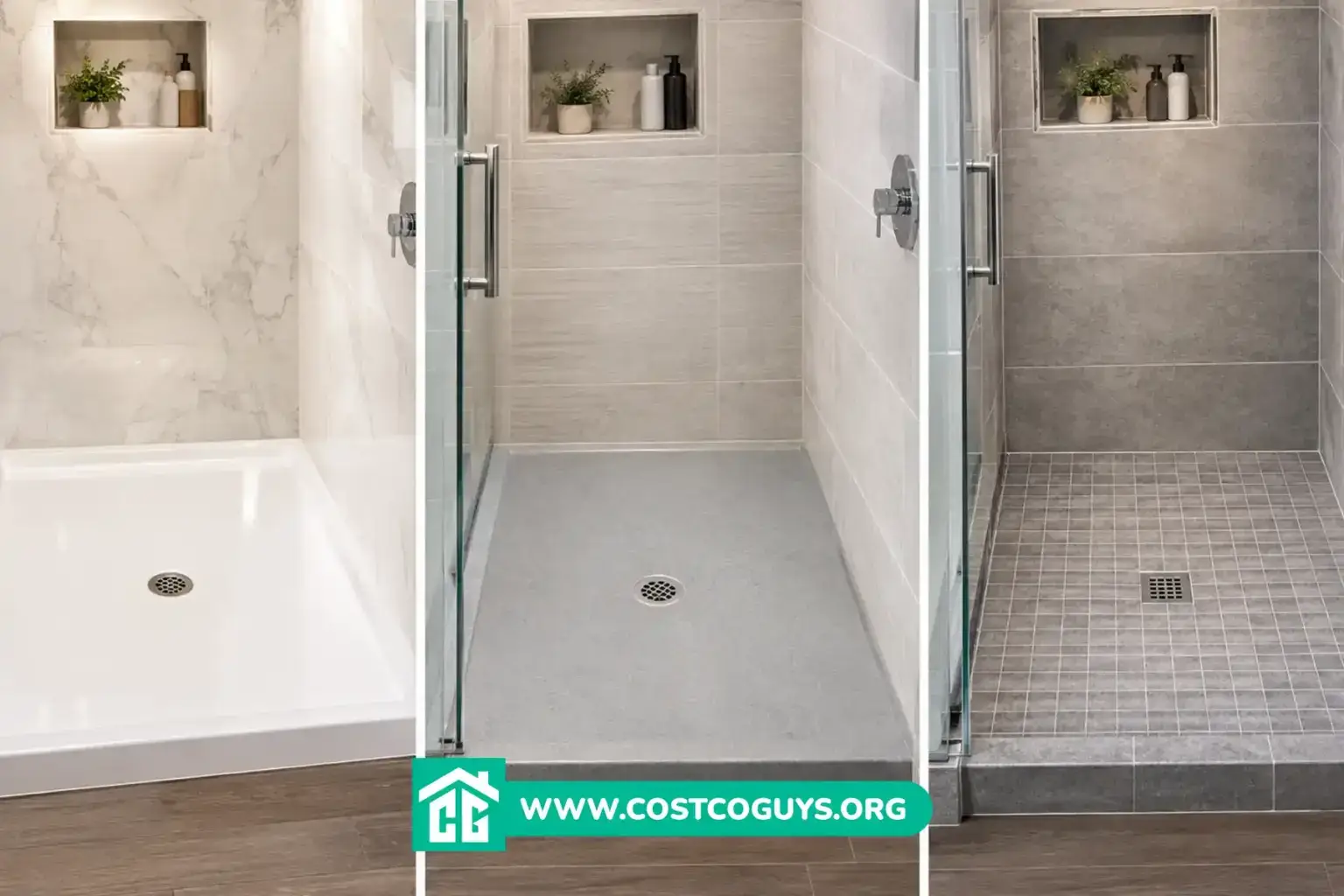

A 42×42 shower pan fits square shower stalls built for corner or alcove layouts, and most models run from about $400 to over $1,000 depending on material and drain style. This size works for both new construction and replacement projects in 2026.
- What Fits a 42×42 Shower Pan Base
- Shower Pan Materials Compared
- 42×42 Shower Pan Cost Ranges
- Center Drain Versus Off-Center Drain Placement
- Single Curb Versus Double Threshold Design
- Installing a 42×42 Shower Pan Yourself
- Common Mistakes That Cost You Later
- Choosing the Right 42×42 Shower Base for Your Project
- 42×42 Shower Pan Frequently Asked Questions
What Fits a 42×42 Shower Pan Base
A 42×42 shower pan base covers a square footprint, which makes it a common pick for corner showers and square alcove stalls. The 42-inch by 42-inch size splits the difference between a cramped 32×32 stall and a roomy 48×48 layout, so it works well in mid-size bathrooms.
Before you shop, measure the actual framed opening, not just the old pan. Framing can shift slightly over the years, and a pan that’s even a quarter inch too big won’t sit flush against the studs. Bring a tape measure and check both the width and depth in two or three spots, since older bathrooms rarely have perfectly square corners.
Shower Pan Materials Compared
Material choice affects price, weight, and how the pan handles daily wear. The three most common options for a 42×42 shower pan are acrylic, solid surface, and tileable PVC.
Acrylic bases use a high-gloss acrylic layer reinforced with fiberglass on the underside. They’re light, easy to install, and resist stains, but a thin single-layer acrylic pan can flex slightly underfoot if the subfloor isn’t level. Solid surface pans, sometimes marketed as cultured stone or granite composite, are heavier and feel more solid, with a matte or stone-look finish that some homeowners prefer over glossy acrylic.
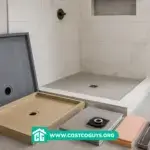
Tileable PVC pans work differently. Instead of a finished surface, they give you a pre-sloped, factory-sealed base that you tile over directly. This option lets you match the shower floor to your wall tile, and it skips the traditional mud bed, which cuts down on one common source of leaks.

| Material | Typical Weight | Surface Finish | Best For |
|---|---|---|---|
| Acrylic | Light | Glossy, smooth | Budget remodels, DIY installs |
| Solid surface | Heavier | Matte, stone-look | Long-lasting, low-flex feel |
| Tileable PVC | Light to moderate | Ready for tile | Matching custom tile design |
42×42 Shower Pan Cost Ranges
Available estimates put acrylic 42×42 shower pans at roughly $400 to $900 for the base unit alone, before installation. MAAX lists its 42 x 42 acrylic alcove shower base with a center drain at an MSRP around $888, and other acrylic brands price similar models lower, often in the $400 to $700 range depending on the retailer and any sales.
Solid surface and tileable PVC bases typically cost more, often landing between $500 and over $1,000 for the pan itself. The final number depends on curb style, drain finish, and whether the manufacturer includes a matching wall kit.
| Base Type | Typical Cost Range (Pan Only) | What Affects the Price |
|---|---|---|
| Acrylic | $400 to $900 | Brand, threshold style, retailer sales |
| Solid surface | $500 to $1,000+ | Thickness, finish, warranty |
| Tileable PVC | $500 to $1,000+ | Curb configuration, drain grate finish, tile costs on top |
These figures cover the pan only. Labor, new tile, wall surrounds, and drain hardware add to the total project cost. Current pricing data for local installation labor isn’t available here, so treat any installation estimate as a rough planning range rather than a local quote.
How These Ranges Were Put Together
These ranges come from checking current manufacturer and retailer listings for 42×42 models, including acrylic, solid surface, and tileable options. Prices shift by region and by ongoing retailer promotions, so use this table as a starting point for your own comparison shopping, not a locked-in number.
Center Drain Versus Off-Center Drain Placement
Most 42×42 shower pans ship with a center drain, which lines up with standard framing and existing plumbing in a lot of homes. A center drain also gives the pan a symmetrical slope in every direction, so water drains evenly no matter where you’re standing.
Off-center drain configurations exist too, mainly for corner installs or when you’re working around plumbing that’s already in place. If your existing drain isn’t centered, check the pan’s rough-in specs against your plumbing before you order, since moving a drain line usually means opening up the subfloor.
Single Curb Versus Double Threshold Design
A single curb, or single threshold, pan has one raised edge where you step in, which suits alcove showers built against three walls. A double threshold pan has two entry points and works better for corner installations where you want access from either side.
Threshold height also varies by model, usually between 2.75 and 5.5 inches. Lower thresholds make stepping in easier, which matters if anyone in the household has mobility concerns, while a taller threshold can help contain water in a shower without a door.
Installing a 42×42 Shower Pan Yourself
Setting a 42×42 shower pan is a project many intermediate DIYers can handle, especially with a straight swap where the drain location doesn’t move. The basic steps involve dry-fitting the pan, setting it in mortar or manufacturer-approved adhesive, connecting the drain, and checking for level before the walls go up.
Where this gets tricky is the drain connection and any changes to the subfloor. If your project involves relocating the drain, cutting into structural framing, or you’re not confident sealing the drain-to-pipe joint watertight, bring in a licensed plumber for that part of the job. A leak that reaches the subfloor or the framing below can cause damage that costs far more to fix than the plumber’s time would have.
- Dry-fit the pan first to confirm the fit and drain alignment
- Use a level across both directions, not just one
- Test the drain connection with water before finishing the walls
- Follow the manufacturer’s instructions for mortar bed thickness under acrylic and solid surface pans
Common Mistakes That Cost You Later
The biggest mistake homeowners make is skipping the dry-fit and assuming the pan will match the framed opening exactly. Even a small gap against the studs can create a weak spot in the wall panel seal down the road.
Another frequent issue is choosing a glossy, thin acrylic pan for a household with kids or frequent use, then noticing flex or a hollow sound underfoot within a year or two. Paying a bit more for a reinforced or solid surface base up front often saves a full pan replacement later. Skipping a full mortar bed under an acrylic pan, when the manufacturer calls for one, is another shortcut that leads to cracking.
Choosing the Right 42×42 Shower Base for Your Project
A 42×42 shower pan works well for square corner and alcove stalls, and your main decision comes down to material, drain placement, and threshold style. Acrylic keeps costs down and installs quickly, solid surface adds durability and a heavier feel, and tileable PVC lets you design a fully custom tile floor.
Measure your framed opening carefully, match the drain to your existing plumbing when you can, and don’t cut corners on the mortar bed or drain seal. Getting those details right the first time helps your 42×42 shower base perform well for years without a repeat project.
42×42 Shower Pan Frequently Asked Questions
Does a 42×42 shower pan fit standard corner shower framing?
Yes, 42×42 is one of the more common sizes for corner and square alcove showers, but you still need to measure your specific framed opening. Framing can vary by an inch or more between homes, even when the stall was originally built for a “standard” size.
Can I install tile directly on top of an acrylic 42×42 shower base?
No, acrylic and solid surface bases come with a finished surface and aren’t meant for tile on top. If you want a tiled shower floor, look at a tileable PVC pan instead, which is built specifically for that purpose.
How do I know if my drain needs to be center or off-center?
Check where your existing drain pipe sits in the subfloor before ordering. If it’s centered under the framed opening, a standard center drain pan works. If it’s offset, you’ll need an off-center model or a plumber to relocate the drain line.
Is a heavier solid surface shower pan better than acrylic?
Solid surface pans generally resist flex better and can feel more solid underfoot, which some homeowners see as a long-term durability advantage. Acrylic pans cost less and are lighter to maneuver during installation, which matters for a DIY project done solo.
