

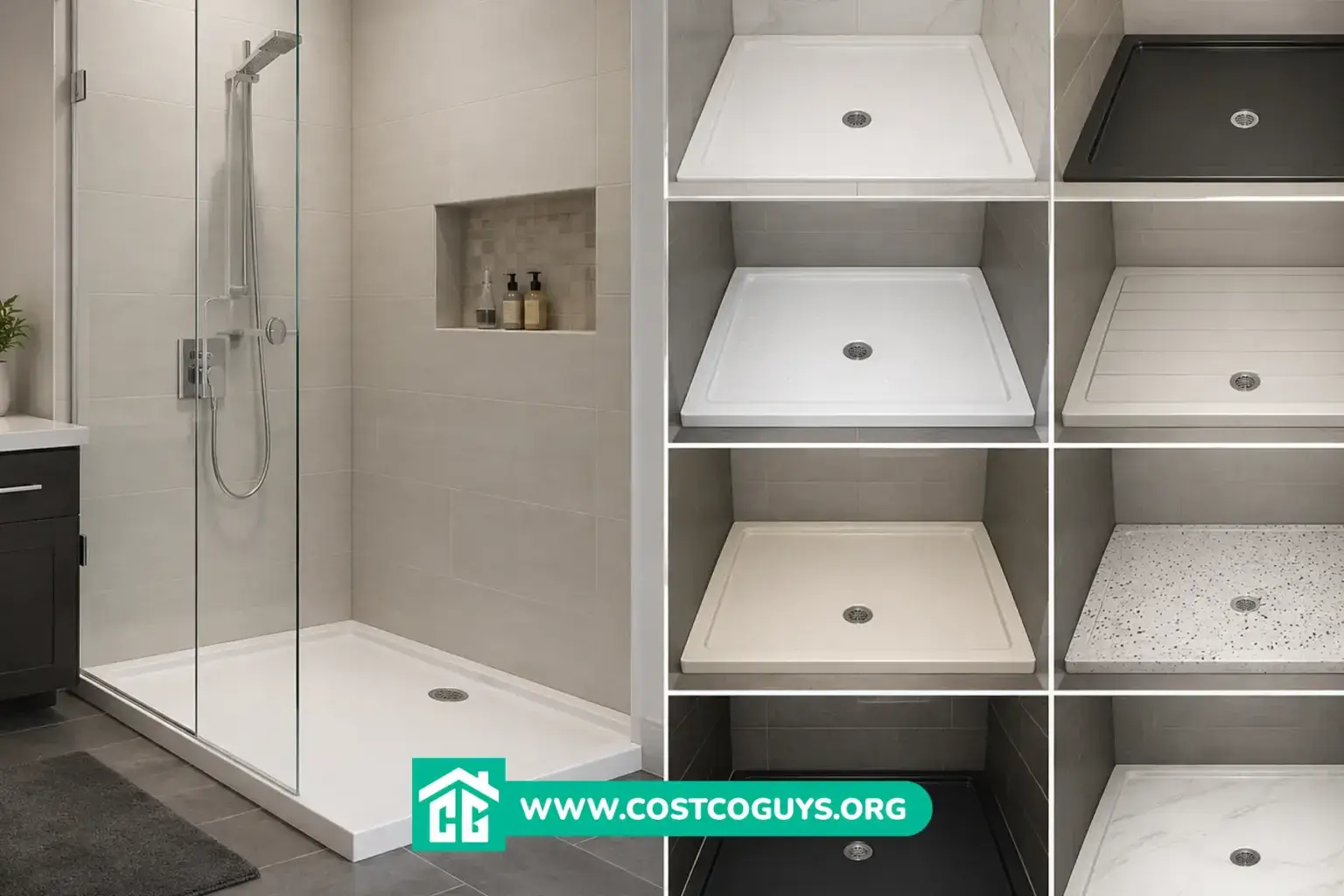

A 36 shower base is a square shower pan sized 36 inches by 36 inches, the most common footprint for alcove and corner shower stalls in U.S. bathrooms. Most acrylic 36×36 shower bases with a center drain run $130 to $700 for the pan alone in 2026, with installation labor adding $600 to $1,400 more.
- What 36×36 and Other Shower Base Sizes Mean
- Shower Base Materials: Acrylic, Fiberglass, and SMC
- 36 Shower Base Price Ranges in 2026
- What Shapes 36 Shower Base Pricing
- Center Drain vs Corner Drain Shower Bases
- Installing a Shower Base: What DIYers Can Handle
- When to Call a Licensed Plumber Instead
- Common Mistakes That Cost More Later
- Choosing a Finish and Drain Cover
- Picking the Right 36 Shower Base for Your Bathroom
- FAQs About 36 Shower Bases
What 36×36 and Other Shower Base Sizes Mean
When a listing says “36 x 36” or “l x 36,” it’s giving you the length and width of the shower floor pan in inches. A 36×36 shower base fits a square alcove, the three-wall opening most common in older homes and standard remodels. It’s one of the most popular shower pan sizes because it works with a wide range of pre-fab wall kits and glass shower doors.
Not every 36 inch base is identical, though. Overall dimensions (the outside edge of the pan) usually run right at 36 inches, but interior basin space is smaller once you account for the integrated tile flange. A typical 36×36 acrylic shower base has a basin around 30.5 inches by 30.5 inches, so measure your framed opening before you order.
You’ll also see variations like a corner drain neo-angle shower base, built for corner installations with a five-sided or angled front, and a double threshold shower base, designed to sit between two finished floor surfaces instead of one. If your bathroom has an unusual layout, match the base shape to the opening first, then worry about drain position.
Shower Base Materials: Acrylic, Fiberglass, and SMC
Acrylic is the most common material for a 36 shower base pan today. Fiberglass-reinforced acrylic combines a high-gloss acrylic surface with a fiberglass and resin backing, which adds rigidity and reduces flex when you step in. Most product listings mention this construction because it’s the industry standard for mid-range and premium pans.
SMC, short for sheet molding compound, is a fiberglass-reinforced polyester used in some budget shower bases. It’s lighter and often cheaper, but it can feel less solid underfoot compared to acrylic. Solid surface bases, made from a resin and mineral blend, cost more but resist scratching and staining better over the long run.



Whatever material you pick, check for a textured or non-slip shower pan floor. A slip resistant textured surface matters more in a shower than almost any other spec, since wet acrylic and wet feet don’t mix well.
36 Shower Base Price Ranges in 2026
Pricing for a 36×36 shower base pan spans a wide range depending on brand and finish quality. Here’s what current retail listings show for the pan alone, not counting installation:
| Item | Typical Cost Range | What Affects the Price |
|---|---|---|
| Budget 36×36 acrylic shower base, white | $120 – $250 | Thinner acrylic, basic drain cover, no brand warranty extras |
| Mid-range 36×36 acrylic base with center drain | $250 – $400 | Fiberglass reinforcement, stainless drain cover, cUPC certification |
| Brand-name base (Kohler Archer, Maax, Aker) | $450 – $700+ | Brand reputation, thicker acrylic, longer or lifetime warranty |
| Solid surface or stone composite base | $500 – $1,200 | Material cost, custom colors, dealer markup |
| Installation labor, pan only | $600 – $1,400 | Old pan removal, mortar bed, waterproofing, local labor rates |
Available estimates put a full 36×36 shower remodel, including base, wall panels, and door, at roughly $3,000 to $9,000. That range swings hard based on whether you go prefab acrylic walls or full tile, and whether the plumbing needs any rerouting.
What Shapes 36 Shower Base Pricing
Material grade drives most of the price difference between a $150 shower base and a $600 one. Thicker acrylic resists flexing and cracking over time, which is why premium collections like Kohler’s Archer or Maax’s Base W&B line cost more upfront but often carry longer warranties.
Brand and certification add cost too. A cUPC certified shower base, meaning it’s been tested and listed under the Uniform Plumbing Code, typically runs higher than an uncertified import. Some local plumbing inspectors want to see that certification before they’ll sign off, so it’s worth checking before you buy.
These figures come from current retail listings at major home improvement and plumbing supply retailers as of mid-2026, not a formal contractor survey. Treat them as a planning range rather than a guaranteed quote, since regional labor rates and retailer promotions shift the numbers.
Center Drain vs Corner Drain Shower Bases
A center drain shower base puts the drain in the middle of the pan, which is the standard setup for a straightforward alcove shower install. Most 36×36 shower base pans with center drain placement are designed as drop-in replacements for existing plumbing that already runs to the middle of the stall.
A corner drain neo-angle shower base moves the drain to one corner, which works better for angled or pentagon-shaped shower footprints. If you’re replacing an existing pan, match the new drain location to your current plumbing unless you’re planning to move the drain line, which usually means opening the subfloor.
Some bases also offer a left or right drain option instead of dead center, useful when you’re working around joists you can’t move. Check the spec sheet for exact drain placement in inches before you order, since “center” isn’t always mathematically centered on every model.
Installing a Shower Base: What DIYers Can Handle
Setting a 36 shower base yourself is a realistic weekend project if you’re comfortable with basic tools and have some plumbing confidence. Most acrylic bases sit on a thin mortar bed, which fills gaps under the pan and stops flexing that can crack the acrylic over time.
The general process looks like this: dry-fit the base first, mix a mortar bed to the manufacturer’s spec, set the base into the wet mortar, and check it’s level before it cures. You’ll connect the drain to your existing drain shower pipe, usually a standard 2 inch fitting, and let everything cure fully before running water.
A common mistake here is skipping the mortar bed entirely to save time. An acrylic pan set directly on a plywood subfloor without support underneath will flex when you stand on it, and that flexing eventually cracks the base or breaks the seal around the drain.
When to Call a Licensed Plumber Instead
If your project involves moving the drain location, tying into an existing waste line, or any work near an existing gas or electrical run, call a licensed plumber. Plumbing work that changes drain position often requires a permit, and local rules on venting and trap distance vary by jurisdiction.
Check with your local building department, sometimes called the authority having jurisdiction or AHJ, before you start any project that touches the drain line or subfloor structure. They can tell you whether your specific remodel needs an inspection.
Signs you’re in over your head include water reaching the subfloor around an old pan, soft or spongy flooring near the shower, or a drain that won’t seat properly no matter how you adjust it. Those point to rot or a plumbing issue beyond a simple pan swap.
Common Mistakes That Cost More Later
Buying the wrong shape is the most frequent and expensive mistake. A rectangular shower base ordered for a square alcove opening simply won’t fit, and return shipping on a heavy acrylic pan isn’t cheap.
Skipping the flange check is another one. An integrated tile flange needs to sit behind your wall material, not in front of it, so tile or acrylic wall panels overlap the flange and keep water from getting behind the pan. Ordering a base with the wrong flange height for your wall setup means redoing the wall trim.
Finally, don’t ignore the threshold height. A single threshold shower base sits lower and works well for easy entry, while a double threshold model needs a step-up on both sides. If accessibility matters in your household, a low or curbless option is worth the extra planning even though true curbless installs usually need a licensed pro for proper floor slope.
Choosing a Finish and Drain Cover
Gloss white remains the most common shower base in white finish, mostly because it matches almost any tile or wall panel color and hides water spots less than darker finishes. Black shower bases have become more available in the past couple years for a more modern look, though they show mineral deposits and soap scum faster.
Most mid-range and premium bases now include a stainless steel drain cover, often 304 stainless steel, which resists rust better than cheaper coated metal. Confirm the drain cover included with your base actually fits your existing or planned drain assembly. Some are sold separately, which is an easy detail to miss when comparing prices between listings.
Picking the Right 36 Shower Base for Your Bathroom
A 36 shower base works for most standard alcove openings, but the shape, drain location, and material grade need to match your specific bathroom before you buy. Start by measuring your framed opening and confirming your existing drain position, then pick a material grade based on how long you plan to stay in the home.
Budget acrylic bases work fine for rentals or a quick flip. If you’re renovating your own bathroom for the long haul, a brand-name base with a longer warranty and thicker acrylic construction usually pays for itself by avoiding a second replacement down the road.
FAQs About 36 Shower Bases
Is a 36×36 shower base a standard size?
Yes, 36×36 is one of the most common shower base pan sizes sold in the U.S., alongside 32×32, 34×34, and 60×36 for larger alcove stalls. It fits standard framed openings in most single-shower bathroom layouts.
Can I install a shower base without hiring a plumber?
You can set the pan and connect it to an existing drain in the same location yourself if you’re comfortable with basic tools and a mortar bed. Moving the drain, working near gas lines, or any work requiring a permit should go to a licensed plumber.
What’s the difference between a shower base and a shower pan?
These terms are used interchangeably by most retailers and manufacturers. Both refer to the molded floor piece that sits at the bottom of an alcove or corner shower before the walls and door go in.
Do all 36 shower bases fit standard shower doors?
Most do, since 36×36 is a standard footprint, but always check the maximum door width listed in the base’s specs. Some bases list a slightly smaller usable width for door installation than the full 36 inch outer dimension.
How long does a shower base installation take?
Setting the pan itself typically takes a few hours, but the mortar bed needs to cure before you can walk on it or connect the walls, often 24 hours or more depending on the product. A full remodel with tile walls adds several more days for waterproofing, tiling, and grout curing.
