

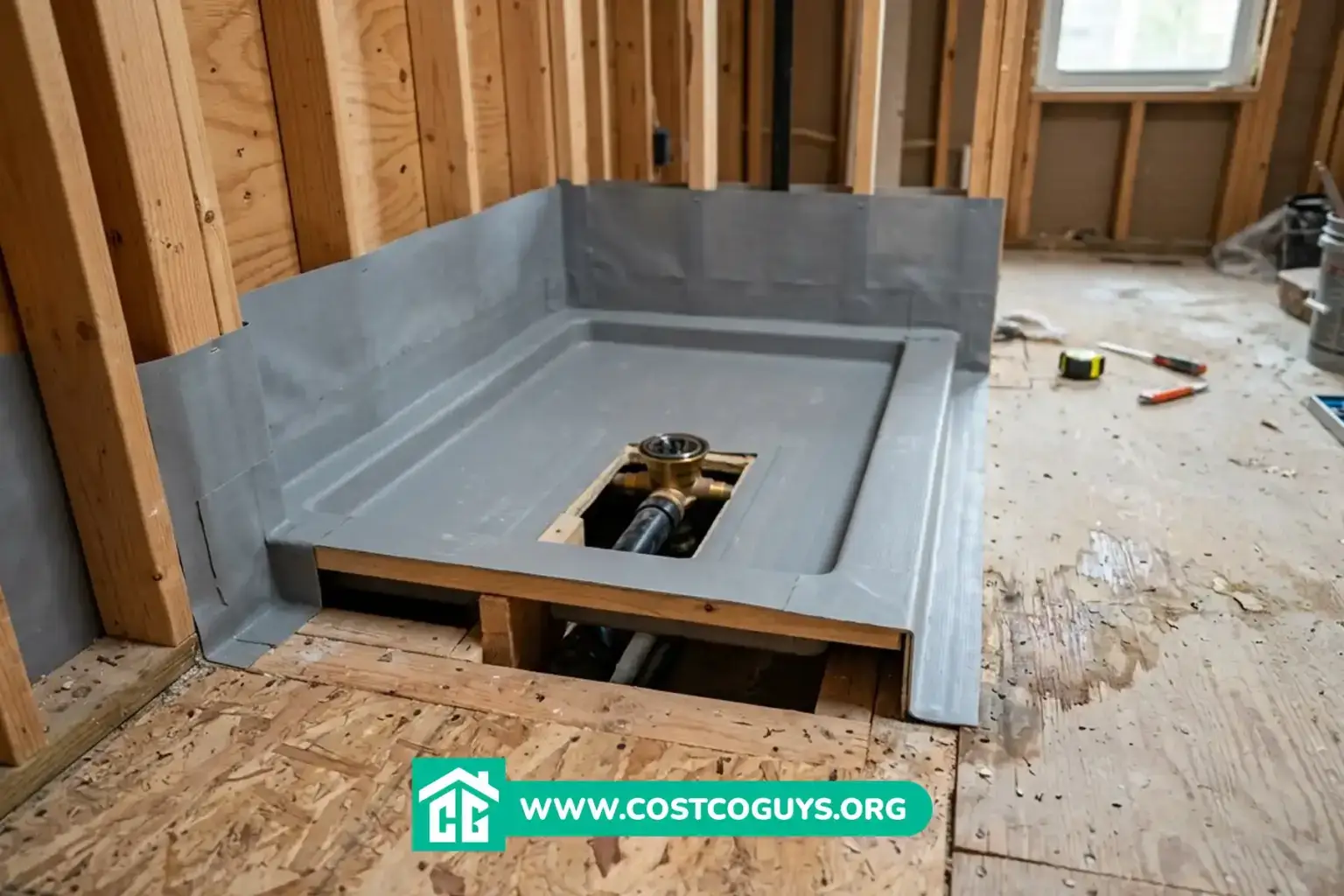

A waterproof shower pan costs $150 to $900 in materials for a DIY build in 2026, or $900 to $3,500 installed by a pro. The price swings based on whether you use a PVC liner, a sheet membrane, or a liquid-applied system.
- Shower Pan Waterproofing Cost Breakdown for 2026
- What Makes a Shower Pan Truly Waterproof
- PVC Liner vs Kerdi vs RedGard Membranes
- Step-by-Step: Installing a PVC Shower Pan Liner
- Step-by-Step: Sheet and Liquid Membrane Installation
- How We Calculated These Cost Estimates
- Common Mistakes to Avoid in Shower Waterproofing
- When to Call a Licensed Plumber
- Getting a Truly Watertight Shower Pan
- Frequently Asked Questions
Shower Pan Waterproofing Cost Breakdown for 2026
Here’s what actually drives the price of a waterproof shower installation, from a basic liner to a full custom tile shower base.
| Item/Service | Typical Cost Range | What Affects the Price |
|---|---|---|
| Oatey PVC shower pan liner kit (5×6 ft, 40 mil) | $20 to $35 | Retailer, sheet size, thickness |
| Schluter Kerdi shower kit (tray, curb, membrane) | $350 to $600 | Tray size, drain style, PVC vs ABS |
| Liquid membrane, one gallon (RedGard, Hydro Ban) | $45 to $70 | Brand, coverage rate, coat count |
| Mortar bed materials (sand, Portland cement, wire mesh) | $40 to $120 | Shower floor size, pre-mixed vs DIY |
| Pro-installed custom tile shower pan | $900 to $3,500 | Labor rate, drain type, demo needed |
| Pro-installed hot mop shower pan | $225 to $500 | Access, local labor, pan size |
Waterproofing itself is a small slice of a full shower job. Reports from Angi put the added cost of a membrane at roughly $1 to $2 per square foot on top of tile and backer board. The pan and its waterproofing are what stop a $2,700 tile shower from becoming a $10,000 subfloor repair.
What Makes a Shower Pan Truly Waterproof
A shower pan is the sloped, waterproof floor under your feet. It sits on top of a shower base, the framed or mortared substructure that supports the pan and directs water toward the drain.
Every wet area needs two things working together: a continuous waterproof membrane and a slope. The membrane blocks water from reaching the subfloor, the wood or concrete layer under the entire bathroom floor. The slope, usually a quarter inch of fall per foot, moves water toward the drain instead of letting it pool.
Weep holes matter here too. These are small openings in the drain’s clamping ring that let any water that gets beneath the tile drain out through the weep holes rather than sitting against the subfloor. A drain without clear weep holes traps moisture and speeds up wood rot, even with a good membrane above it.

PVC Liner vs Kerdi vs RedGard Membranes
There’s no single best shower waterproofing system for every bathroom. Each of the three common methods solves the same problem in a different way.
A PVC shower pan liner, like the Oatey PVC Shower Pan Liner Kit, is a 40 mil flexible sheet set into a sloped mortar bed beneath the tile. It’s the traditional method plumbers have used for decades, it meets ASTM D4551 and Uniform Plumbing Code specs, and it costs the least. The kit typically includes preformed PVC dam corners designed to seal the junction of the curb and door jamb.
A sheet membrane system, most commonly Schluter Kerdi, uses a fleece-backed waterproof sheet bonded directly to cement board with thin-set mortar, skipping the traditional mortar bed liner entirely. Laticrete’s Hydro-Ban sheet and liquid systems work on the same principle. Schluter also sells a foam shower tray with a built-in pan slope, so no dry pack mortar bed is needed at all.
A liquid membrane like RedGard or Laticrete Hydro Ban gets rolled or troweled directly onto cement board and the mortar bed in two coats. RedGard meets ANSI A118.10, the industry standard for load-bearing bonded waterproof membranes, and is also rated for pools and spas. It bonds well to metal, PVC, and ABS drain flanges, which makes it a flexible choice around odd-shaped curbs or benches.
Step-by-Step: Installing a PVC Shower Pan Liner
This is the step-by-step guide most DIYers follow for a traditional mortar bed shower pan installation. It assumes the subfloor is already sound and the drain rough-in is set.
- Pour and slope a pre-slope mortar bed (dry pack: five parts sand to one part Portland cement) toward the drain, about a quarter inch of fall per foot.
- Let the pre-slope cure, then set the drain’s lower flange and check that the weep holes stay clear.
- Drape the PVC liner over the pre-slope and up the walls, extending it at least a few inches above the finished curb height.
- Fold and glue the corners with PVC cement so the liner forms a continuous, seamless waterproof seal at every corner and the curb and door jamb.
- Cut a hole over the drain, clamp the liner between the drain’s flanges, and confirm the weep holes still drain freely into the liner.
- Pour a second, top mortar bed directly on the liner, sloped the same quarter inch per foot, then let it cure before tiling.
The liner does the actual waterproofing here. The top mortar bed just gives the tile a solid, sloped surface to bond to with thin-set.
Step-by-Step: Sheet and Liquid Membrane Installation
Membrane systems skip the buried liner and instead waterproof the visible surface, right beneath the tile.
- Install cement board on the walls and floor, taped and thin-set at every seam.
- For a sheet membrane like Kerdi, cut and bond the sheet to the cement board with thin-set, working from the drain flange outward and overlapping seams by two inches.
- Press waterproofing tape or extra membrane strips over inside corners and the curb, since these are the weak point where most leaks start.
- For a liquid membrane, apply RedGard with a roller or trowel in two coats, letting the first coat dry solid red before adding the second.
- Embed fiberglass mesh at the drain flange for extra reinforcement, then apply a final coat over it.
- Flood test the pan for 24 hours before tiling, plugging the drain and filling the pan a couple inches deep to confirm a truly waterproof seal.
A flood test is the one step DIYers skip most often, and it’s the cheapest insurance you’ll ever buy on a shower job.
How We Calculated These Cost Estimates
These ranges come from comparing current retail listings for Oatey, Schluter, and Custom Building Products materials against 2026 labor-cost data reported by Angi and Homewyse. Material prices reflect Home Depot, Amazon, and manufacturer-site listings pulled this year. Labor ranges reflect national averages for tile installers and plumbers, not a specific city.
Your real number depends on local labor rates, shower size, drain type, and whether a contractor needs to remove and replace an existing pan. Treat these figures as a starting point for comparing quotes, not a guaranteed local price.
Common Mistakes to Avoid in Shower Waterproofing
A missed seam at a corner is the single most common cause of a failed shower pan. Water finds any gap, works its way beneath the tile, and reaches the subfloor over months, not days.
Skipping the flood test is another frequent mistake. Tiling over an untested pan means you won’t find a leak until the ceiling below stains or the subfloor starts to rot.
Blocking weep holes with thin-set or mortar during a mortar bed pour also causes water damage down the line. Keep weep holes clear around the entire perimeter of the drain flange, or trapped water has nowhere to go.
Using a “water-resistant” backer board instead of an actual waterproof membrane is a mistake that looks fine for a year or two, then fails quietly behind the tile. Cement board alone isn’t a waterproofing system.
When to Call a Licensed Plumber
Call a plumber before you start if the drain needs to be moved, the rough-in height looks wrong, or you’re not confident reading a slope with a level. Getting the drain height and pan slope wrong means redoing the entire mortar bed.
Hire a professional for the whole job if your subfloor shows soft spots, staining, or any sign of existing water damage. That points to a bigger problem than a new membrane can fix on its own, and proper installation on a compromised subfloor won’t hold.
Getting a Truly Watertight Shower Pan
A waterproof shower pan runs $150 to $900 in materials for a DIY job, or $900 to $3,500 installed, and the method you pick matters as much as the price tag. A PVC liner over a mortar bed is the budget, proven route. Kerdi and other sheet membranes cost more but cut out a mortar bed entirely. RedGard and other liquid membranes split the difference on cost and flexibility.
Whichever system you choose, the fundamentals stay the same: a continuous membrane, a correct pan slope toward the drain, clear weep holes, and a flood test before you set a single tile. Get those right and you’re protecting your home from the kind of hidden water damage that costs far more than the shower pan itself.
Frequently Asked Questions
Can I use RedGard instead of a PVC shower pan liner?
Yes. RedGard is ANSI A118.10 compliant and meets Uniform Plumbing Code requirements for use as a shower pan liner. It applies directly over the mortar bed and cement board instead of a buried PVC sheet, which some installers find faster on odd-shaped showers.
Do I still need a mortar bed with a Schluter Kerdi shower kit?
No, not with the prefabricated foam tray version. The tray already has the pan slope built in, so you skip the dry pack mortar bed entirely and bond the membrane and tile straight to the tray.
How long does a waterproof shower pan last?
A properly installed PVC liner or sheet membrane system typically lasts 20 to 30 years or longer, since the membrane sits behind the tile where it’s not exposed to daily wear. Grout and caulk on the surface usually need attention long before the membrane does.
What causes a shower pan to leak after installation?
Most leaks trace back to a missed seam, a punctured liner, or blocked weep holes at the drain. Skipping the flood test before tiling is the biggest reason these problems go unnoticed until there’s visible water damage.
Is a liquid membrane like RedGard as reliable as a PVC liner?
Both meet recognized waterproofing standards when installed correctly. RedGard needs two even coats and a clean bond to the substrate, while a PVC liner relies on properly glued seams and corners. Neither is inherently better; installation quality matters more than the product choice.
