

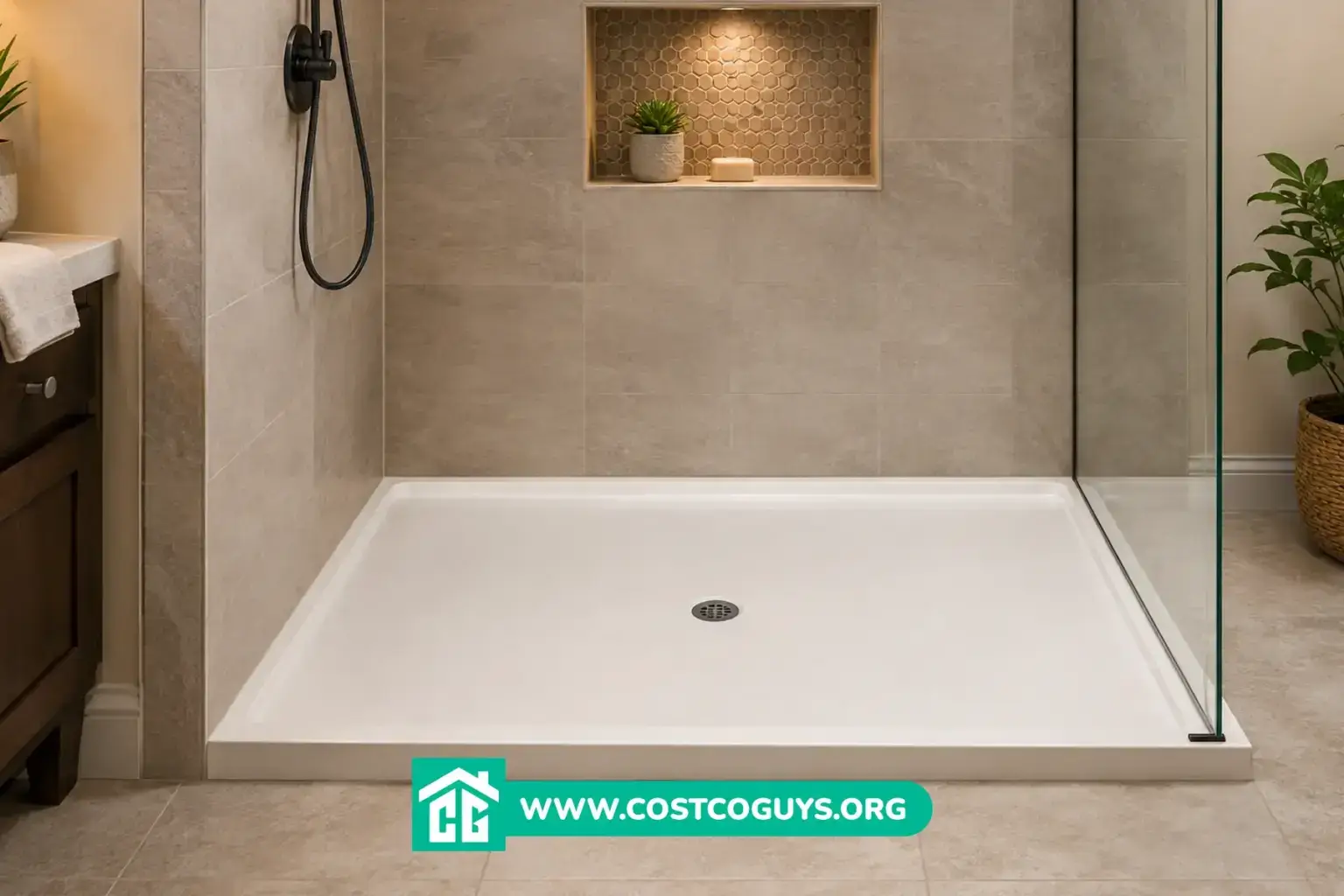

A 60 x 48 shower pan is a rectangular shower base measuring 60 inches long by 48 inches wide, built for walk-in or barrier-free showers where a standard 32×32 or 36×36 stall feels too tight. Most models cost between $200 and $1,200 depending on material, drain type, and whether the base is barrier-free.
- What a 60 x 48 Shower Pan Base Offers
- Acrylic vs Fiberglass 60×48 Shower Base Options
- Center Drain vs Left or Right Drain Configuration
- Barrier-Free and Curbless Shower Pan Options
- Installation Time and What It Involves
- DIY Installation vs Hiring a Pro
- Common Mistakes When Buying a Shower Pan
- Choosing the Right 60×48 Shower Pan for Your Bathroom
- FAQ
What a 60 x 48 Shower Pan Base Offers
This size sits at the large end of prefabricated shower bases, which is why it shows up so often in bathroom renovation projects that convert a tub into a walk-in shower. The extra floor space compared to a 60×32 or 48×36 pan makes it a common pick for primary bathrooms and accessible showers.
A shower base is the molded floor piece that sits under your shower walls and directs water to the drain. Unlike a traditional tiled mud bed, a prefabricated pan arrives pre-sloped, so you skip the multi-day mortar cure and reduce the chance of a poorly pitched floor that lets water pool.
Acrylic vs Fiberglass 60×48 Shower Base Options
Most 60×48 pans on the market are either high-quality acrylic or fiberglass-reinforced. Acrylic bases, like those from Royal Baths and MTI, use cross-linked cast acrylic backed by a rigid support layer to resist flexing underfoot. Fiberglass models, common from brands like BestBath, use a gel-coated surface over a fiberglass shell, which tends to run lighter and less expensive.
Both materials resist staining and are easy to clean with regular bathroom cleaners. The real difference shows up over time: acrylic generally holds its finish and color longer under daily use, while fiberglass can show wear or minor flex sooner in high-traffic households. Neither material needs sealing the way natural stone tile does.
| Material | Typical Price Range | What Affects the Price |
|---|---|---|
| Fiberglass | $200 to $500 | Base thickness, brand, drain finish |
| Acrylic | $350 to $900 | Reinforcement layer, threshold style, brand warranty |
| Ready-to-tile (foam core) | $400 to $700 | Curb configuration, waterproofing system included |
| Solid surface or cast marble | $800 to $1,200+ | Custom finish, commercial-grade construction |
Center Drain vs Left or Right Drain Configuration
Drain placement is one of the first decisions you’ll make, and it depends entirely on where your existing rough-in plumbing sits. A center drain configuration works when your drain line runs to the middle of the shower footprint, which is the most common setup in new construction and many tub-to-shower conversions.
If your existing drain sits off to one side, you’ll need a left-drain or right-drain pan instead of trying to relocate the plumbing, which adds real labor and often requires opening the floor. Measure from the drain center to both side walls before you order, since even an inch off can mean the pan won’t align.
Barrier-Free and Curbless Shower Pan Options
A barrier-free or curbless shower pan skips the raised curb entirely, creating a flush, roll-in entrance. These pans are popular for accessibility upgrades and for homeowners planning to age in place, since a low or nonexistent threshold reduces trip hazards and makes wheelchair access realistic.
Barrier-free bases in the 60×48 size often reference ANSI A117.1 accessibility guidelines and general ADA design principles for roll-in showers, though ADA itself technically applies to public accommodations rather than private homes. If accessibility is the goal, check the specific manufacturer’s spec sheet for threshold height, since “barrier-free” isn’t a single fixed number across brands. The U.S. Access Board’s ADA guidance covers roll-in shower dimensions if you need a reference point for a fully compliant install.
Installation Time and What It Involves
A prefabricated 60×48 pan typically installs faster than a traditional mud-set floor, often in a single day for the base itself, though the full shower project including walls, plumbing, and finishing usually spans several days. The pan sets on a level subfloor, gets secured (often with construction adhesive or mortar bed depending on the model), and connects to the drain assembly before walls go up.
Ready-to-tile foam core pans need a thin-set mortar layer and waterproofing membrane before tile goes on top, which adds a step compared to a finished acrylic or fiberglass pan that’s ready to use once walls are sealed. Either way, the subfloor has to be flat and structurally sound first. A pan sitting on an uneven or spongy subfloor can crack or shift over time, so this isn’t a step to rush.
DIY Installation vs Hiring a Pro
Basic DIY installers who are comfortable with plumbing connections and level work can often handle a straightforward center-drain pan replacement, especially with a ready-to-tile system designed for easy installation. Where it gets trickier is drain relocation, subfloor repair, or any barrier-free install that needs precise leveling across a wider footprint.
Hire a licensed plumber if the drain location needs to move, if you find soft or water-damaged subfloor when you pull up the old base, or if local building codes require a permit for the plumbing work. Local building codes and permit requirements vary by area, so check with your local building department, sometimes called the AHJ or authority having jurisdiction, before you start.
Common Mistakes When Buying a Shower Pan
- Ordering by rough opening size instead of actual pan dimensions, which can leave gaps at the walls.
- Skipping the drain rough-in measurement, resulting in a pan that doesn’t line up with existing plumbing.
- Choosing the cheapest fiberglass option for a household with several daily users, where a sturdier acrylic base often holds up better long-term.
- Forgetting to check threshold height against existing tile or flooring transitions, which matters most for barrier-free installs.
Internal link opportunity: link to a Costco Guys guide on walk-in shower sizes.
Choosing the Right 60×48 Shower Pan for Your Bathroom
The right 60×48 shower pan comes down to three things: your existing drain location, whether you want a curb or a barrier-free entrance, and how much daily wear the shower needs to handle. Measure your rough-in first, decide on material based on budget and durability needs, and confirm threshold height if accessibility is part of the plan. Once those three details are locked in, picking a specific model gets a lot easier.
FAQ
Is a 60×48 shower pan a standard size?
It’s one of the larger common prefabricated sizes, though not as universal as 32×32 or 60×32. Most major manufacturers, including Tile Redi and BestBath, stock 60×48 in multiple drain configurations, so availability is generally good.
Can I install a 60×48 shower pan myself?
Basic DIY installers can often handle a straightforward center-drain replacement on a sound subfloor. If the job involves moving the drain, repairing subfloor damage, or meeting accessibility code requirements, bring in a licensed plumber.
What’s the difference between a shower pan and a shower base?
The terms are used interchangeably in most product listings. Both refer to the molded floor piece that sits under the shower walls and channels water to the drain.
Do I need a permit to replace a shower pan?
It depends on your local building department. A straight swap with no plumbing changes often doesn’t need one, but drain relocation or full bathroom renovations frequently do. Check with your local AHJ before starting work.
What’s the price difference between acrylic and fiberglass 60×48 pans?
Fiberglass models typically run $200 to $500, while acrylic bases usually cost $350 to $900. The gap comes down to reinforcement, finish quality, and brand warranty terms.
