

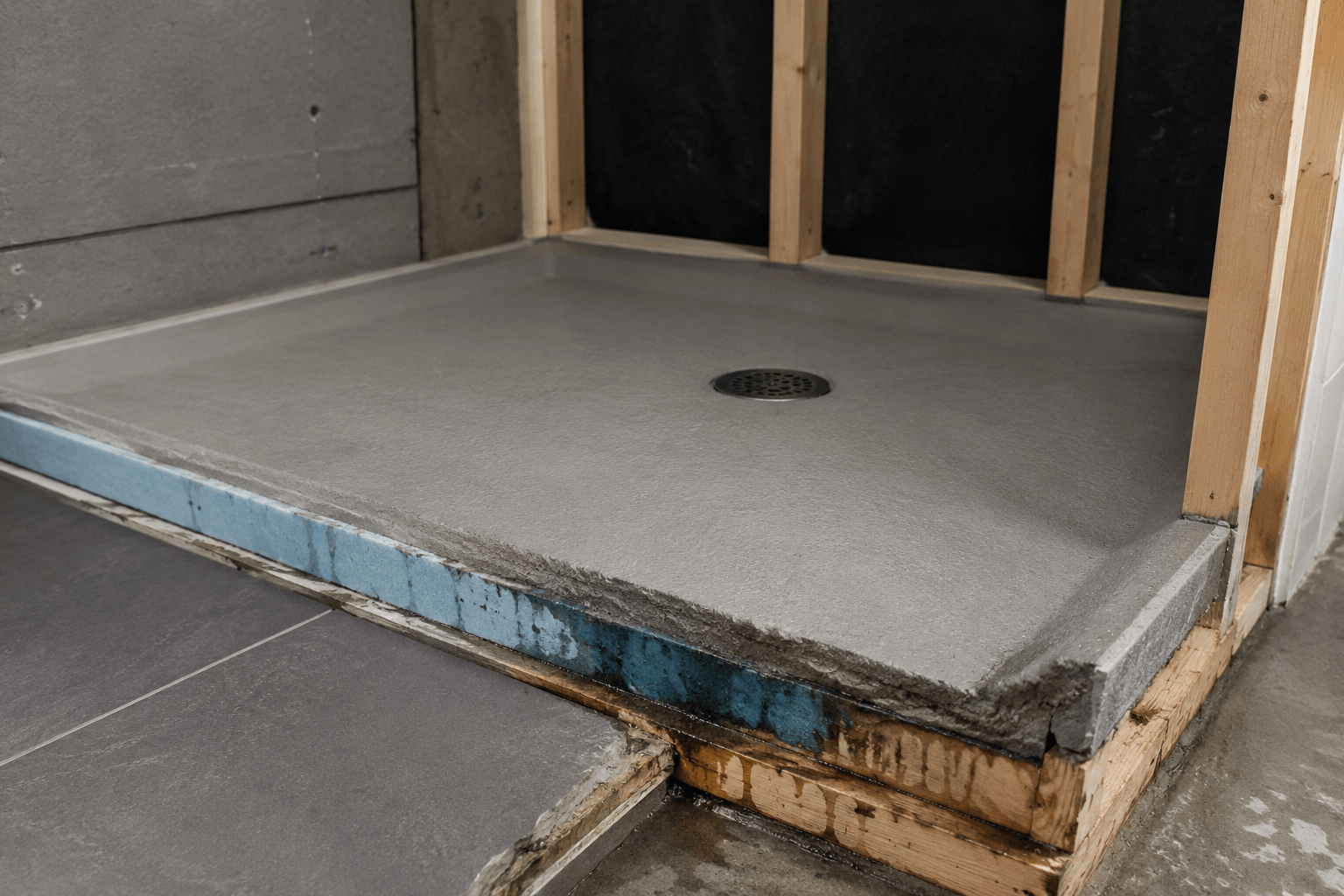

A pre-sloped shower pan kit costs $85 to $600 for a foam-core tray, and up to $1,200 or more for a fully waterproofed one-piece system, in 2026. Price depends mostly on the brand, the pan size, and whether the kit already includes a membrane and drain.
- What a Pre-Sloped Shower Pan Actually Is
- Pre-Sloped Shower Pan Cost Breakdown for 2026
- Pre-Sloped Pans vs. Mud Beds vs. Membrane Kits
- How to Install a Pre-Sloped Shower Pan Kit
- Common Mistakes That Cause Shower Pan Leaks
- When to Call a Plumber or Tile Contractor
- How These Cost Estimates Were Calculated
- Choosing the Right Pre-Sloped Shower Pan for Your Project
- Pre-Sloped Shower Pan FAQs
What a Pre-Sloped Shower Pan Actually Is
A pre-sloped shower pan is a factory-made shower base that already has the correct pitch built in. Instead of a tile setter hand-shaping a mortar bed to guide water toward the drain, the slope arrives ready to go. Most kits use a lightweight, high-density foam core, and some ship with a waterproof membrane already bonded to the surface.
Brands like Schluter Kerdi-Shower, Laticrete Hydro Ban, Tile Redi, KBRS, and Trugard all sell versions of this product. Some are simple preformed trays that still need a separate waterproofing step. Others, like the Tile Redi one-piece pan, come fully sealed with the curb, drain flange, and splash walls built in. A flange is the raised lip around the drain opening that the waterproofing bonds to, and it’s one of the most common leak points if it isn’t sealed correctly.
Plumbing code generally calls for a shower floor to slope at a quarter inch per foot toward the drain. A pre-sloped pan hits that pitch consistently across the entire surface, which is harder to guarantee with a hand-floated mud bed.
Pre-Sloped Shower Pan Cost Breakdown for 2026
Prices below reflect current retailer listings and manufacturer pricing as of mid-2026. Ranges vary because pan size, drain configuration, and shipping weight all move the final number.
| Item/Service | Typical Cost Range | What Affects the Price |
|---|---|---|
| Preformed slope tray only, no membrane | $85 to $400 | Size, brand, whether a curb is included |
| Foam-core kit with waterproofing (Kerdi-Shower, Hydro Ban) | $250 to $600 | Size, center vs. off-center drain, PVC vs. ABS drain body |
| One-piece tile-ready pan (Tile Redi style) | $600 to $1,200+ | Curb count, drain style, custom cuts |
| Traditional mud bed, materials only (DIY) | $100 to $150 | Liner cost, number of mortar bags needed |
| Traditional mud bed, professionally installed | $350 to $650 | Local labor rates, pan size, prep work |
A Schluter Kerdi-Shower 32-inch by 60-inch kit with a PVC drain currently lists for $519 at Home Depot. That price includes the sloped tray, curb, waterproofing membrane, and seals, but not the drain grate on every version. A one-piece Tile Redi-style pan tends to run higher because the entire unit, curb and all, ships as a single molded piece and often travels LTL freight due to its size.
Contractors quote traditional mud beds at $45 to $150 an hour for labor, on top of $350 to $650 for the finished pan. The wide range comes down to region and whether the job needs extra framing or subfloor repair first.
Pre-Sloped Pans vs. Mud Beds vs. Membrane Kits
A traditional mud bed uses a mortar mix, called dry-pack, spread over a PVC or CPE liner and hand-shaped to slope toward the drain. It takes real skill to get an even pitch, and it usually needs two visits: one to float the pre-slope, another to set the final pan once the liner and drain clamping ring are in place.
A membrane kit like Kerdi-Shower speeds that up with a preformed tray, but it still relies on thin-set mortar to bond the waterproofing band at every seam and corner. One tile contractor ran a live demonstration where water wicked nearly two inches under a properly installed Kerdi waterproofing band within 20 hours, since thin-set itself isn’t waterproof. That doesn’t mean the system fails when installed correctly, but it shows why seam quality matters more than the pan itself.
A one-piece tile-ready pan skips seams almost entirely. The curb, floor, and drain flange come molded as a single unit, so there’s no thin-set joint for water to travel through. That’s the main reason installers describe these pans as the lowest-risk option for a DIYer, even though they cost more upfront than a mud bed or a basic slope tray.
How to Install a Pre-Sloped Shower Pan Kit
Every brand has its own instructions, but the general process looks similar across most kits. Read your specific manufacturer’s guide before starting, since drain height and thin-set type vary by product.
- Dry-fit the pan in the shower opening to confirm it clears the framing and the drain rough-in lines up.
- Measure and cut the drain riser pipe to the exact height the kit’s drain assembly needs. This is the step where most DIY installs go wrong.
- Set the pan into a bed of thin-set mortar, following the ratio and mix type the manufacturer specifies.
- Connect the drain flange and tighten the clamping ring so it grips the waterproofing evenly.
- Apply waterproofing membrane strips or sheet membrane over every seam, corner, and the curb.
- Run a flood test, plugging the drain and filling the pan with an inch or two of water for at least 24 hours, before any tile goes down.
Common Mistakes That Cause Shower Pan Leaks
Cutting the drain pipe to the wrong height causes more failed installs than any other single mistake. If the P-trap, the curved section of pipe that blocks sewer gas from entering the bathroom, sits too high in the slab, the drain assembly won’t seat correctly no matter how the pan is set.
Skipping the flood test is another frequent shortcut. A pan can look and feel solid and still leak once water sits on it for a full day. Testing before tile goes down means any fix is cheap. Testing after means tearing tile back out.
Poor subfloor support is a quieter problem. Lighter foam-core pans can flex if the framing underneath isn’t solid, which eventually cracks grout lines even when the waterproofing itself holds. Manufacturers publish minimum subfloor and joist spacing requirements for this exact reason, and skipping that check is a common regret among first-time installers.
When to Call a Plumber or Tile Contractor
Call a plumber first if the drain rough-in height doesn’t match what your chosen pan kit needs. Adjusting a P-trap inside a concrete slab isn’t a DIY-friendly fix, and getting it wrong means redoing plumbing work later.
A tile contractor earns their fee on curbless or linear-drain showers, where the slope has to work in two directions at once instead of toward a single center point. Structural subfloor repairs, uneven joists, or any sign of existing water damage also call for a professional before a new pan goes in.
How These Cost Estimates Were Calculated
These ranges come from current retailer pricing at Home Depot, Amazon, and manufacturer sites for Schluter, Laticrete, and Tile Redi-style products, cross-checked against published cost-guide data for traditional mud bed labor and materials. Costs reflect editorial judgment based on that research, not an official or audited industry figure, and they can shift with material costs, shipping rates, and regional labor pricing. Treat these numbers as a starting point for budgeting, and always check local codes before starting plumbing work.
Choosing the Right Pre-Sloped Shower Pan for Your Project
For most bathroom remodels, a pre-sloped shower pan in the $250 to $600 range covers a standard-size shower with a name-brand waterproofing system attached. Budget-conscious DIYers can get away with a $85 to $400 slope tray paired with a separate liner, while anyone who wants the lowest leak risk should look at a one-piece pan closer to $600 to $1,200.
The right pick usually comes down to your shower’s exact dimensions, your comfort level with thin-set work, and how much you value skipping seams altogether. Whatever route you take, don’t skip the flood test. It’s the one step that catches a bad install before it becomes an expensive one.
Pre-Sloped Shower Pan FAQs
What size pre-sloped shower pan is most common?
32 inches by 60 inches is the most widely stocked size across major brands, including Schluter Kerdi-Shower and Tile Redi. Larger sizes and custom cuts cost more and often need special order or freight shipping.
Can I install a pre-sloped shower pan kit myself?
Yes, many DIYers install these kits successfully, especially the foam-core tray versions. The trickiest part is cutting the drain riser to the correct height, so measure twice before cutting.
Do pre-sloped shower pans need a mortar bed underneath?
Most foam-core and one-piece kits skip the mortar bed entirely and set directly on a properly supported subfloor with thin-set mortar. Some manufacturers still recommend a thin leveling layer on uneven concrete slabs.
How long does a pre-sloped shower pan last?
A correctly installed pan with intact waterproofing can last as long as the tile itself, often 20 years or more. Longevity depends heavily on flood-testing before tile goes down and keeping grout sealed over time.
Is a pre-sloped shower pan cheaper than a traditional mud bed?
A basic slope tray can cost less than a professionally installed mud bed, but a full waterproofed kit or one-piece pan often costs more in materials. The savings usually show up in labor time instead of the material price.
