

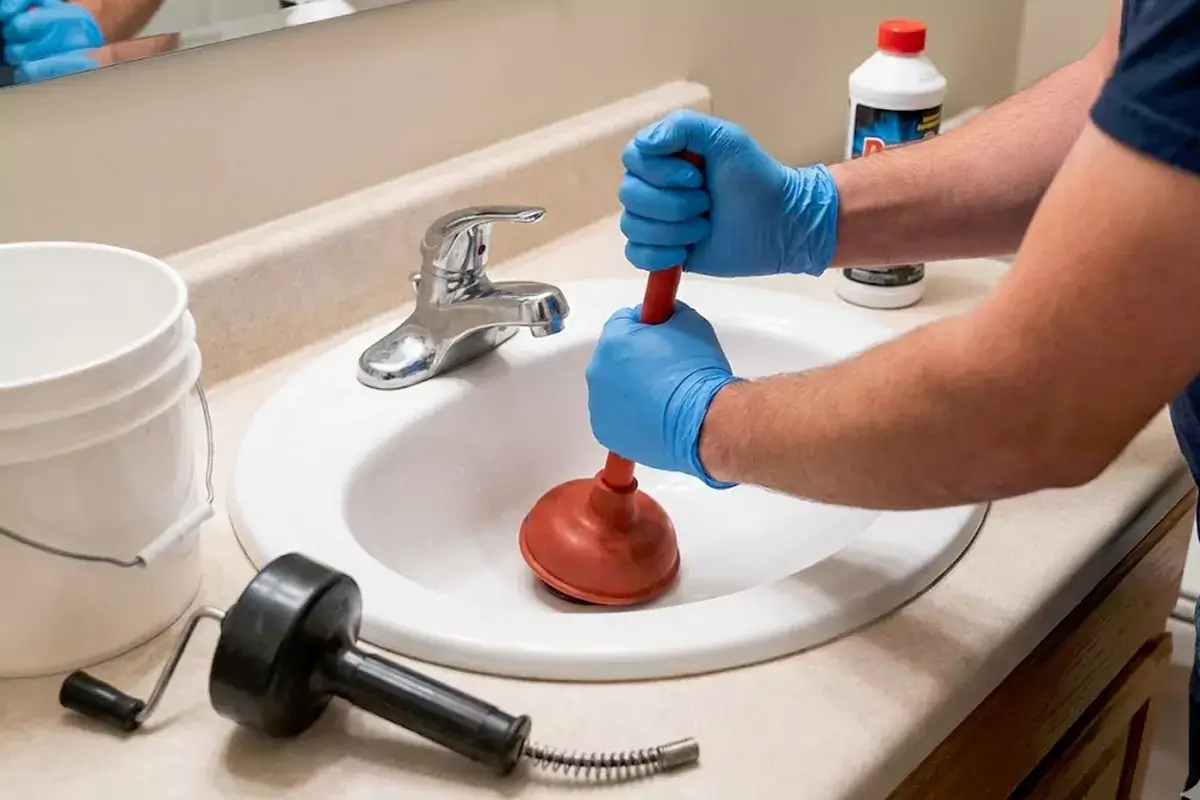

You can unclog a drain line using several proven methods. Start with a plunger for simple blockages. For stubborn clogs, try a drain snake or remove the P-trap under your sink. The key is choosing the right method based on your pipe material and the severity of the blockage. This guide walks you through safe, practical steps to clear your drain without damaging your pipes.
Common Causes of Drain Line Clogs
Most drain clogs happen because of everyday items that shouldn’t go down your pipes. Hair, grease, soap scum, and food particles are the main culprits. Tree roots can also break into your main sewer line and create serious blockages.
Your kitchen sink faces different problems than your bathroom drain. Cooking oils and fats stick to pipe walls and trap other debris. Over time, this buildup narrows your pipes until water barely flows through. In bathrooms, hair combines with soap residue to form tough clogs that hook onto drain walls.
Coffee grounds, grease, and materials that clump or solidify should never go in your sink. These substances cause most preventable clogs. Small items like cotton swabs, dental floss, and food scraps also contribute to blockages when flushed down drains regularly.
Tree roots naturally move toward water sources and can break into your municipal sewer system. Older pipes are especially vulnerable to root damage. Sagging sewer lines create divots that prevent water from flowing freely, which leads to standing water and clogs.
How to Diagnose the Clog: Mild vs Severe vs Deep Pipe Issues
Before you start working on your drain, figure out what kind of problem you have. A mild clog drains slowly but still moves water through. A severe clog stops water completely. Deep pipe issues affect multiple drains in your home and signal problems with your drainage system.



Check if only one drain is slow or if several drains back up at once. Single-drain problems usually mean a local blockage near that fixture. Multiple drains backing up, gurgling sounds from pipes, and foul odors signal a main sewer line issue. These symptoms require different solutions than simple sink clogs.
Watch how fast water drains after you run the faucet. A slow-draining sink that pools water for several minutes indicates a partial blockage. Complete stoppage means you have a full clog that needs immediate attention. Listen for bubbling or gurgling noises, which suggest air trapped behind the blockage.
Test your toilet’s flush power if you suspect a deeper problem. Weak flushing combined with slow sink drains points to main line issues. Look for wet spots in your yard near where sewer lines run underground. These signs help you decide whether to try DIY plumbing methods or call a professional right away.
Safe DIY Methods for Minor and Moderate Clogs
Start with the simplest solution first. Many clogs respond to basic blockage removal techniques that don’t require special tools or chemicals. These methods work best for fresh clogs that haven’t had time to harden.
For minor clogs consisting of hair, soap scum, or grease, combining baking soda and vinegar can be effective. Pour one cup of baking soda down the drain pipe. Follow with two cups of white vinegar slowly. The fizzing reaction creates carbon dioxide and water that bubbles through the clog, breaking it up into loose material. Let this mixture sit for 30 minutes before flushing with hot tap water.
Hot water alone can help with grease clogs, but temperature matters for your plumbing system. Use hot tap water, not boiling water, especially if you have PVC pipes. PVC pipes are most at risk from boiling water, which can cause softening and warping at high heat. Most modern homes use PVC under sinks, and PVC piping is designed for a maximum service temperature of about 140 degrees. Boiling water reaches 212 degrees and can damage your pipes over time.
For preventive maintenance, consider enzyme-based drain cleaners that use natural enzymes and bacteria to break down organic blockages like fats, oils, and food scraps. Lipase enzymes break down fats and oils, proteases tackle proteins, and amylases deal with carbohydrates. These cleaners work slower than chemicals but are safer for your plumbing maintenance routine.
Using a Plunger Correctly
A plunger works through pressure, not magic. Choose the right type for your drain. Sink plungers have a flat bottom, while toilet plungers feature a flanged bottom. Don’t use a toilet plunger on your sink.
Fill the sink with enough water to cover the plunger head. This creates the seal you need for effective plunging. Press the plunger firmly over the drain opening to remove air pockets. Push down and pull up vigorously 15 to 20 times. The suction and pressure work together to dislodge the clog.
Apply petroleum jelly to the plunger’s rim for a better seal. This simple trick improves your results. If the water starts draining, you’ve cleared the blockage. Run hot tap water for two minutes to flush remaining debris through the pipes.
Using a Drain Snake or Wire Step by Step
A drain snake (also called an auger) reaches clogs that plungers can’t touch. You can buy one at any hardware store for under $20. This tool has a long, flexible cable that breaks up or hooks onto blockages.
Push the cable until it reaches the obstruction, then turn the handle clockwise to dig the tip into the clog. You’ll feel resistance when you hit the blockage. Twist, push, and pull the cable to break apart the material. Work slowly to avoid damaging pipe walls.
Feed the snake into your drain opening or through the cleanout access point. Work the auger in both directions, back towards the house and out from the house. This ensures you clear the blockage completely, not just push it deeper into the system.
After you remove the snake, run hot tap water to flush loosened debris. If water still drains slowly, you may need to snake the drain again or try a different approach. Clean your snake thoroughly after each use to prevent spreading bacteria.
What to Do and What to Avoid Based on Pipe Type
Your pipe material determines which pipe clearing methods are safe. Using the wrong technique can cause expensive damage that requires professional repair. Most homes built after 1970 have plastic pipes under sinks.
PVC is white plastic that’s clearly visible under your sink. You can tap on it to hear a hollow plastic sound. Metal pipes like cast iron or copper can handle boiling water without issue. If you have metal pipes, hot water methods work safely.
PVC pipes can withstand heat, but not water temperatures up to 100 degrees Celsius. Regular exposure to boiling water softens the glue holding pipe joints together. Over time, water pipes deteriorate and begin to leak, requiring immediate repair or replacement. This damage happens gradually, so you might not notice problems right away.
Avoid chemical drain cleaners when possible. Chemical drain cleaners can be hard on your drain pipe and should be used as a last resort. These products contain caustic chemicals that eat away at clogs but also corrode pipes. They’re especially harsh on older pipes or those already weakened by previous damage.
ABS pipes (usually black plastic) handle heat better than PVC but still have limits. ABS pipes can withstand exposure to boiling water better than PVC, but prolonged contact may still cause warping. When in doubt, stick with hot tap water instead of boiling water for any plastic pipe system.
When to Call a Professional Plumber
Some clogs require professional equipment and expertise. Knowing when to stop trying DIY methods saves you time and prevents pipe damage. Professional plumbers have specialized tools like hydrojets and camera inspection equipment.
Call a plumber if you’ve tried multiple methods without success or if you’re uncomfortable performing these tasks yourself. Recurring clogs in the same drain suggest a deeper problem. Multiple fixtures backing up simultaneously means your main sewer line needs professional attention.
Tree root infiltration requires professional assessment and removal. Roots can cause significant pipe damage that DIY methods can’t fix. Plumbers may recommend hydrojetting or pipe replacement depending on the damage. Hydrojetting uses high water pressure to clear the inside of pipes, breaking down materials like fats, oils, and grease lining the interior walls. These services cost more upfront but prevent repeated clogs and water damage.
Watch for warning signs that indicate serious problems. Foul odors, water pooling in unexpected places, and sewage backing up into your home all require immediate professional help. Don’t wait if you smell sewer gas or see water damage around fixtures.
Older homes with original pipes may have corrosion or structural issues. Attempting aggressive unclogging methods on fragile pipes can cause breaks or leaks. A plumber can inspect your pipes and recommend the safest approach for your specific situation.
Preventive Drain Maintenance to Keep Pipes Clear
Preventing clogs is easier and cheaper than fixing them. Simple habits protect your drain line and extend the life of your plumbing system. Most clogs develop over weeks or months, giving you plenty of time to prevent them through proper drain care.
Cover fixture drains with protective grates or nets to catch large debris. These simple devices stop hair, food particles, and other materials from entering your pipes. Clean these screens weekly to maintain good drainage. Hair catchers in showers prevent the most common bathroom clogs.
Never pour grease, oil, or fat down your kitchen drain. Grease solidifies in pipes and attracts debris to stick to it. Instead, pour cooled grease into a container and throw it in the trash. Wipe greasy pans with paper towels before washing them.
Flush your drains weekly with hot tap water. Pour a drain-cleaning solution of baking soda and vinegar into fixtures monthly to prevent blockages. This maintains clean pipes without harsh chemicals. Periodically flushing drains with hot water and dish soap helps dissolve accumulated soap scum and grease. Run water for several minutes after using your garbage disposal to wash food particles completely through the system.
Use cold water when running your garbage disposal to flush food particles down the pipe. Cold water keeps fats solid so they move through pipes instead of coating them. Avoid putting fibrous vegetables, coffee grounds, or eggshells in your disposal.
Clean your P-traps twice a year. P-traps trap water in the bend to prevent gases from escaping and tend to clog with food, hair, and minerals. Place a bucket under the trap, unscrew it, clear out debris, and replace it. This simple maintenance prevents most sink clogs.
Enzyme-based drain cleaners work to clear organic waste by introducing enzymes or bacteria that feed on organic matter. These products work slower than chemical cleaners, taking eight to 24 hours to remove blockages, but they’re excellent for drain maintenance. Use them monthly as part of your drain cleaning routine to prevent clog formation.
Schedule professional drain cleaning every few years. Plumbers can clear buildup before it becomes a problem. Regular maintenance costs less than emergency repairs and keeps your plumbing system running smoothly for years.
Key Takeaways
Your drain line health depends on regular care and smart choices. Use methods appropriate for your pipe material, especially avoiding boiling water on PVC pipes. Start with simple solutions like plungers before moving to mechanical tools like drain snakes. Remember that preventive maintenance through drain screens and proper disposal habits stops most clogs before they start. Consider enzyme-based cleaners for gentle, ongoing drain care that supports your entire drainage system. Call a professional when you face recurring clogs, multiple backed-up drains, or signs of main sewer line damage.
