

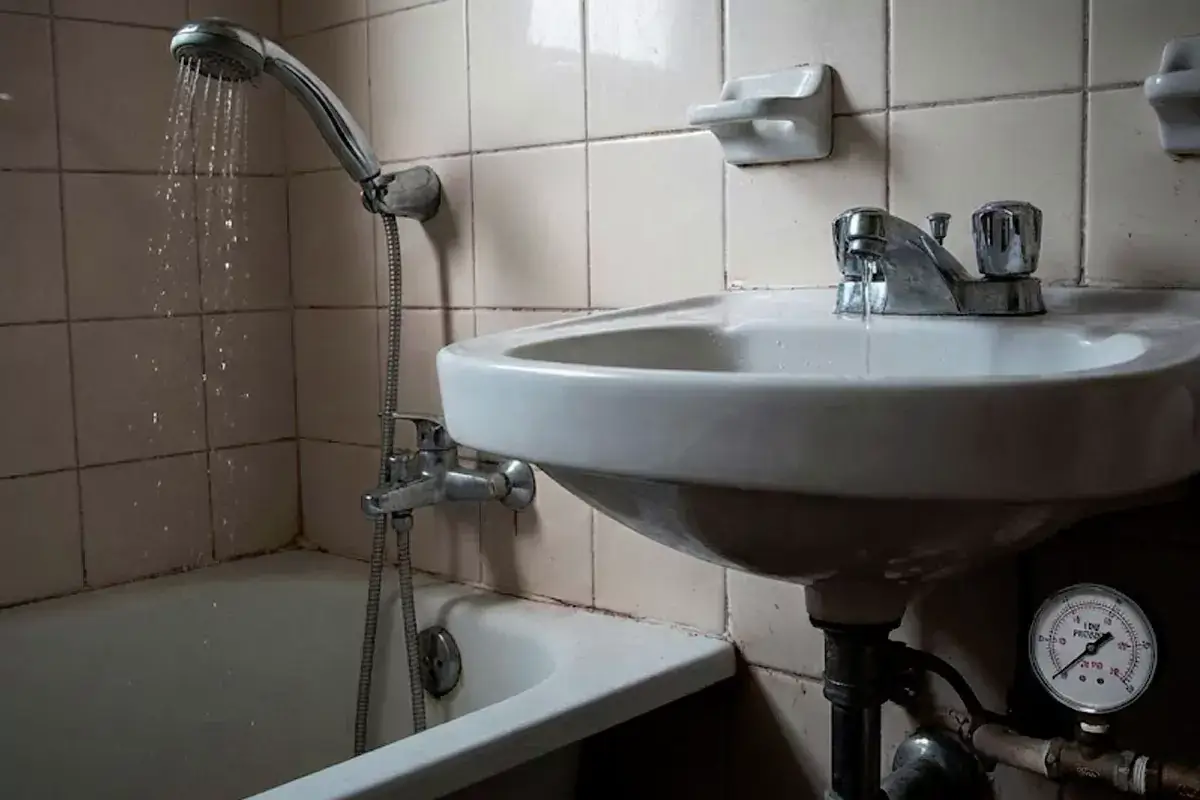

Low water pressure can turn your shower into a trickle and make washing dishes take twice as long. How to improve water pressure in your home starts with testing your current pressure, identifying what’s causing the problem, and fixing it with the right solution. Most pressure issues come from clogged fixtures, old pipes, or incorrect valve settings. You can fix many of these problems yourself without calling a plumber.
Test Your Water Pressure First
You need to know your current pressure before you can fix it. Testing takes about 10 minutes and costs less than $15 for a pressure gauge.
Normal home water pressure should fall between 40 and 60 PSI (pounds per square inch), with 50 PSI being the sweet spot for most households. Anything below 40 PSI feels weak when you turn on your faucet or shower. Pressure below 20 to 30 PSI is considered inadequate and won’t run most appliances properly. Understanding hydraulic pressure (derived from the Greek words “hydro” meaning water and “aulos” meaning pipe) helps you see why proper force matters in your residential plumbing system. You can buy a water pressure gauge at any hardware store. Attach it to an outdoor faucet or the washing machine connection. Make sure no water is running anywhere in your house during the test. Turn the faucet on fully and read the gauge. If your reading shows low pressure, you can start looking for the cause. Testing at different times of day helps you spot patterns, since pressure can change based on neighborhood demand.
Common Causes of Low Water Pressure
Low pressure happens for several reasons. Your main shut-off valve might be partially closed from a recent repair. Check the valve near your water meter and make sure it’s turned all the way open.
Clogged pipes and fixtures cause most pressure problems. Mineral buildup from hard water gradually accumulates on aerator screens and inside pipes, blocking water flow. Old homes with galvanized steel pipes often have pipe corrosion that narrows the inside diameter over time. Debris from plumbing work, rust particles from older pipes, and sediment from your water supply can all lodge in your fixtures. Your pressure-reducing valve might need adjustment too. These valves control how much pressure enters your home from the main line. If yours is set too low or failing, your whole house suffers. The pressure differential between your municipal supply and your fixtures determines how well water reaches every tap. Leaks anywhere in your system steal pressure from where you need it. Even small leaks you can’t see yet will create a noticeable pressure drop throughout your home.
Quick Fixes You Can Try Today
Start with the easiest solutions before you call for help. These fixes take 30 minutes or less and need basic tools you probably already own. Water flow optimization begins with simple home maintenance tasks that anyone can handle.



Clean your fixture aerators first. Unscrew the aerator from your faucet tip, soak it in white vinegar for 30 to 60 minutes to dissolve mineral deposits, then scrub it with a small brush. The vinegar breaks down hard water buildup that blocks the tiny holes in the screen. You should clean aerators every six months to prevent mineral deposits and debris from causing clogs. If you can’t remove a stuck aerator, fill a plastic bag with vinegar and secure it around the faucet with a rubber band. Replace old showerheads and faucets if cleaning doesn’t help. Modern fixtures give better water flow rate even at lower pressure. Check all visible supply pipes for leaks and fix them right away. Even small drips add up and steal pressure from your system.
Adjust Your Pressure Regulator
Your home’s pressure-reducing valve sits where the main water line enters your house. Water coming from the city main line often runs as high as 200 PSI, which is too much for your home’s pipes and fixtures. The regulator brings it down to a safe level. Look for a bell-shaped device on your main line, usually in the basement or crawl space. Some have an adjustment screw on top. Turn it clockwise to increase pressure, counterclockwise to decrease it. Make small adjustments and test the pressure after each change. Most homes should maintain approximately 60 to 65 PSI for comfortable daily use. Proper adjustment ensures you have adequate pressure for all your daily needs without risking damage to your plumbing.
When to Upgrade Your Plumbing System
Sometimes simple fixes aren’t enough. Older homes with corroded pipes or consistently low municipal pressure need bigger solutions. Plumbing pressure enhancement through equipment upgrades delivers lasting results.
A water pressure booster pump adds force to push water through your system. These pumps work by pumping water into a tank that’s partially filled with air, and as the tank fills, it compresses the air to create pressure. Booster pumps rated for 70 PSI cost between $80 and $200, while pumps handling up to 3 gallons per minute run from $60 to $300. Professional installation averages around $1,200 but can range from $200 to $10,000 depending on your situation. Install the pump right after your main shut-off valve in the basement. You’ll need electrical work done by a licensed electrician since the pump requires its own circuit. Multi-story homes benefit most from booster systems. The water has to move against gravity to reach upper floors, and a booster pump can counterbalance this factor. This solution works well for both city water and well water systems that struggle with consistent delivery.
Replace old pipes if they’re corroded or too narrow. Galvanized steel pipes from before 1960 often need replacement. Copper or PEX pipes have smooth interiors that let water flow freely. Consider a water softener if you live in an area with hard water. Water softeners reduce the concentration of dissolved minerals that cause buildup in your fixtures and pipes. This prevents future clogs and keeps your pressure strong. If you want to increase shower pressure specifically, combine a booster pump with new showerheads designed for low-pressure systems.
Keep Your Water Pressure Strong Long-Term
Regular maintenance prevents pressure problems before they start. Build these tasks into your home care routine.
Test your pressure twice a year with your gauge. Write down the readings so you notice changes over time. Clean your aerators every three to six months, or monthly if you have hard water or old pipes. Flush your water heater annually to remove sediment that builds up at the bottom. This sediment can affect your hot water pressure. Check for leaks during your seasonal maintenance. Look under sinks, around toilets, and at pipe connections in your basement. Fix small leaks immediately before they get worse. Watch your water use patterns too. Running multiple fixtures at once drops pressure in every home. Stagger heavy water use like showers, dishwashers, and laundry to maintain better pressure throughout your house.
Monitor your main valve and pressure regulator. Make sure nobody accidentally closes the main valve partially. Test your pressure regulator every few years. These devices can fail over time, causing sudden pressure increases that lead to leaks or burst pipes. Replace regulators that show signs of wear or don’t maintain steady pressure. Keep your plumbing maintenance records in one place. Note when you clean fixtures, replace parts, or notice pressure changes. This history helps you spot patterns and catch problems early. Understanding pressure as a force (one meaning of this term with multiple uses) rather than just stress helps you maintain your system properly.
Key Takeaways:
Your water pressure directly affects daily comfort and how well your appliances work. Most homes should maintain 40 to 60 PSI for good performance. Start by testing your current pressure with a simple gauge from the hardware store. Look for common causes like partially closed valves, clogged aerators, old pipes, or failing pressure regulators. Try easy fixes first like cleaning aerators with vinegar, checking your main valve, and inspecting for leaks. When simple solutions don’t work, consider a booster pump for consistent pressure or replace corroded pipes. Regular maintenance every few months keeps your water flowing strong and prevents expensive repairs down the road. Simple home maintenance tasks combined with proper plumbing pressure enhancement when needed ensure your residential plumbing system delivers adequate pressure for comfortable living.
