

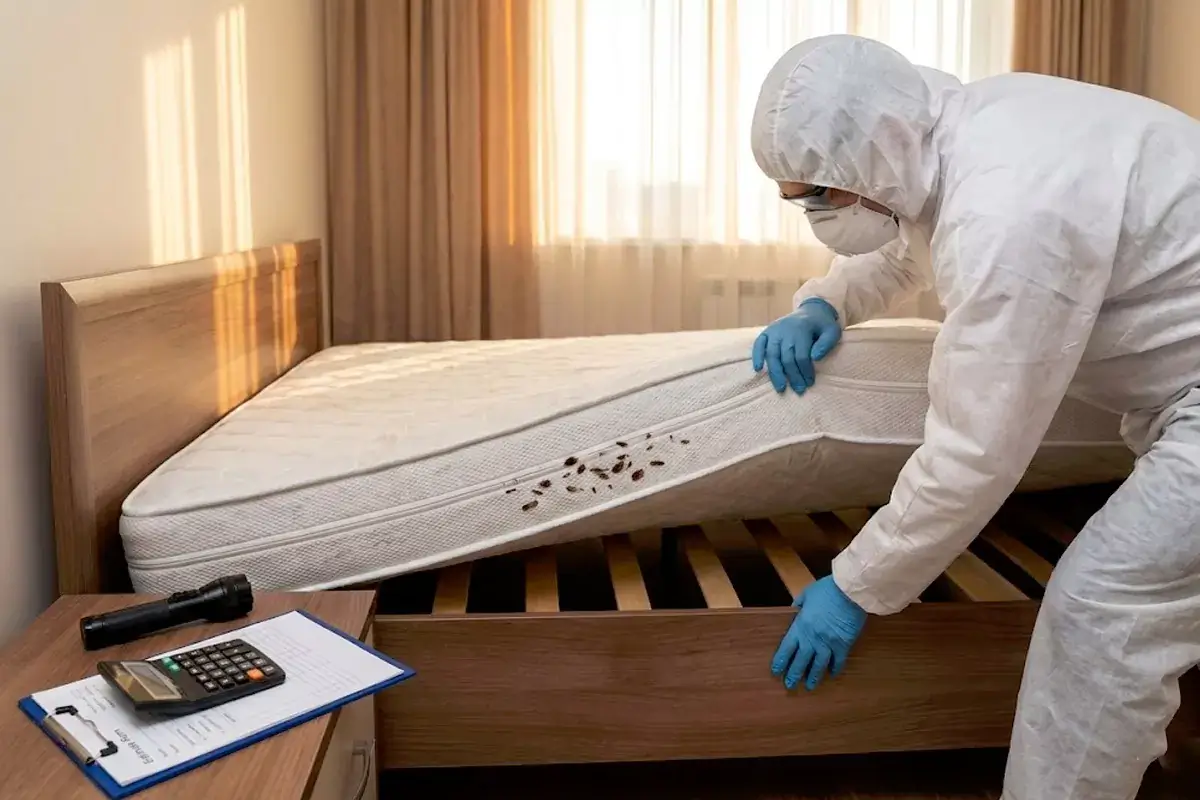

Professional pest control for bed bugs typically costs between $1,000 and $5,000 for a whole home, though prices vary based on your home’s size, the severity of the problem, and which treatment method you choose. Single-room treatments start around $200 to $800 for minor cases, while severe infestations can push costs above $6,200. Understanding these price ranges helps you budget properly and avoid overpaying when these unwanted guests invade your space.
How Much Does Pest Control Cost For Bed Bugs
The average homeowner pays between $1,000 and $4,000 for professional bed bug treatment, though your final bill depends on several factors.
Single room treatments range from $200 to $400 per room, or around $4 to $7.50 per square foot. If you’re dealing with just one bedroom with a light problem, you’ll spend less. But when bugs spread throughout multiple rooms or hide deep in furniture and walls, costs climb quickly. This extermination expense varies by method—chemical treatments run similar per-room rates, while heat treatments can reach $1 to $3 per square foot depending on the area size. Most companies charge either per room, per square foot, or a flat rate for the entire job. The price estimate for treating one bed sits around $279 nationally, though geographic location plays a role in pricing.
Don’t forget about follow-up visits. Initial inspections cost $75 to $200, and follow-up appointments run another $75 to $225. Since bed bugs often require multiple treatments to completely eliminate, your total cost might include several visits. Exterminators may need to make multiple visits at rates of $415 to $625 per visit. Some pest management companies offer package deals that include the initial treatment plus follow-ups at a reduced rate.
Factors That Influence Bed Bug Treatment Cost
Several key elements affect how much you’ll pay to eradicate bed bugs from your home.
Home size matters most. Exterminators typically charge $4 to $7.50 per square foot, so larger homes need more time, labor, and treatment materials. A small apartment costs less than a sprawling house simply because there’s less area to cover. Even if bugs only infest one room, professionals often recommend treating adjoining spaces to prevent spread. The square footage directly impacts your bottom line—treating 1,000 square feet costs substantially less than treating 3,000 square feet.



Infestation severity changes everything. While treating an average bed bug infestation costs $1,000 to $2,500, a more serious case can cost $4,000 to $6,000. A few bugs spotted early require minimal treatment. But if they’ve been breeding for months and spread into walls, outlets, and furniture, you’ll need more aggressive—and expensive—solutions. Heavy infestations take more product, more time, and sometimes require bringing in extra technicians. This degree of contamination determines whether you’re looking at a quick fix or an extensive treatment plan.
Your location affects pricing. Apartment buildings can be hot spots for bed bugs to spread from unit to unit, and extermination costs can be three times higher in areas with lots of apartments, like major cities. Urban areas with dense housing and high tourism see more bed bug activity, which drives up demand and costs for removal services. Cities also have higher labor rates and business overhead. The cost of fumigation in New York costs 3-5 times as much as it does in Southern California. Rural areas generally charge less, though you might have fewer companies to choose from.
Furniture quantity adds up. Many pros will charge an additional fee for each piece of furniture that needs to get treated. Each chair, cabinet, or dresser needs inspection and treatment, adding 30 to 60 minutes of labor and requiring more product. In worst-case scenarios, heavily infested furniture can’t be saved and must be disposed of properly, which brings its own costs. The number of items requiring treatment directly correlates with your final bill.
Typical Cost Ranges by Home Size and Infestation Severity
Understanding pricing structures based on specific situations helps you budget more accurately.
For single room treatments, expect to pay $200 to $800 per room in most areas. This works if you catch the problem early and it hasn’t spread beyond one bedroom or living space. The room’s square footage, furniture density, and how long the bugs have been there all affect the final price. A localized infestation costs significantly less than widespread problems.
For whole house treatments, costs range from $1,200 to $5,000 or more depending on property size, severity of the infestation, and treatment method employed. Treating your entire home makes sense when bugs have moved between rooms or when you want complete peace of mind. This comprehensive treatment approach ensures no hiding spots remain untreated.
Severity-based pricing breaks down roughly like this: Light infestations with just a few visible bugs in accessible areas cost least. Moderate infestations where bugs have spread to multiple pieces of furniture cost more. Severe infestations requiring extensive treatment across multiple rooms or fumigation can cost $4,000 to $6,200. The most extreme cases, particularly in large buildings, can reach $50,000 for fumigation. The level of penetration throughout your property determines which end of the price spectrum you’ll face.
Multiple treatments factor in. Bed bugs have life cycles that span several weeks—eggs hatch into nymphs that become adults. A single treatment might miss some eggs, which then hatch and require another round. Most infestations require two to three visits, and serious bed bug infestations may require quarterly, monthly, or even semi-monthly treatments. These recurring service visits must be factored into your total budget.
Common Treatment Methods and Their Relative Costs
Different elimination techniques carry different price tags and work better for specific situations.
Chemical treatments use insecticides applied to infested areas. Chemical treatments range from $270 to $775 per room. These treatments cover surfaces, cracks, and crevices where bugs hide. The advantage? Chemicals leave behind residual protection that continues killing bugs for weeks or months after application. The downside? Bed bugs can detect and avoid some chemicals, and some populations have developed resistance. You’ll likely need multiple applications to break the breeding cycle. This pesticide application method remains popular due to its lasting effects.
Heat treatments raise room temperature high enough to kill bugs at all life stages. Heat treatments cost $1 to $3 per square foot. Professionals use industrial heaters and fans to maintain temperatures around 120 to 135 degrees Fahrenheit for several hours. Heat penetrates cracks and crevices where chemicals can’t reach, killing bugs within hours. This method uses no chemicals, making it safer for families and pets. However, heat can damage window seals, refrigerator seals, and soft vinyl components, and offers no residual protection against reinfestation. This thermal eradication approach delivers immediate results but requires careful monitoring.
Steam treatments use targeted hot vapor to kill bugs in specific locations. Steam treatments cost $2 to $7.50 per square foot. This method works well for mattresses, box springs, furniture, and baseboards. It’s chemical-free but can’t treat entire homes effectively since moisture damages electronics. Many companies use steam as a supplemental method alongside other treatments. This vapor application technique targets specific problem areas.
Fumigation involves sealing your home and filling it with pesticide gas. Fumigation costs an average of $4 to $8 per square foot or $528 to $1,056 per room. This aggressive approach kills bugs at every life stage throughout your entire home, including inside walls and hard-to-reach spaces. It’s the most expensive option but works best for severe, widespread infestations. You’ll need to vacate your home for several days, and everything must be carefully sealed or removed. This gas treatment represents the most thorough but disruptive method available.
Freezing treatments use extreme cold to kill bugs. Freeze treatments cost around $500 for key spots within one room. Like steam, this method targets specific areas rather than whole rooms. It’s chemical-free but limited in scope. This cryonite treatment works well for sensitive items that can’t handle heat or chemicals.
What to Ask When Getting a Pest Control Quote
Smart questions help you compare companies and avoid surprises on your final invoice.
Request itemized estimates. Don’t accept vague quotes. Ask for breakdown of inspection fees, treatment costs per room or square foot, follow-up visits, and any additional charges for furniture treatment or disposal. This transparency lets you compare apples to apples when getting multiple quotes. Understanding the cost breakdown prevents hidden fees.
Clarify the treatment plan. Which method will they use? Why? How many treatments do they expect you’ll need? What’s their success rate with that method? Some companies combine methods—for example, using heat treatment initially, then applying residual chemical sprays to prevent reinfestation. Understanding the full service protocol helps you evaluate whether you’re getting good value.
Ask about warranties and guarantees. What happens if bed bugs return after treatment? Many homeowners think 90 or 180 day guarantees are sufficient terms, but because bed bugs can survive for 400 days without a blood meal, you want longer protection. Reputable companies often offer satisfaction guarantees and will continue service until the problem’s resolved at no extra cost. Get this in writing. Some companies include free follow-up inspections for 30 to 90 days after treatment. This service guarantee protects your investment.
Understand preparation requirements. What do you need to do before treatment? Most companies require you to wash and bag all bedding and clothing, move furniture away from walls, and remove clutter. For heat treatments, you’ll need to remove heat-sensitive items like wax, crayons, and certain electronics. Some companies charge extra if your home isn’t properly prepared. Knowing the pre-treatment tasks helps you plan accordingly.
Check credentials and experience. Is the company licensed and insured? How long have they specialized in bed bugs specifically? Can they provide references? The biggest factor in successful bed bug removal is the experience of the pest management professionals performing it. Don’t hire based on price alone. Verify their professional qualifications before signing any contract.
Ways to Reduce Cost and Prevent Future Infestations
Taking smart steps before and after treatment saves money and prevents bed bugs from coming back.
Catch problems early. The sooner you notice signs of bed bugs, the less expensive treatment becomes. Check mattress seams, box springs, and furniture regularly for small brown bugs, tiny white eggs, or dark spots (fecal matter). Early detection almost always means lower costs, while waiting can multiply your expenses several times over. Prompt identification makes all the difference.
Do your own prep work. Most companies charge less if you handle preparation yourself. Wash all bedding, curtains, and clothing in hot water and dry on high heat for 30 minutes. Vacuum thoroughly, especially around beds and furniture. Seal cracks and crevices in walls and baseboards. Reducing clutter eliminates hiding spots and makes professional treatment more effective. This DIY preparation can reduce labor costs.
Use protective covers. Purchase protective covers that seal mattresses and box springs—these typically cost between $50 to $200 each, depending on the size and quality. Trapped bed bugs will die inside. These covers also prevent new bugs from getting into your mattress. If budget is a concern, a vinyl encasement that costs $5-10 a piece can be used, however vinyl encasements easily rip or tear. Quality mattress encasements cost $20 to $100 but protect your investment and make future inspections easier.
Try DIY methods for small problems. DIY bed bug treatment costs anywhere between $200 and $500, depending on your setup. DIY approaches generally include some combination of store-bought sprays ($10-$50), mattress encasements ($20-$100), steam cleaners ($40-$200), and diatomaceous earth ($10-$20). For very minor infestations, you can use a clothes dryer on high heat to kill bugs in bedding and clothes. However, DIY measures rarely yield long-term control for established infestations. If you’ve tried DIY approaches for more than a week without improvement, call professionals before the problem worsens. These self-treatment options work only for the earliest stages.
Maintain vigilance after treatment. Carefully look for evidence of bed bugs every few days after treatment. If you see new bugs, contact your pest control company immediately. Many treatments need follow-up visits to catch newly hatched bugs before they reproduce. Stay in communication with your exterminator about what you’re seeing. This ongoing monitoring ensures complete elimination.
Prevent reinfestation. Regular vacuuming, proper food storage, and keeping your home clutter-free help prevent bed bugs from returning. Inspect secondhand furniture carefully before bringing it home. Check luggage and clothing after traveling. Seal cracks around baseboards and electrical outlets. These simple habits reduce your risk of dealing with bed bugs again. These preventive measures protect against future problems.
Key Takeaways
1. Professional bed bug extermination costs between $1,000 and $5,000 for most homes, with single rooms running $200 to $800 depending on severity and treatment method.
2. Your home size, infestation severity, location, and furniture quantity all significantly impact final costs. Larger spaces with heavy infestations in urban areas cost most.
3. Different treatment methods serve different needs: Chemical treatments offer residual protection but may require multiple visits. Heat treatments work quickly and penetrate deep but cost more upfront and offer no lasting barrier. Fumigation handles the worst cases but requires evacuating your home.
4. Always get itemized quotes from multiple licensed companies and ask about warranties, treatment plans, preparation requirements, and success rates before deciding.
5. Prevention saves money: Early detection, proper preparation, mattress encasements, and regular cleaning reduce treatment costs and prevent reinfestation.
Don’t let bed bugs disrupt your life longer than necessary. The faster you act, the less you’ll pay and the sooner you’ll sleep soundly again.
