

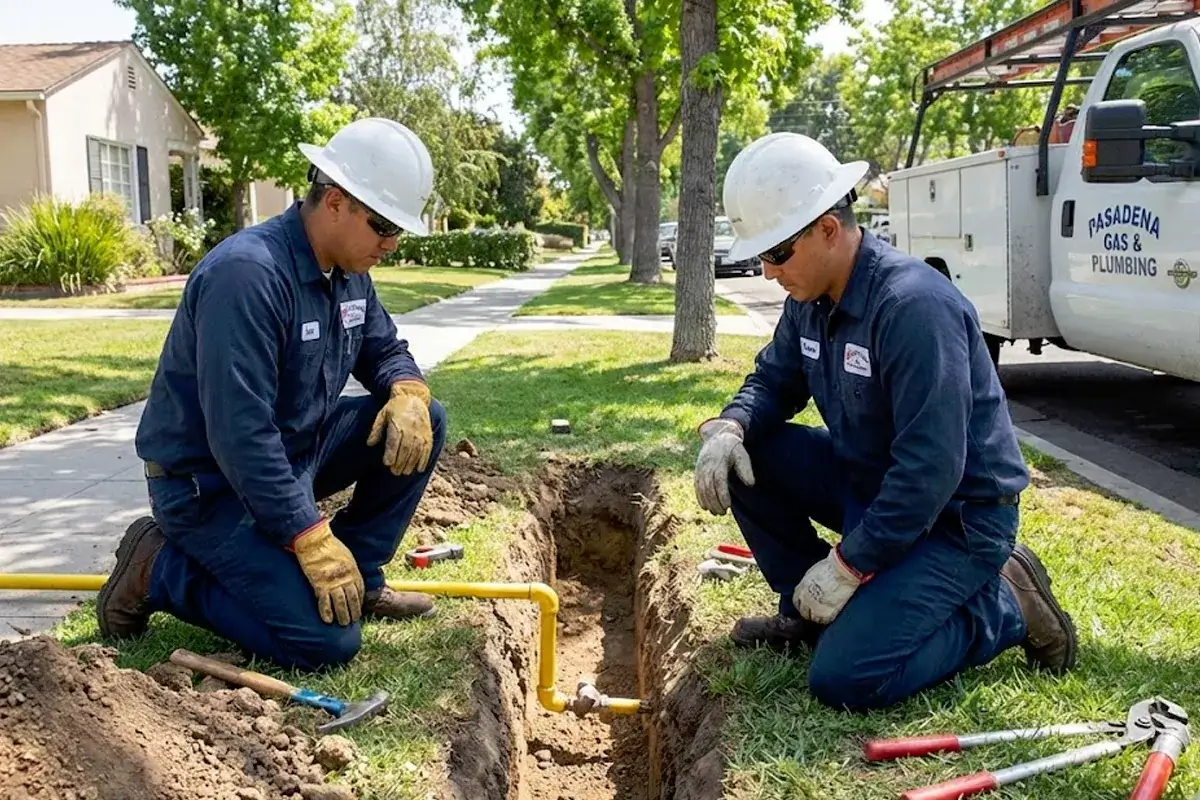

Gas line repair & installation in Pasadena requires proper permits, licensed contractors, and compliance with the 2022 California Plumbing Code. Homeowners can expect costs between $300 to $3,000 depending on project scope, with simple appliance hookup at the lower end and full system installs at the higher end. All work must include pressure testing and inspection before use.
You own a home in Pasadena and need to connect a gas appliance, fix a leak, or install new piping work. This guide walks you through what you need to know about gas line installation cost, permits, safety requirements, and how to hire the right licensed gas fitter.
What to Expect When Installing or Repairing a Gas Line
Natural gas piping work follows a standard process regardless of whether you’re installing new lines or repairing existing ones. The process involves planning, material selection, installation, testing, and inspection by your building inspector.
Your contractor starts by assessing your property and planning the route for the fuel gas system. They measure distances, identify obstacles, and determine the best path from your meter to the appliance. For underground work, they mark utility lines to avoid hitting other services. The contractor then selects appropriate pipe materials based on your specific needs and local code requirements.
Installation involves cutting and fitting pipes, installing shut-off valves, and making secure connections. Every joint must be properly sealed and supported. After installation comes pressure testing, where the contractor pumps the line with air or inert gas to check for leaks. This test typically lasts 15 minutes to several hours depending on system size. Finally, a city inspector reviews the work before you can use the line.
Materials and Pipe Types
Black iron pipe remains the most common material for indoor gas line repair in Pasadena. It’s durable, code-approved, and handles high pressure well. Corrugated stainless steel tubing (CSST) offers flexibility for tight spaces and complex routes. Underground lines often use polyethylene pipe with corrosion-resistant coating, which works well in soil.



Your contractor chooses materials based on location, pressure requirements, and code specifications. Indoor lines typically use black iron or CSST. Outdoor underground sections need PE pipe or coated steel. Each material has specific installation requirements and cost implications for residential gas service.
Cost Factors and Typical Price Ranges
Simple appliance hookup projects for stoves or dryers typically cost $300 to $800. Mid-range projects like extending lines to new rooms or connecting water heaters run $800 to $1,500. Complex installations involving underground piping, full system upgrades, or extensive rerouting can reach $2,000 to $3,000 or more.
Several factors affect your final cost. Distance matters most because longer runs need more material and labor. Pipe fittings and diameter influence price since larger lines cost more but handle higher flow rates. Material choice impacts cost with CSST generally running higher than black iron. Underground work costs more than above-ground installation due to excavation and backfill requirements.
Labor rates vary by contractor experience and demand. Licensed gas plumber rates typically range from $108 to $786 per hour in Los Angeles County. Permits add $50 to $200 depending on project scope. Pressure testing and inspection fees run $100 to $300. Some contractors bundle these costs while others itemize them separately.
Get multiple quotes before committing to any contractor. Price differences often reflect experience level, material quality, and service comprehensiveness. The cheapest bid may skip important steps like proper permitting or thorough testing.
Permits, Codes, and Legal Requirements in Pasadena
Any gas piping work in Pasadena requires a permit-required authorization. This includes new installations, repairs, replacements, and relocations. You cannot legally do this work without proper authorization from the city.
The city adopted the 2022 California Plumbing Code as its regulatory standard. This code sets strict requirements for materials, installation methods, testing procedures, and safety measures. Your contractor must hold a C-36 plumbing license that covers gas appliances, flues and gas connectors for all systems. Violations can result in fines, required rework, or even disconnection of your gas service.
The permit process starts when your contractor submits plans to the city building department. The application includes project details, pipe routing, material specifications, and connection points. The city reviews these plans to ensure code compliance before issuing the permit. This review typically takes several business days to two weeks depending on complexity and current workload.
After installation, a city inspector must examine the work before you can use the residential utility network. The inspector checks pipe materials, joint quality, support methods, shut-off valve placement, and test results. They verify everything meets code requirements and poses no safety risk. Only after passing inspection can your contractor open the line for gas flow.
Some homeowners wonder if they can skip permits for small jobs. The answer is no. Even minor repairs or simple appliance connections require permits in Pasadena. Working without permits creates liability issues, may void your homeowner’s insurance, and can complicate future home sales.
Safety, Leak Detection & Maintenance Tips for Homeowners
Gas leak detection should be part of your regular home maintenance routine. Natural gas companies add a distinctive sulfur smell to help you identify leaks quickly. If you smell this odor, hear hissing near gas lines, or notice dead vegetation above underground pipes, suspect a leak.
Leave immediately if you smell gas. Don’t use light switches, phones, or anything that could create a spark. Call your utility company emergency line from outside your home. They’ll send a technician to assess the situation and shut off gas if necessary. Never try to locate or fix gas leaks yourself as this is safety-critical work.
You own and maintain the gas lines on your property from the gas meter onward. The utility company handles the line from the street to your meter, but everything past that point falls under your responsibility. This includes all piping, connections, shut-off valves, and appliance hookup points throughout your home.
Schedule professional inspections every three to five years or whenever you notice problems. Inspectors check for corrosion, loose connections, damaged pipes, and proper valve function. They also verify your home gas system still meets current code requirements. Older homes may need upgrades to match modern safety standards, including seismic-rated valves in earthquake zones.
Know where your main gas shut-off valve sits. This valve typically sits next to your meter outside your home. Learn how to turn it off using a wrench. In emergencies, shutting off gas quickly prevents dangerous situations. Keep a wrench near the valve for easy access.
Watch for warning signs between inspections. Corroded pipes show rust or green discoloration. Loose connections may leak at joints or fittings. Damaged supports let pipes sag or move. Any of these issues in your hazardous installation needs immediate professional attention.
How to Choose a Qualified Gas Line Contractor
Start by verifying the contractor holds a valid California C-36 plumbing license. The state requires specific licensing for gas line service. Check their license status through the California Contractors State License Board website. Active licenses mean the contractor meets state education, experience, and insurance requirements.
Ask about their experience with gas line repair in Pasadena specifically. Local experience matters because contractors familiar with city codes and inspectors work more efficiently. They know what the city expects and avoid common permit issues.
Request proof of insurance including general liability and workers’ compensation coverage. Insurance protects you if accidents occur during installation. Contractors without insurance put your property and finances at risk for this plumbing service.
Get written estimates from at least three contractors. Compare not just prices but what each quote includes. Some contractors bundle permits, testing, and inspection fees while others charge separately. Read the fine print about materials, warranties, and timeline.
Ask how they handle permits and inspections. Reputable contractors pull permits themselves and schedule inspections as part of their service. Avoid contractors who suggest skipping permits or doing work without city approval.
Question their testing procedures. Professional certified installer contractors always perform pressure testing after installation. They should explain their testing process and provide documentation of results. This documentation proves the system passed safety checks and is code-compliant.
Check references from recent Pasadena projects. Talk to past clients about their experience, final costs versus estimates, timeline accuracy, and work quality. Good contractors gladly provide references and may show photos of completed projects.
Verify they use quality materials approved for gas service. Cheap materials may meet minimum code requirements but fail sooner than premium options. Ask what brands they use and why they recommend those products.
Review the contract carefully before signing. It should specify materials, timeline, total cost, payment schedule, and warranty terms. Clear contracts prevent disputes and ensure both parties understand expectations.
Understanding Your Responsibilities as a Homeowner
Your property ownership includes responsibility for the entire gas system from the meter to your appliances. This covers all piping, valves, connections, and fixtures inside your property boundaries for utility infrastructure.
Gas line maintenance falls entirely on you as the homeowner. The utility company maintains the service line up to your meter but nothing beyond that point. You pay for all repairs, upgrades, and replacements on your side of the meter.
Regular maintenance prevents expensive emergency repairs. Annual visual inspections cost little but catch problems early. You can check exposed pipes yourself for obvious issues like rust or damage. Schedule professional inspections periodically for thorough system evaluation.
Budget for eventual pipe replacement. Gas lines don’t last forever. Older black iron pipes may corrode after 30 to 50 years depending on conditions. Planning ahead for replacement costs less than emergency repairs after failures.
Keep records of all gas piping work including permits, inspections, and contractor invoices. These documents prove code compliance and help during home sales. Future buyers want assurance that gas systems meet safety standards.
Update your system when adding appliances. Each new gas appliance needs proper connection to your existing lines. Some additions require larger main lines to handle increased flow. Consult contractors before buying new gas appliances to ensure your system can support them.
Gas line repair & installation in Pasadena demands attention to safety, codes, and professional expertise. Your home’s gas system provides reliable energy for cooking, heating, and hot water when properly installed and maintained. Following these guidelines helps ensure your gas lines work safely for decades. Always hire licensed contractors, obtain required permits, and prioritize safety over cost savings. Your family’s wellbeing depends on properly functioning gas systems installed by qualified professionals who understand local requirements and pressure-tested standards.
