

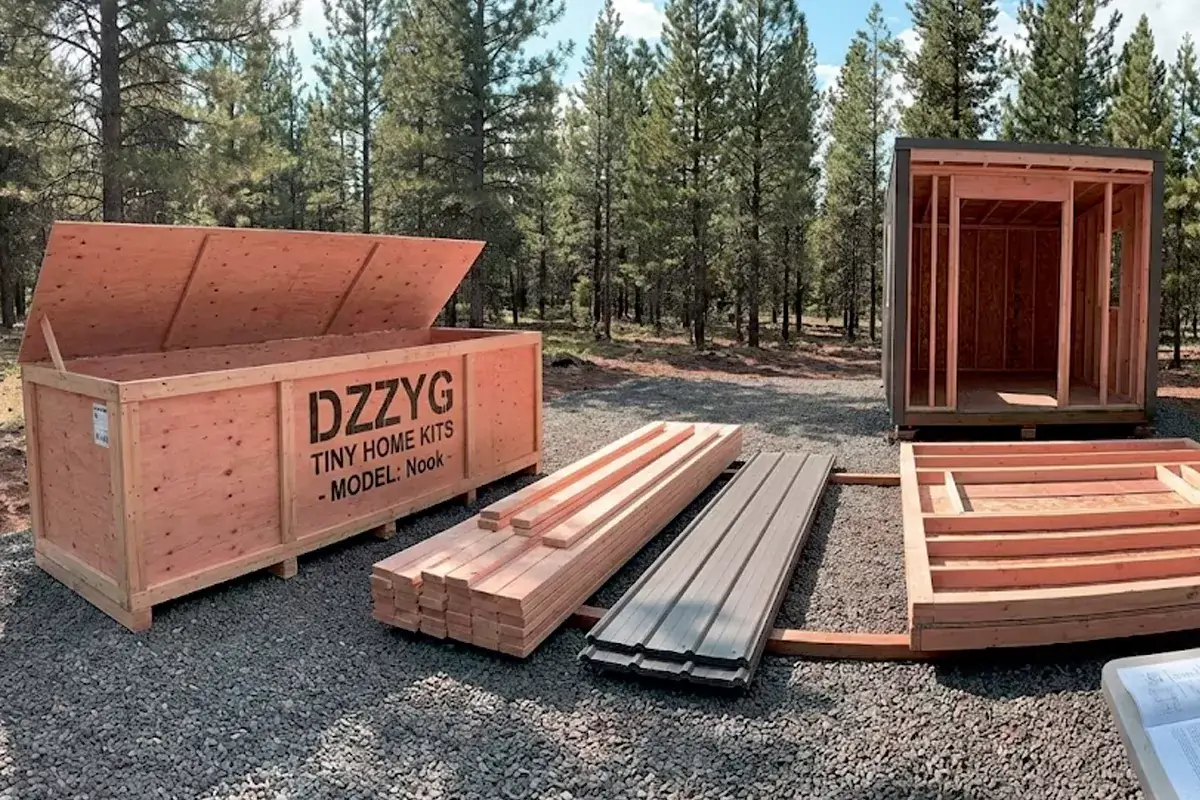

The Dzzyg Tiny Home Kit is a prefabricated housing solution that ships in flat-packed panels and assembles in one to two days. It features a steel-framed structure with insulated panels and arrives mostly preassembled. Available in three sizes (400, 600, and 800 square feet), this compact living option works as a guest house, home office, vacation cabin, or backyard accessory dwelling unit (ADU).
What Is a Dzzyg Tiny Home Kit
A tiny home kit is a prefabricated package that includes pre-cut building components ready for quick assembly—distinct from traditional homes that require months of on-site construction.
The Dzzyg model ships with prefabricated wall and roof panels that fit together like building blocks. You get a powder-coated steel frame and sandwich-panel walls designed to resist rust, mold, and weather. The dwelling unit typically includes a small kitchen nook, a bathroom with basic plumbing fixtures, and a sleeping loft or compact sleeping space packed into under 900 square feet.
Models come in 20-, 30-, and 40-foot options with customizable floor plans featuring an open living-area concept. You can configure the space for one to three bedrooms depending on your needs. The expandable container house design means you can relocate the home with a flatbed truck or trailer. Most buyers place these portable dwellings on simple concrete pads or blocks without needing a full foundation in many cases.
The kit represents a key component of the broader tiny house movement, which emphasizes minimalist living and reduced environmental impact. Unlike conventional residences that average 2,000+ square feet, these modular construction systems prioritize efficiency and mobility.
Real Costs Beyond the Kit Price
The base price starts at $9,700 for the 800-square-foot model, but your total investment extends beyond the sticker price.

You need to budget for land preparation, utility connections, permits, and finishing touches. Transport costs vary by distance and can add $1,000 to $3,000. Foundation work for a concrete pad runs $6 to $14 per square foot. If your location requires full utility hookups, expect another $2,000 to $5,000 for professional electrical and plumbing work. The kit includes basic plumbing and electrical wiring, but HVAC or full utilities may require add-ons or local electrician support.
Some regions require professional installation inspections, which add $500 to $1,500. Interior customization like upgraded flooring, cabinet finishes, or appliances can push costs up another $2,000 to $8,000. Your all-in cost typically lands between $15,000 and $30,000 depending on site conditions and local requirements.
This affordable housing option contrasts sharply with full-size houses where median prices exceed $396,000 nationally. The small house package delivers entry-level homeownership without decades of mortgage debt.
What to Check Before Buying
Local regulations determine whether you can legally install easily your prefab tiny house on your property.
Check local zoning and building codes before purchase, as some areas require permits even for prefab units. Many municipalities have minimum square footage requirements for permanent residences. Your property may be zoned residential, agricultural, or commercial, and each classification has different rules. Some regions allow tiny homes only as accessory dwelling units on lots with existing primary structures.
Building permits typically cost $500 to $2,000 and require engineered plans. Your local building department will inspect electrical, plumbing, and structural elements before issuing a certificate of occupancy. HOA restrictions may prohibit tiny homes entirely or limit their placement. Call your county planning office and ask specifically about prefabricated structures, square footage minimums, and setback requirements before you buy.
Foundation and Utility Access
Your site needs proper foundation support and utility access points for this residential structure.
Mounting options allow placement on a simple concrete pad or blocks with no full foundation needed in many cases. However, some jurisdictions require permanent foundations for structures intended as dwellings. You need access to water, sewer or septic, and electrical service. Off-grid setups with solar panels and composting toilets work in rural areas but may not meet code in suburban zones. Check if your lot has existing utility lines or if you need to pay for extensions from the street.
The foldable prefab unit offers flexibility but must still meet local building standards. Some buyers choose to place their units on wheels as a tiny home on wheels (THOW) to navigate zoning restrictions, though this limits permanent foundation options.
Materials and Climate Performance
The kit features fireproof and waterproof sandwich board walls with aluminum alloy windows and a galvanized steel frame that can endure heavy snow accumulations.
Rock wool sandwich panels provide year-round insulation and temperature control. The steel construction resists rot, termites, and moisture better than wood-framed homes. In moderate climates, the standard insulation keeps the interior comfortable. In colder regions, users often add extra insulation or heating for comfort. The powder-coated exterior holds up against rain, UV exposure, and humidity.
For hot climates, you may want to add reflective roof assembly coatings or extra ventilation. The aluminum windows provide natural light but may need window treatments to manage heat gain. In areas with extreme weather like hurricanes or earthquakes, you should verify that the anchor system meets local wind or seismic codes. The lightweight structure means easier transport conveniently but requires proper tie-downs in high-wind zones.
These customizable features distinguish the Dzzyg kit within the alternative housing market, where buyers prioritize both durability and adaptability.
Assembly and Setup Process
Most customers report that assembly takes just a weekend with basic tools and a handful of helpers—a hallmark of weekend assembly efficiency.
The panels arrive numbered and include assembly instructions. You need a level pad, basic hand tools, and two to four people. The steel frame goes up first, followed by wall panels that lock into the frame channels. Roof panels install last and secure with provided fasteners. Most buyers spend four to eight hours on the main structure assembly, demonstrating how these systems assemble quickly compared to conventional builds.
Finishing work takes additional time. You need to connect plumbing supply and drain lines to your water source and septic or sewer. Electrical wiring connects to your breaker panel or generator. Interior finishing like trim, fixtures, and flooring can take another one to three days depending on your customization level. The DIY tiny home approach saves labor costs but requires some construction knowledge and physical stamina.
The term “kit” derives from Middle Dutch kitte (wooden vessel), later evolving to mean a collection of items sold together—apt for these housing solutions that arrive as complete component sets.
Pros and Cons of This Kit
The Dzzyg kit offers clear advantages for budget-conscious buyers seeking compact living solutions within the simplified lifestyle paradigm.
Advantages:
You get affordable entry into homeownership with starting prices under $10,000. Quick assembly means you can move in within weeks instead of months. The modular home design allows easy relocation if you change properties. Factory production cuts waste and labor hours, letting you spend less on skilled trades and specialty tools while gaining a sturdy shell with insulated walls. Lower utility bills follow from the smaller space and efficient energy consumption. No long mortgage commits you to decades of payments. The flatbed transportable design means genuine mobility for life changes.
Drawbacks:
Space limitations challenge larger families or those with extensive possessions. Resale markets for prefab tiny homes remain uncertain compared to traditional houses. Financing options are limited since most lenders do not offer mortgages for structures under 400 square feet. Insurance can be tricky because some carriers treat these as RVs while others require specialty policies. Zoning battles may prevent installation in your preferred location. The small footprint means limited storage and privacy. Depreciation typically occurs rather than home value appreciation seen in conventional residences.
These tradeoffs reflect the broader tension between minimalist living aspirations and practical household needs—a consideration every potential tiny home buyer must weigh.
Who Should Consider This Kit
The Dzzyg prefab works well for full-time living, guest houses, Airbnb rentals, backyard offices, or vacation getaways.
Remote workers who value mobility over square footage find these portable kits practical. Retirees downsizing from larger homes appreciate the reduced maintenance and costs. Property owners wanting rental income through accessory dwelling units benefit from the quick setup. First-time buyers priced out of traditional housing markets can build equity without massive debt. Minimalists and eco-conscious individuals drawn to smaller carbon footprints embrace the sustainable lifestyle these homes support.
The kit works best for singles, couples, or small families comfortable with close quarters. You should have basic construction skills or access to help for assembly. Financial flexibility to handle permit fees and utility hookups is necessary. Patience to navigate local regulations and willingness to adapt to compact living make success more likely.
This housing solution particularly appeals to those seeking alternatives to the expense and complexity of full-size houses, representing a practical middle ground in residential options.
What You Get in the Package
Kits typically include a small kitchen nook, bathroom with basic plumbing fixtures, and sleeping loft or compact sleeping space.
The package contains pre-cut steel frame components, insulated wall panels, roof panels with weather sealing, windows, exterior doors, and basic structural hardware. Interior planning includes a full living room, bedroom, kitchen, and bathroom with smart storage design to maximize utility of every inch of space. Electrical wiring roughed to US standards and plumbing pipes for water supply and drainage come installed in the panels.
You supply your own appliances, light fixtures, faucets, toilet, and interior finishes. Some buyers add custom cabinetry, upgraded flooring, or specific paint colors after assembly. The prefab kit gives you a weather-tight shell and basic systems, but personalizing the space requires additional purchases and effort.
Understanding these meronyms—the individual components that form the complete system—helps buyers grasp exactly what arrives and what they must source separately. The expandable design allows some models to unfold, tripling their compact shipping dimensions once on-site.
Key Takeaways for Buyers:
- Budget for total costs including permits, foundation, utilities, and finishing beyond the base kit price
- Research local zoning laws and building codes before purchasing to avoid legal issues
- Understand that assembly requires physical labor, basic tools, and helper support over one to two days
- Consider climate-specific needs for heating, cooling, and weatherproofing in your region
- Recognize space limitations and lifestyle adjustments required for successful tiny home living
The Dzzyg Tiny Home Kit delivers an accessible path to homeownership for buyers willing to embrace compact living and navigate regulatory requirements. Your success depends on thorough planning, realistic budgeting, and local code compliance.
Note: Information about Dzzyg Tiny Home Kit is based on current marketplace listings and third-party reviews as of late 2025. The brand emerged in the early 2020s through e-commerce platforms. Specifications and availability may vary by region and should be verified with sellers before purchase.
